Vertical Balcony Gardening: The Complete Guide to Growing Up When Space Is Limited
Transform your small space with Vertical Balcony Gardening — discover wall planters, trellises, hanging systems, and the best plants to grow up instead of out. A complete 2026 guide for balcony and small-space gardeners ready to maximize every inch.
BALCONY TINY PLOTS: TURN YOUR OUTDOOR SPACE INTO A MINI FARM
Introduction
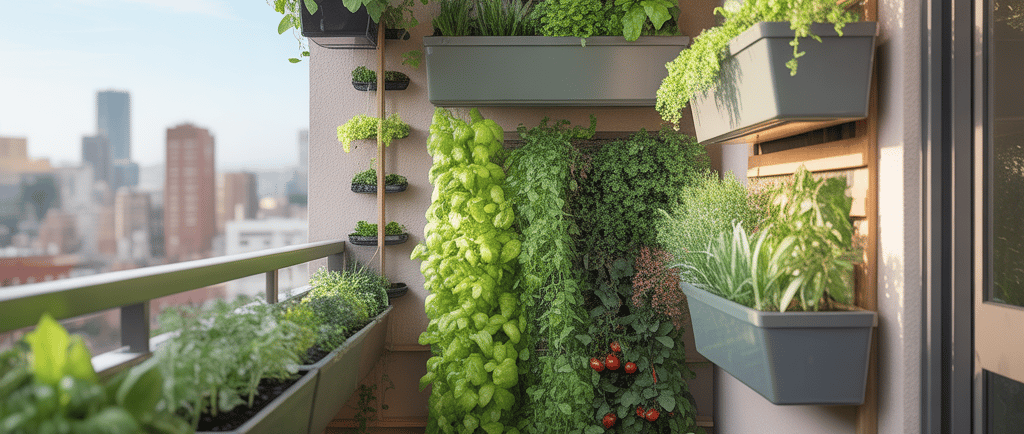
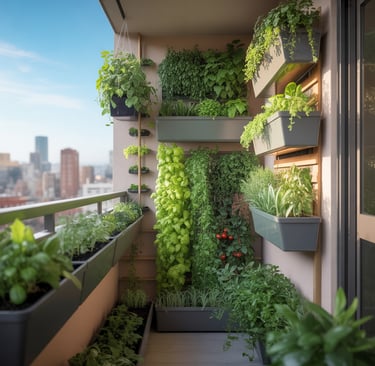
Here's a number that reframes how most balcony gardeners think about their space: a vertical garden system on a six-foot-wide balcony wall can provide the equivalent planting area of a twelve to fifteen square foot garden bed — from a wall that was previously contributing zero growing space. That same wall, fitted with a modular pocket system or a series of mounted trellises, becomes the most productive part of your outdoor growing setup while leaving your floor space free for furniture, movement, and the other things a balcony needs to actually be livable.
I've been gardening on balconies for most of my adult life and the shift that made the biggest difference wasn't buying better containers or finding superior seed varieties — it was looking up. The floor of my balcony was always crowded, always competitive for space between pots and chairs and the actual human activity a balcony is supposed to support. The walls were bare. The railing was bare. The ceiling overhead had hooks that had never held anything. When I finally started treating all of that vertical surface as potential growing space, my balcony transformed from a cramped collection of floor pots into a genuinely lush, layered garden that produces more food, looks dramatically better, and still has room for a small table and two chairs.
The principles of vertical balcony gardening aren't complicated but they are specific — weight matters, wind matters, watering behaves differently when plants are on a wall rather than on the floor, and plant selection for vertical positions requires some different thinking than for floor containers. This guide covers all of it: the systems, the plants, the watering, the structural considerations, and the design thinking that transforms a bare balcony wall into a productive, beautiful living garden. Let's build something remarkable.
Why Vertical Gardening Is the Smartest Move for Small Balconies
The fundamental constraint of balcony gardening is floor space — and vertical gardening is the most direct possible solution to that constraint. Instead of spreading growing area horizontally across a floor that already has to accommodate furniture and human activity, vertical systems extend growing area upward along surfaces that are otherwise completely unused. The space multiplication is real and significant, and it happens without competing with any other use of the balcony.
The math of vertical space multiplication is worth understanding concretely. A standard apartment balcony might have thirty-six to sixty square feet of floor area — let's say forty-eight square feet, a reasonably generous urban balcony. Once you account for a small table, two chairs, and comfortable movement around them, maybe twenty square feet of that is realistically available for container gardening. A wall that's six feet wide and seven feet tall, fitted with a pocket planter system, provides roughly forty-two square feet of growing surface — more than double the available floor growing area — from a vertical dimension that contributes nothing without a deliberate system installed there. The railing, the overhead structure, and the remaining walls add more on top of that. Going vertical doesn't just add growing space — it multiplies it.
Weight distribution is an important practical advantage of vertical gardening that most people don't immediately consider. Balconies have weight limits — typically between forty and one hundred pounds per square foot depending on construction type and age — and floor containers, particularly the large ones needed for productive vegetable growing, concentrate that weight in specific spots. A heavy floor container sitting in one spot creates a significant point load on the balcony structure. Vertical systems distribute weight differently: wall-mounted planters spread load across attachment points along a wall, railing planters distribute weight along the railing, and smaller containers in vertical positions weigh less individually than the large floor containers they replace. Properly designed vertical systems are often more appropriate for older or weight-limited balconies than multiple large floor containers in the same positions.
Visual transformation is the immediate benefit that tends to be most obvious and most motivating. A bare concrete or painted wall is visually inert — it contributes nothing to the atmosphere of the space beyond defining its boundary. The same wall covered in a modular pocket planter filled with herbs, trailing plants, and flowers creates a living, dynamic surface that completely changes the character of the balcony. Guests consistently react to well-executed vertical balcony gardens with the kind of genuine surprise and admiration that a collection of floor pots rarely produces — because the wall transformation is genuinely dramatic in a way that more containers on the floor is not.
Privacy is a benefit that's particularly relevant for urban balconies overlooked by neighboring buildings, walkways, or other balconies. Dense vertical plantings — either on the railing itself or on a freestanding trellis positioned near the railing — create natural visual screening that's both more attractive and more effective than privacy screens or curtains. A railing covered in climbing nasturtiums, a trellis of beans, or a wall of dense pocket planters creates a living wall between your private outdoor space and the overlooking eye. The privacy benefit grows over the season as plants fill in, creating a progressively more enclosed garden room feeling as summer progresses.
Assessing Your Balcony Before You Build Vertical
Before investing in any vertical garden system, spend time genuinely understanding what your balcony offers and what it limits. The assessment isn't complicated but it's important — and the decisions you make based on it will determine whether your vertical garden works beautifully or causes structural concerns, disappoints with poor plant performance, or creates problems with your building management.
Weight limits are the most critical and most commonly ignored factor in balcony gardening of any kind, and they become particularly important when planning vertical systems because wall-mounted systems add load to building structure in ways that pure floor containers don't. Every balcony has a structural weight limit specified in its building's engineering documentation — typically expressed as pounds per square foot. In practice, most urban apartment balconies are rated for forty to one hundred pounds per square foot, with newer construction often at the higher end of that range. For vertical systems specifically, the relevant consideration is the load capacity of the wall or railing you're attaching to, which may differ from the floor's load rating. If you're planning a significant wall-mounted system — multiple modular panels, a heavy-duty trellis system — and you're uncertain about the wall's capacity, consulting your building management before installing is genuinely worth doing.
Sun exposure changes significantly with height on a balcony, and understanding how your specific balcony's light shifts from floor level to railing height to wall height is important for matching plants to vertical positions accurately. If the floor of your balcony is partially shaded by an overhang or neighboring building while the railing and wall above are in full sun, plants in railing planters and upper wall pockets will receive dramatically more light than floor containers — requiring different plant selection and more frequent watering. Conversely, if an overhang shades the upper portion of your balcony while the floor receives reflected light from below, lower wall positions may actually receive better light than you'd expect from their height. Observe your balcony's light pattern at different times of day and at different heights before finalizing plant placement.
Wind exposure is a significant factor for elevated balconies that ground-level gardens don't deal with in the same way. Higher floors experience stronger and more consistent wind, which has multiple practical implications for vertical gardening. Wind desiccates plants faster than still air — vertical planters on exposed balconies may need watering twice as often as comparable floor containers. Wind physically damages fragile plants and climbing plants that aren't well-secured. And wind can dislodge containers, pocket planters, and hanging systems that aren't adequately attached. For balconies above the fifth floor or in exposed urban wind corridors, plant selection should favor wind-tolerant species, systems should be attached more securely than lower-level equivalents, and watering frequency expectations should be calibrated upward from baseline.
Lease and building rules around balcony modifications vary significantly between buildings and are worth checking before installing anything that involves drilling into walls, attaching to railings, or significantly altering the balcony's appearance. Many buildings prohibit permanent modifications to balcony surfaces. Some have rules about maximum planter height or what can be mounted to railings. Rules about what can be seen from the street or from neighboring units sometimes affect the type of vertical systems that are permitted. Reading your lease and checking with building management takes fifteen minutes and can save you from having to remove an installed system. There are excellent vertical gardening options that require no permanent modifications — freestanding tower planters, tension rod systems, and over-railing planters that clamp without drilling — that work within virtually any building's rules.
Vertical Planter Systems — Wall Pockets, Modular Panels, and Towers
The vertical planter system market has expanded dramatically and improved significantly in quality over the last several years, offering apartment balcony gardeners more genuinely good options than at any previous point. Understanding the different system types — their specific advantages, limitations, and ideal use cases — helps you choose what will actually work for your balcony rather than what looks impressive in product photography.
Fabric wall pocket planters are the most accessible and widely available vertical planter system and remain genuinely useful for the right applications. Typically made from felt or woven geotextile fabric, these systems consist of a hanging panel with multiple pockets sewn across its surface — each pocket holding enough growing medium for one plant. They're lightweight, inexpensive, easy to install with a few hooks or screws, and available in a wide range of sizes from small six-pocket panels to large panels covering significant wall area. The primary limitation is individual pocket volume — each pocket holds a relatively small amount of growing medium, which means plants with extensive root systems or high water demands struggle to thrive in them. They work best for herbs, lettuce, strawberries, and flowering annuals with compact root systems rather than for large vegetable plants with extensive root needs. They also dry out quickly in warm or windy conditions because the fabric breathes on all sides — daily or twice-daily watering is often needed in summer.
Modular tile and panel systems represent the premium end of the vertical planter market and the systems that produce the most visually impressive results for long-term installations. These systems consist of individual planting modules — typically plastic or composite material with a soil reservoir — that interlock or mount to a backing structure to create a custom-configured living wall. The individual modules provide more growing volume per plant than fabric pockets, the reservoir design improves moisture retention, and the modular configuration allows any size or shape of installation from a small accent panel to a full wall coverage. The investment is higher than fabric pocket systems — quality modular systems represent a meaningful purchase — but the longevity, plant performance, and visual quality justify the cost for gardeners committed to a permanent vertical setup.
Freestanding tower planters require no wall attachment whatsoever, making them the ideal choice for renters who can't make modifications or for balconies where wall attachment isn't structurally appropriate. These towers stand independently on the balcony floor or in a floor container, typically reaching three to five feet in height with planting pockets around the circumference at multiple levels. The limitation of tower planters relative to wall-mounted systems is that they do occupy floor space — they're just using it more vertically efficiently than a flat floor container of equivalent planting area would. The advantage is complete portability — they can be moved within the balcony for seasonal light optimization or taken inside for winter storage.
Hydroponic vertical towers designed specifically for food production have become increasingly popular for balcony use and represent the most productive growing option per square foot of floor space. These systems circulate nutrient solution through a tower structure that holds plants in individual growing slots around the exterior, allowing a remarkably high density of food plants in a compact footprint. The Lettuce Grow Farmstand is the most recognizable consumer version — a tower that can hold up to thirty-six plants in a floor footprint of roughly two square feet. For balcony gardeners specifically interested in maximizing food production rather than ornamental display, a hydroponic tower system is genuinely worth the investment and complexity.
Trellis and Climbing Plant Systems for Balconies
Trellis systems combined with climbing plants represent one of the most productive and visually dramatic vertical gardening approaches available to balcony gardeners — and one of the most cost-effective, since a simple trellis structure supports plants that do the growing work themselves, creating significant vertical green coverage from a minimal initial investment.
Trellis types suitable for balcony use fall into several categories with different installation approaches. Freestanding A-frame trellises stand independently within large floor containers or in their own base, requiring no wall or railing attachment. These are ideal for tenants who can't make modifications and for positioning climbing plants exactly where they'll receive optimal light. Fan trellises and flat panel trellises designed for wall mounting attach to balcony walls with screws or adhesive hooks and provide a rigid climbing structure for plants growing in floor containers below. Diamond mesh or wire grid systems can be attached to railing systems — running along the inside of the railing rather than the exterior — creating a climbing surface that's integrated with the railing structure. Bamboo pole structures, assembled in teepee or grid configurations, are cheap, lightweight, and completely removable at season's end.
Climbing vegetables are where trellis systems deliver their most impressive practical results on a balcony. Cucumbers are among the best balcony climbing vegetables — they climb enthusiastically by tendrils, produce prolifically in warm weather, and deliver full-sized cucumbers from plants that take minimal floor space when trained vertically. A single cucumber plant on a four-foot trellis section can produce a dozen or more cucumbers over a season. Pole beans are similarly enthusiastic climbers that produce abundant harvests from a narrow vertical footprint — far more productive per square foot of floor space than bush bean alternatives. Peas — both sweet peas for edible pods and sugar snap varieties — are ideal for spring trellis growing, producing quickly in cool weather before the heat of summer. Indeterminate cherry tomatoes trained up a vertical support on the balcony railing produce heavily in good sun and with adequate watering and feeding.
Climbing ornamentals offer visual payoff without the intensive care requirements of vegetable crops, and several species are particularly well-suited to balcony conditions. Nasturtiums are the climbing ornamental I recommend most enthusiastically for balcony beginners — they're fast-growing, completely edible, produce prolific colorful flowers from spring to frost, and literally thrive on neglect, preferring poor soil to rich and handling dry conditions better than most plants. They climb or trail depending on what structure is available and look extraordinary cascading from a railing or climbing a simple mesh. Clematis in compact varieties grows beautifully on balcony trellises in good sun and produces flowers of exceptional beauty — 'Nelly Moser' and 'Comtesse de Bouchaud' are compact varieties suited to container growing. Morning glory grows extremely rapidly and covers a trellis with abundant trumpet flowers in a single season from direct-sown seed.
Training and supporting climbing plants on a balcony requires more active management than in a static garden bed because wind can dislodge new growth before it's established, and the specific structure of balcony trellis systems may not match the natural climbing habit of every plant. Check climbing plants every few days during active growth and guide new shoots onto the trellis structure, securing loosely with soft plant ties or twine. Don't tie stems tightly — a loose figure-eight loop that holds the stem near the support without constricting it is the correct technique. Remove ties and retrain any growth that's heading in an unhelpful direction before it becomes established in the wrong position.
Railing Planters and Hanging Systems
The railing of your balcony is a genuinely valuable piece of growing real estate that most balcony gardeners either ignore entirely or use minimally. A balcony railing running along the full length of the balcony — typically six to twelve feet for most apartment balconies — represents a growing position that receives some of the best light on the balcony, is at convenient working height, and doesn't consume any floor space.
Railing planter types have diversified significantly and the best options in 2026 are meaningfully better than early iterations. Hook-on planters are the simplest design — a container with a hook that hangs over the top of a flat railing — inexpensive, lightweight, and requiring no tools. They work well for flat-topped railings but can shift or tip if not secured and aren't appropriate for round railings that the hook can't grip securely. Bracket-mounted planters attach to the railing with adjustable brackets that clamp around the railing rail, providing more secure mounting and compatibility with round railing profiles. These are the most secure non-permanent attachment method and my preferred option for most balcony railing applications. Clamp-on systems with locking hardware provide maximum security for exposed, windy balconies where simple hook systems might be dislodged by strong wind gusts.
Weight management for railing planters is important because railings are designed to support human loading but not necessarily the continuous static load of multiple planted containers. Most balcony railings can safely support railing planters, but loading the entire railing length with heavy planted containers is worth thinking about relative to your building's specifications. Practical weight management strategies include using lightweight potting mixes with significant perlite or coco coir content, choosing planter sizes appropriate for the plant rather than maximal, and staggering heavy planters with lighter ones rather than running maximum-weight planters continuously along the full railing length.
Hanging basket systems from ceiling hooks and overhead balcony structures open up the overhead dimension of the balcony as growing space. A series of hanging baskets suspended from ceiling hooks at different heights creates a layered canopy effect that makes the balcony feel like a verdant outdoor room rather than an open concrete platform. Check that your balcony ceiling or overhead structure has appropriate anchor points before hanging — the combined weight of soil, plant, and watering can be significant, and a hook that pulls free from a ceiling drops a planted basket onto whatever is below it. Expansion bolt anchors rated for the expected load provide secure hanging points in concrete ceilings. Hanging basket brackets that clamp to the railing rather than mounting to the ceiling are a secure alternative for buildings where ceiling drilling isn't permitted.
Cascading and trailing plants are particularly effective in railing planters and hanging basket positions because their natural growth habit takes advantage of the vertical drop below the mounting point. Trailing nasturtiums, lobelia, calibrachoa, bacopa, and the ornamental sweet potato vine all cascade beautifully from railing planters, creating the flowing, abundant look that makes vertically gardened balconies so visually distinctive. For edibles, trailing cherry tomato varieties like 'Tumbling Tom' produce hanging stems of small tomatoes from basket positions. Strawberries — particularly the ever-bearing alpine varieties — send runners and fruit cascading attractively from railing planters while producing genuinely useful harvests.
The Best Plants for Vertical Balcony Gardens
Plant selection for vertical balcony positions requires considering factors beyond the standard container gardening criteria — root volume constraints in smaller planter pockets, wind exposure at height, the specific light angles that vertical positions receive versus floor positions, and the watering frequency demands of elevated and wall-mounted systems. Getting plant selection right for your specific vertical system and balcony conditions is what determines whether plants thrive or merely survive.
Edible climbers and trailers are the plants that provide the best practical return from vertical balcony systems. The full-sun, warm-season climbers — cucumbers, pole beans, tomatoes — provide abundant harvests from vertical positions in good light on south and west-facing balconies. For more modest light conditions, peas in spring and autumn, and climbing nasturtiums throughout the season, provide edible returns with lower light demands. Herbs are extraordinarily well-suited to wall pocket systems and small vertical planters — their compact root systems, moderate water needs, and high per-gram value make them the ideal crop for the smaller growing volumes that fabric pocket and modular panel systems provide. Basil, chives, parsley, mint in contained pockets, thyme, and oregano all grow well in vertical herb wall positions and provide daily kitchen value from minimal growing space.
Strawberries deserve specific mention as one of the best crops for railing planters and vertical pocket systems because they're genuinely productive in small volumes of growing medium, their fruiting habit produces attractively from elevated positions where the fruit hangs visibly, and the runners they produce create a trailing effect that looks beautiful in the right container. Alpine strawberry varieties — smaller-fruited but prolific and reliable — are particularly well-suited to pocket planters and railing containers because they produce more compactly than large-fruited varieties.
Flowering annuals for vertical systems should be chosen for their compatibility with the constraints of vertical positions — compact root systems, tolerance for drying out between waterings, and good wind tolerance for exposed balconies. Calibrachoa — million bells — is my top recommendation for vertical ornamental planting because it flowers prolifically throughout the season, tolerates some drying, cascades beautifully from elevated positions, and comes in a color range that spans most design palettes. Petunias are the classic hanging basket plant for good reason — they're resilient, colorful, and forgiving of less-than-perfect watering. Lobelia, bidens, and bacopa work beautifully as companion fillers in mixed vertical plantings, providing fine texture and continuous color.
For year-round structural foliage in vertical systems, hardy ferns in shaded vertical positions, sedums and sempervivums in sunny wall pocket systems, and variegated ivies in mixed positions all provide permanent or semi-permanent structural planting that anchors a vertical garden between seasonal annual displays. Sedums and sempervivums are particularly appropriate for wall pockets because their succulent adaptation to dry conditions suits the faster drying of small pocket volumes better than most other plants.
Watering Vertical Balcony Gardens — The Biggest Challenge
Watering is the most significant practical challenge in vertical balcony gardening and the area where most vertical garden setups eventually struggle or fail. The combination of smaller growing volumes per planting position, exposure to drying wind, the inability of vertical planters to retain water the way large floor containers can, and the difficulty of watering wall-mounted systems manually creates an irrigation challenge that needs to be addressed thoughtfully from the beginning of any vertical garden setup.
Vertical gardens dry out faster than floor containers for several compounding reasons. Fabric pocket systems allow evaporation from all sides of the growing medium, not just the top surface. Wind — stronger at height on an exposed balcony — dramatically accelerates evaporation from all exposed surfaces. Small growing volumes have a worse surface-area-to-volume ratio than large containers, meaning proportionally more of the growing medium is near an evaporating surface. And plants in productive vertical food gardens are actively transpiring heavily — pulling water through their systems and releasing it through leaves in quantities that can exceed the moisture available in a small pocket of growing medium within a day or two. The practical consequence is that vertical gardens in warm, sunny, or windy conditions may need watering once or even twice daily during summer — a maintenance demand that's difficult to sustain manually over an entire growing season.
Drip irrigation systems for vertical walls and towers are the solution that makes vertical balcony food gardens genuinely sustainable rather than an exhausting daily commitment. A basic drip system for a vertical balcony garden consists of a small reservoir or connection to a water supply, a pump or gravity-feed system, thin drip tubing that runs to each individual planting pocket or to the top of a tower system, and a timer that triggers watering cycles at appropriate intervals. For wall pocket systems, individual drip emitters — small nozzles that release precise volumes of water — can be positioned in each pocket. For tower systems, a single emitter at the top of the tower distributes water downward through the growing medium. The timer makes the entire system automatic — set it and forget it, adjusting cycle frequency seasonally as temperatures and plant water demands change. Basic drip irrigation kits for garden use cost twenty to fifty dollars and can be adapted to most vertical system configurations with some straightforward setup.
Self-watering vertical planter options have improved significantly and are worth specifically seeking out for vertical systems where manual watering is the only option. Some modular vertical panel systems incorporate reservoir bases that wick moisture upward to individual planting positions. Tower planters with internal reservoir systems distribute water from a top reservoir down through the growing medium. These systems extend the interval between manual waterings from daily to every two to four days in moderate conditions — not eliminating manual watering but reducing its frequency to a manageable level.
Water runoff management on balconies is a practical and neighborly consideration that's easy to overlook when planning a vertical garden but important to address before your first heavy watering cycle. Water that drains from vertical planters falls onto the balcony floor and must have somewhere to go. Balconies typically have drainage channels or drain holes, but a large vertical system watered thoroughly produces significant runoff that can flow toward the building wall, pool near the base of the balcony, or — in older buildings with inadequate balcony drainage — overflow onto the balcony below. Before installing a vertical system, check that your balcony drainage is functional and clear. Consider drip trays behind wall-mounted pocket systems that collect runoff before it reaches the floor. And be aware of how much water you're applying in each watering session to avoid creating runoff volumes that your balcony drainage can't handle.
Soil, Weight, and Structural Considerations
The practical engineering of a vertical balcony garden — the soil, the weight, the attachment systems, the structural implications — is where planning and design thinking prevent problems that are awkward or expensive to fix after a system is installed. Getting these considerations right before installation is straightforward with the right information.
Lightweight soil mixes are essentially non-negotiable for vertical gardening systems, both for structural reasons and for plant health. Standard heavy potting mix designed for floor containers is unnecessarily heavy for vertical positions and often has moisture retention characteristics that make it prone to becoming waterlogged in pockets that don't drain as freely as floor containers. A good lightweight mix for vertical garden applications combines fine-textured potting mix with a high proportion of perlite — perhaps forty to fifty percent — and coco coir for moisture retention without weight. This mix is significantly lighter than standard potting mix when wet, drains quickly enough to prevent waterlogging in pocket planters, and retains enough moisture to keep plants adequately hydrated between watering cycles. Some vertical garden specialists use almost entirely inorganic growing medium — pumice, perlite, and vermiculite — supplemented with liquid nutrients, which provides excellent drainage and very low weight at the cost of more frequent fertilizing.
Calculating total weight before installing a vertical system is worth doing for any significant installation. A fabric pocket panel with twenty pockets, each containing half a liter of wet growing medium and a plant, weighs roughly fifteen to twenty pounds — manageable for wall anchors. A modular panel system covering a four-by-six foot wall area with wet growing medium and plants can weigh considerably more — potentially one hundred fifty pounds or more depending on system design and growing medium density. Run the numbers using the growing medium density of your specific mix, the number of planting positions, and the weight of the system hardware. Then check that your planned attachment points can support that load with an appropriate safety margin.
Structural anchoring for wall-mounted vertical systems requires matching the anchor type to the wall material and the expected load. Concrete screws into concrete or masonry walls provide very secure attachment points. Expansion anchors into concrete provide excellent load capacity for heavier systems. Toggle bolts into hollow interior walls have lower load ratings and should be used with appropriate load expectations. For renters who can't make holes in walls, adhesive mounting systems using construction-grade adhesive — Command strips in heavy-load versions, or construction adhesive with removable positioning — can support light fabric pocket systems, though their load limits are typically too low for heavier modular systems.
Seasonal takedown and storage of vertical systems is a planning consideration for gardeners in climates with cold winters. Most vertical planter systems — particularly fabric pocket systems and lighter modular panels — are designed to be removed at season's end, stored inside, and reinstalled in spring. Planning for this seasonal cycle from the beginning means the system is designed for disassembly and reassembly rather than permanent installation, and storage space for the off-season hardware is considered. Permanent systems using more durable materials and robust anchoring can remain installed through winter, but emptying growing pockets of soil and plants before freezing prevents the water expansion damage that can crack growing medium and damage planter materials during hard freezes.
Designing a Beautiful Vertical Balcony Garden
The design dimension of vertical balcony gardening is where the practice moves from functional food and plant production to genuinely transformative space-making — and the principles that produce beautiful vertical gardens aren't complicated, though they reward deliberate thought rather than random accumulation.
The fundamental design principle for vertical gardens is rhythm — the repetition and variation of forms, colors, and textures across the vertical surface that creates visual coherence rather than chaos. A wall covered randomly with whatever plants were available tends to look busy and unintentional. The same wall planted with a considered palette of three to five plant types, arranged with deliberate repetition and spacing, reads as designed and beautiful. Establish a dominant plant — perhaps a trailing calibrachoa in a consistent color — and repeat it at regular intervals across the vertical surface. Fill between dominant plants with secondary plants that complement the color and texture of the dominant choice. Use accent plants sparingly — an amaranth, a brightly colored salvia, a single dramatically different foliage plant — at specific points to create visual focal moments.
Color palette management in vertical garden design follows the same principle as in any garden design — a limited, harmonious palette produces more sophisticated results than many colors used simultaneously. I tend to work with palettes of two to three colors for vertical garden plantings, typically anchored by a foliage color (the green or grey-green of the growing plants) and one or two flower colors that work together. A palette of white and purple flowers in a sea of green foliage is clean and elegant. A palette of orange and yellow flowers creates warmth and energy. Blue flowers with silver-grey foliage plants has a cool, contemporary quality. Whatever palette you choose, maintaining it consistently across the vertical surface creates the sense of intention that distinguishes a designed garden from a random collection of plants.
Combining edible and ornamental plants in a single vertical system is not only possible but produces the most visually interesting and practically useful results. An herb wall pocket system that incorporates some flowering edibles — nasturtiums, violas, borage — alongside purely culinary herbs is more beautiful than a purely utilitarian herb wall while remaining entirely functional. A trellis of climbing beans underplanted with trailing calibrachoa uses the vertical structure for food production while adding ornamental color at a level where beans don't provide interest. The combination of beauty and productivity is what distinguishes the best urban vertical gardens from their purely functional or purely ornamental counterparts.
Lighting vertical gardens for evening enjoyment transforms the balcony from a space that's used only during daylight into an inviting outdoor room that extends usable outdoor time into warm evenings. Solar-powered string lights woven through a trellis or pocket panel system create ambient illumination that shows off plant texture and form in a flattering evening light. Clip-on spotlights directed at specific plants create dramatic focal points. Lanterns or candles on railing planters add warm, human-scaled light that turns a planted balcony railing into a beautiful lit display at night. The lighting investment is modest — a set of solar string lights costs under twenty dollars — and the transformation of the evening experience of the space is significant.
Seasonal design keeps vertical gardens beautiful year-round rather than spectacular in summer and bare in winter. Plan for a succession of seasonal plants that maintain interest through the year — spring bulbs in pockets for early color, summer annuals for peak season abundance, cool-season herbs and greens for autumn and mild-winter growing, and evergreen structural plants that maintain presence through the off-season. In colder climates where winter makes most planting impractical, the vertical structures themselves — a clean trellis, an empty but attractive pocket panel, well-chosen wall-mounted containers — maintain the visual framework that plants will fill again in spring. Designing for the structure rather than only the planting means the balcony doesn't feel abandoned and empty when the growing season ends.
Conclusion
Vertical balcony gardening is the single highest-impact change you can make to a small outdoor growing space — and it's available to virtually every balcony regardless of size, orientation, or floor area. The transformation from a cramped collection of floor pots to a layered, lush, productive garden that uses every dimension of the available space changes not just how much you grow but how the balcony feels to spend time in.
Start with one system. A set of railing planters along the full length of your balcony railing is a good beginning — visible, immediately impactful, requiring no wall modification, and providing an immediate home for herbs, trailing flowers, and strawberries. Or a single fabric pocket panel on your sunniest wall, filled with herbs you actually cook with and a few nasturtiums for color. Or a trellis against the railing with two cucumber plants at its base, trained upward through a full summer of warm weather. Any of these transforms a flat, floor-focused balcony into something more interesting — and once you see that transformation, the curiosity about what comes next tends to take care of itself.
Share your vertical balcony setup, your favorite plant and system combinations, your design challenges, or your best harvest photos in the comments below. Vertical balcony gardening has one of the most visually inspiring communities in urban growing — setups that look like green living rooms suspended above city streets, railings covered in flowers and fruit, walls of herbs fragrant in the morning sun. Every setup shared adds to the collective inspiration that keeps this community growing upward. 🌿