Urban Gardening Subscription Boxes: The Best Seed and Supply Boxes for City Growers in 2026
Discover the top Urban Gardening Subscription Boxes packed with seeds and supplies for city dwellers — honest reviews, what to look for, and how to choose the perfect box for your small growing space in 2026.
CONTAINER TINY PLOTS: CROPS, SOIL & CLEVER HACKS
Introduction
The gardening subscription box market has grown by over 80% since 2020 — and if you've ever stood in a garden center feeling overwhelmed by the seed display, or ordered seeds online only to realize you had no idea what supplies you also needed, you already understand exactly why. For urban gardeners especially — people growing on balconies, windowsills, in apartments without yards — the curation problem is real. You don't need everything in the garden center. You need the right things for your specific, small, often indoor growing situation. And finding those right things, scattered across multiple suppliers, in the correct quantities, with reliable quality? That takes time and knowledge that most beginners simply don't have yet.
I've been gardening in small urban spaces for over a decade, and I've tried more subscription boxes than I can honestly count at this point — some excellent, some mediocre, a couple genuinely disappointing. I've gifted them to gardening-curious friends and watched some become passionate growers as a result. I've also watched some boxes pile up unused in a corner because the contents didn't match the recipient's actual situation. The difference, I've come to understand, is almost entirely about choosing the right box for the right person and the right growing context.
In 2026, the urban gardening subscription box market is more developed and more diverse than it's ever been. There are boxes built specifically for apartment windowsill growing, boxes for balcony container gardeners, boxes for microgreen enthusiasts, boxes for people who want to build a complete indoor herb garden, and boxes for experienced urban growers who want access to rare and unusual seed varieties. The range is genuinely exciting — but it also means there's more to navigate than there used to be. This guide cuts through everything and gives you what you actually need to know: what to look for, what to avoid, what's worth paying for, and how to get real, ongoing value from a subscription rather than a box of stuff you don't know what to do with. Let's dig in.
Why Urban Gardening Subscription Boxes Are Worth It
Let me make the honest case for subscription boxes, because I think there's a version of this conversation that's all hype and I'm not interested in that. The real value of a good urban gardening subscription box isn't just convenience — it's curation by people who actually know what they're doing, applied to a context (small space urban growing) where bad choices are particularly costly.
The curation advantage is the thing I appreciate most. When you're new to gardening, or new to urban gardening specifically, walking into a seed shop or browsing a seed catalogue is both exciting and completely overwhelming. There are hundreds of tomato varieties. Which ones actually work in containers? Which ones produce quickly enough to be rewarding for a beginner? Which ones are disease-resistant and lower-maintenance? A good subscription box curated by experienced urban growers answers those questions for you — the seeds that arrive in your box have been selected because they genuinely work for small spaces, containers, or indoor growing. That expertise has real value, especially early in your growing journey.
The discovery factor is something I genuinely love about seed subscriptions specifically. Left to my own devices, I tend to buy the same varieties I already know and trust. A subscription box forces me to try things I'd never have picked myself — and some of those things have become absolute staples in my indoor garden. I discovered my favorite lettuce variety, a gorgeous bronze-red heritage type with outstanding flavor, through a subscription box three years ago. I'd never have picked it from a catalogue on my own. That kind of discovery — the expansion of your growing repertoire through expert-curated variety selection — compounds beautifully over time.
The cost comparison is genuinely favorable for the right buyer. A quality seed packet costs two to five dollars. Specialty heirloom or organic seed packets often cost five to eight dollars or more. Add growing accessories, soil amendments, and educational materials, and building an equivalent collection of quality supplies yourself from scratch costs significantly more than a comparable subscription box — especially at the retail prices that most urban gardeners without bulk buying access are paying. Where subscription boxes lose their cost advantage is when they include items you already have, don't need, or wouldn't have chosen — which is an argument for customization options rather than against subscription boxes as a concept.
That said, subscription boxes aren't for everyone, and I want to be clear about who should probably skip them. Experienced gardeners with established seed collections and reliable supply sources may find limited value in the curated selections. People with very specific, well-defined growing goals who know exactly what they want will do better buying precisely what they need. And anyone who isn't yet sure they're genuinely committed to gardening should probably try a one-time starter kit before committing to a subscription — better to test the interest before the monthly boxes start arriving.
What to Look for in an Urban Gardening Subscription Box
Not all subscription boxes are created equal — and the differences that matter most aren't always the ones that are most prominently advertised. After years of trying and evaluating different boxes, these are the factors I actually use when deciding whether a subscription is worth recommending.
Seed quality and sourcing is the foundation everything else builds on, and it's the area where corners get cut most often by lower-quality boxes. Look for boxes that explicitly source from reputable, independent seed companies and that specify organic, heirloom, or non-GMO status on their seed packets. The best boxes work with small, specialist seed growers who maintain genetic diversity and careful seed-saving practices — not just large commercial seed suppliers who prioritize high-volume commodity varieties. Seed packet labeling should include the variety name, planting instructions, days to maturity, and ideally the source farm or company. Vague labeling — "tomato seeds" without variety information — is a red flag that suggests the seeds are commodity-sourced and the curation isn't as deep as it might appear.
Customization options are increasingly important as the market has matured, and the best boxes now offer meaningful personalization. At minimum, look for the ability to specify your growing context — indoor or outdoor, container or in-ground, climate zone or USDA hardiness zone. Better boxes let you specify experience level, dietary preferences (salad garden vs. cooking garden vs. cocktail garden), available light conditions, and space constraints. Some boxes now offer full personalization questionnaires that genuinely tailor content to your specific situation. This level of customization is worth paying for — a box full of seeds perfectly matched to your windowsill is infinitely more valuable than a generic box of seeds some of which work for you and some of which don't.
Supply quality beyond seeds is something that separates genuinely good all-in-one boxes from ones that use cheap accessories to fill space and justify higher prices. Any physical supplies included — small tools, pots, soil, soil amendments — should be things you'd actually buy if you encountered them separately. I've received subscription boxes that included beautifully sourced seeds alongside single-use plastic tools that broke immediately and growing media of such poor quality that seeds germinated poorly in it. The accessories should enhance and support the seed growing experience, not detract from it.
Educational content is where a lot of subscription boxes add tremendous value that isn't always fully appreciated at the point of purchase. A well-written growing card for each variety — with specific instructions for container growing, timing, spacing, companion planting suggestions, and harvesting guidance — is genuinely useful, especially for beginners. Some boxes include access to online communities of subscribers, which provides ongoing support, troubleshooting help, and community that has real value beyond any individual delivery. Video content, access to webinars, and personalized growing advice from experts are increasingly being incorporated into premium subscription tiers and represent significant added value for the right subscriber.
Subscription flexibility matters more than people usually think about when signing up, but becomes very important once life gets complicated. Look for boxes that allow easy pausing — for vacations, for seasonal breaks, for periods when you've got a backlog of seeds you haven't planted yet. Skip-a-month options, frequency control (monthly versus quarterly versus seasonally), and genuinely hassle-free cancellation without punitive fees are all markers of a company that's confident in its product and respectful of subscribers. Boxes with aggressive lock-in contracts and difficult cancellation processes are worth being suspicious of regardless of how appealing the contents look.
The Best Urban Gardening Subscription Boxes in 2026
The subscription box landscape in 2026 has consolidated somewhat from the explosion of options that appeared in the early 2020s — some promising boxes didn't survive, and others have matured and improved significantly. What remains is a solid field of genuinely good options, each with a distinct character and best-suited audience. Here's my honest assessment of the landscape.
At the premium end of the market, boxes that combine heirloom and rare seed varieties with high-quality educational content and meaningful customization have established themselves as the standard for serious urban growers. These boxes typically run twenty-five to forty-five dollars per month, and the seed packets they include — often five to eight varieties per delivery — would cost significantly more purchased individually from specialty seed companies. The best in this tier work with small, regional seed companies and rotate varieties seasonally, ensuring subscribers are always receiving seeds appropriate for their current growing season and climate zone. The educational content in top-tier boxes has become genuinely impressive — detailed growing cards, access to expert growers through online communities, and increasingly, video content that walks through seed starting, transplanting, and problem-solving in the context of small-space urban growing.
Mid-tier boxes in the fifteen to twenty-five dollar range offer solid seed quality — typically organic and non-GMO — with less extensive customization and educational content. These represent good value for growers who have basic knowledge and primarily want reliable seed access rather than a comprehensive growing education. The variety selection in this tier tends toward reliable, widely-adapted varieties that perform well across diverse growing situations — excellent for general urban gardening, less specialized for specific contexts like indoor growing or balcony container gardening.
Starter and beginner-focused boxes occupy their own tier, typically priced at twenty to thirty-five dollars for boxes that include seeds alongside basic supplies — small pots or grow bags, a soil disc or small amount of growing media, a simple tool, and detailed beginner-oriented instructions. These boxes are primarily valuable for their onboarding function — reducing the intimidation of starting from zero — rather than for ongoing seed variety access. They make exceptional gifts for gardening-curious people who haven't yet taken the plunge.
Specialty boxes — focused specifically on herbs, microgreens, edible flowers, or other specific categories — have become a genuinely strong segment of the market. These boxes offer depth within their category that general boxes can't match, and for growers with specific goals they often represent better value than general subscriptions. I'll cover these in more detail in a later section.
Seed-Focused Subscription Boxes — For the Dedicated Grower
For gardeners who already have their growing setup dialed in — they know what containers to use, they've figured out their light situation, they've got soil and tools covered — the limiting factor in developing and expanding their indoor garden is often access to genuinely good, interesting, diverse seeds. Seed-focused subscription boxes serve this audience specifically, and when they're done well, they're extraordinary resources for building a vibrant and varied growing practice.
The best seed-focused boxes work with networks of small, specialist seed growers and seed-saving operations that maintain varieties you genuinely cannot find at most garden centers or even most mainstream online seed retailers. We're talking about heritage tomato varieties selected over generations for flavor rather than shipping durability. Regional pepper varieties from specific culinary traditions. Ancient grain and legume varieties with extraordinary nutritional profiles. Rare Asian vegetable varieties that transform home cooking. Wild-collected edible plant seeds with botanical interest beyond their culinary value. Accessing this level of seed diversity through a curated subscription — rather than spending hours researching and ordering from a dozen different specialty suppliers — represents real value for the dedicated grower who wants to continuously expand what they're growing.
Heirloom seed subscriptions deserve particular attention from a values perspective beyond their growing value. When you subscribe to a box that works with heirloom seed growers and seed-saving networks, you're participating in the active preservation of agricultural genetic diversity. Many heirloom varieties have been maintained for generations by small farming communities and are genuinely at risk of being lost as industrial agriculture continues to narrow the genetic base of commercial food production. A subscription that supports heirloom seed growers is doing something meaningful beyond providing you with interesting seeds to grow — it's sustaining seed diversity that benefits everyone.
Seasonal seed subscription models are the format that makes most sense for serious seed-focused subscribers. Rather than receiving the same types of seeds year-round, seasonal boxes deliver seeds specifically appropriate for the upcoming growing season — cool-season crops in late winter and early spring, warm-season seeds in late spring, fall crops in midsummer, and indoor or overwintering varieties in autumn. This temporal alignment between delivery and optimal planting time means seeds arrive when you should be starting them, rather than arriving months before their season and requiring careful storage in the interim.
Getting maximum value from a seed-only subscription requires some organizational discipline that not everyone brings naturally. Set up a simple seed storage system — a small box or file box with labeled dividers — and organize incoming seeds by planting season or plant family. Keep a simple record of what you've received, what you've planted, and how each variety performed. This information compounds in value over time — by your second and third year of subscribing, you'll have a clear picture of which varieties thrive in your specific indoor environment and which don't, informing your future growing decisions in ways that are far more useful than any general growing guide.
All-in-One Starter Boxes — Perfect for Beginners
The single most common failure mode in beginner gardening isn't poor technique or inadequate knowledge — it's starting with insufficient or inappropriate supplies and becoming frustrated before ever having the chance to develop technique and knowledge. All-in-one starter boxes address this directly by providing everything someone needs to begin growing in a single, curated package. When they're done well, they're genuinely transformative — the difference between someone who tries gardening once and gives up and someone who catches the bug and becomes a committed grower for life.
A well-designed all-in-one starter box for urban growers typically includes five to eight seed varieties appropriate for small-space or indoor growing, small containers or grow bags sized for the included seeds, a compressed soil disc or small bag of quality potting mix, basic tools — typically a small trowel, plant markers, and sometimes a spray bottle or small watering can — and detailed, beginner-oriented growing instructions that hold someone's hand through the entire process from seed to harvest. The best boxes in this category organize the experience as a progression — here's what you do first, here's what you do next, here's what to look for and how to respond — rather than just providing supplies and a single generic instruction sheet.
The intimidation reduction function of starter boxes shouldn't be underestimated. Beginning gardeners frequently don't start because they don't know where to begin — what seeds to buy, what soil to use, what containers to get, whether they need special tools. A starter box collapses all of those decisions into one purchase and removes the paralysis of choice. For people who've wanted to grow their own food but haven't known how to start, a starter box is genuinely the lowest-friction entry point available. I've given them as gifts to half a dozen friends and family members over the years, and the conversion rate — the proportion who continued gardening beyond the first box — is significantly higher than for people I've simply encouraged to try gardening on their own.
When you've outgrown your starter box — when you've successfully grown everything in it and you're ready to expand your growing practice — the transition should be toward a seed-focused subscription for variety discovery and separate, deliberate purchasing of supplies as your growing setup evolves. The starter box has done its job: it got you started, it gave you early wins, it built confidence. The next stage is building a more personalized, sophisticated growing practice that reflects your specific interests, growing context, and culinary preferences.
As a gift, starter boxes are genuinely excellent for the right recipient. The key is matching the box to the person — a box designed for outdoor raised bed growing makes a poor gift for a sixth-floor apartment dweller, and a seed-heavy box without supplies makes a poor gift for someone who has no existing growing infrastructure. Look for boxes that are specifically designed for indoor or small-space growing if you're gifting to an urban gardener, and consider adding a note that explains what the box contains and why you chose it — that context transforms a subscription box from a generic gift into a thoughtful one.
Specialty Boxes — Herbs, Microgreens, and Edible Flowers
The expansion of specialty subscription boxes into specific gardening niches has been one of the most interesting developments in the market over the last few years. Where early subscription boxes tried to serve every gardener with general content, specialty boxes go deep on specific categories — and for growers with defined goals, that depth is significantly more valuable than breadth.
Herb garden subscription boxes are the most established specialty category and for good reason — herbs are the highest-value-per-square-foot edible plants most urban gardeners grow, they're used constantly in cooking, and the variety within the herb category is much greater than most people realize. A good herb subscription goes beyond the standard basil-rosemary-thyme trio and introduces subscribers to the extraordinary world of specialty herb varieties — Thai basil, lemon basil, purple basil, African blue basil. Lime thyme, woolly thyme, caraway thyme. Pineapple sage, clary sage, mountain sage. Vietnamese coriander, cilantro, cutting celery. The culinary possibilities that open up when you have access to this diversity of fresh herbs are significant, and a well-curated herb subscription is genuinely transformative for people who cook seriously.
Microgreen subscription boxes operate on a model that's distinct from other gardening subscriptions and worth understanding specifically. Because microgreens are grown and harvested quickly — most in seven to fourteen days — the ideal microgreen subscription provides seeds in quantities and frequencies that keep a continuous succession of trays going. The best microgreen boxes include seeds specifically selected for indoor tray growing, with variety rotation that provides diverse flavors and nutritional profiles across deliveries. Some include growing supplies — trays, growing media, sprouting lids — on an initial delivery with subsequent deliveries focusing primarily on seeds. For people who've integrated microgreens into their daily diet, a microgreen seed subscription is essentially a fresh produce subscription that they grow themselves — a genuinely compelling value proposition.
Edible flower subscriptions are a specialty niche that's grown significantly in recent years as edible flowers have moved from restaurant garnish to genuine home cooking ingredient. A good edible flower subscription provides seeds for varieties that genuinely work indoors or on balconies, with guidance on which parts of each plant are edible and how to use them. The visual variety across edible flower species — from the jewel tones of nasturtiums to the delicate faces of violas to the bold daisy forms of calendula — means a well-curated edible flower subscription also serves as a continuous source of ornamental indoor garden material. For someone who uses edible flowers in cooking, baking, and drink making, a specialty subscription is far more useful than the occasional inclusion of one or two flower varieties in a general subscription.
Mixing specialty subscriptions is something I've done myself and find genuinely rewarding. A herb subscription plus a microgreen seed subscription covers two of the most practically useful categories of indoor edible growing — fresh cooking herbs always available, fresh microgreens always growing. Adding an edible flower subscription on top of those two creates a comprehensive indoor food garden that produces fresh material year-round across three distinct categories. The total cost of three specialty subscriptions is higher than one general subscription, but the depth of variety and the specificity of curation in each category means far better growing outcomes and far more useful harvests.
What Comes in a Typical Urban Gardening Subscription Box
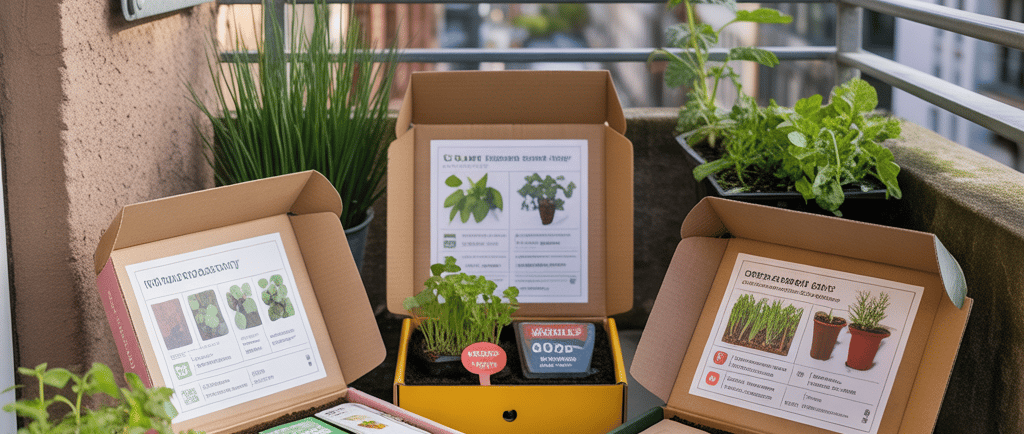
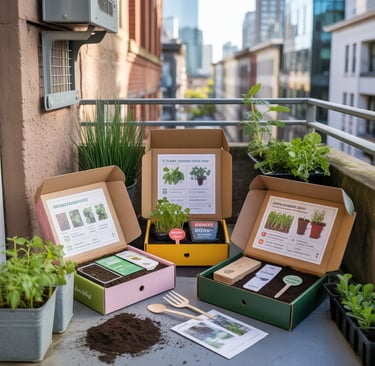
Understanding exactly what arrives in a subscription box — what a good box includes, what quantities to expect, what quality standards to hold the contents to — helps you evaluate options before subscribing and assess value once you're receiving deliveries. Here's what the inside of a quality urban gardening subscription box actually looks like.
Seed packets are the core of most urban gardening subscription boxes, and the best ones treat them with the seriousness they deserve. Expect five to eight seed packets per delivery in a well-curated mid-to-premium tier box. Each packet should include the full variety name — not just the species, but the specific cultivar — along with days to germination, days to maturity, planting depth, spacing, and ideally specific notes for container or indoor growing. Seed quantities per packet vary by species — tiny seeds like lettuce may include hundreds of seeds, while larger seeds like beans might include twenty to thirty. Look for packets that include enough seeds for multiple sowings — succession planting is a key strategy for continuous harvest, and packets that provide only enough seeds for a single sowing are limiting your growing options unnecessarily.
Growing supplies in subscription boxes range from genuinely useful to obvious filler, and learning to distinguish between them helps you evaluate box value accurately. Genuinely useful supplies include high-quality soil amendments like worm castings or perlite in useful quantities, well-designed small tools that are actually durable enough to use repeatedly, quality grow bags or air pots in sizes appropriate for the included seeds, plant markers with enough space to write meaningful variety information, and moisture meters or other practical monitoring tools. Filler supplies are typically single-use items, low-quality tools that won't last a season, soil in quantities too small to be meaningfully useful, and decorative items that serve no growing function. A box heavy with filler supplies is compensating for something — usually inadequate seed quality or variety — and should be viewed skeptically.
Educational materials in the best boxes have evolved significantly and are now a genuine differentiator between good and mediocre subscriptions. Individual growing cards for each variety — sized to fit in a recipe card box or small binder, with full growing instructions on one side and harvest and use information on the other — are a format I find particularly useful. They're referenceable throughout the growing season and create a growing library over time. Booklets covering specific topics relevant to urban growing — companion planting, succession planting, dealing with low light, container soil management — add depth that transcends any individual delivery. QR codes linking to video content, online growing calendars, and community forums represent the digital layer that the best subscriptions have developed into a genuine resource.
Seasonal variation in box contents is one of the most thoughtful features of the best subscription services. A January delivery to a northern hemisphere subscriber should look fundamentally different from a June delivery — winter appropriate for indoor growing of cool-season crops and microgreens, spring appropriate for starting warm-season transplants, summer for succession planting and harvesting guidance, autumn for transitioning to cool-season crops and indoor overwintering. Boxes that send the same content year-round without seasonal adjustment are ignoring a fundamental reality of growing and delivering reduced value as a result. When evaluating a subscription, ask directly how their content varies by season and by the subscriber's climate zone.
How to Get Maximum Value from Your Subscription Box
A subscription box is only as valuable as what you actually do with it — and I've seen people subscribe enthusiastically, receive boxes regularly, and somehow end up with a growing collection of unopened seed packets and unused supplies without ever really getting their garden going. Getting genuine, ongoing value from a subscription requires some simple but consistent practices that transform a monthly delivery from an exciting arrival into a meaningful contribution to your growing life.
Seed storage is the first thing to get right because improperly stored seeds lose viability quickly, and a collection of non-viable seeds is a collection of wasted money and missed growing opportunities. Seeds want to be stored cool, dry, and dark. A small airtight container in the refrigerator — a glass jar, a metal tin, a dedicated seed storage box — provides near-ideal conditions. Label everything clearly with the variety name and the year received. Most vegetable seeds maintain good germination rates for two to four years under proper storage conditions, with some — onions and parsnips notoriously — declining much faster. Doing a simple germination test on seeds you're uncertain about — placing ten seeds between moist paper towels in a warm spot and counting how many sprout in the expected germination window — saves you from planting dead seeds and wondering why nothing came up.
Growing calendar planning around your subscription delivery schedule turns passive receiving into active gardening management. Most good subscriptions send seeds appropriate for the upcoming season — which means they arrive roughly four to eight weeks before optimal planting time. Use that window deliberately: when a new box arrives, spend twenty minutes updating your growing calendar with the optimal start dates for each variety included. What needs to be started indoors under lights immediately? What should be direct-sown in four weeks? What's going in the balcony container in six weeks? This planning step, done consistently when each box arrives, means seeds actually get planted at the right time rather than sitting in storage past their optimal window.
Online communities associated with subscription services are underused resources that provide substantial ongoing value. Most serious subscription services maintain subscriber communities — forums, Facebook groups, Discord servers, or dedicated community platforms — where subscribers share growing progress, ask questions, and troubleshoot problems. These communities are populated by people who have received the same seeds as you and are growing them in similar small-space urban contexts — the experiential knowledge in these communities about what specific varieties do in container growing, indoor growing, and small-space situations is more practically useful than generic gardening advice. Engaging with these communities, even just lurking and reading, meaningfully improves your growing outcomes.
Knowing when to supplement your subscription with additional purchases is part of using subscriptions intelligently rather than treating them as complete solutions. A seed subscription provides excellent variety access but won't cover every seed you want to grow — buy specific varieties you know you need from reliable seed companies without waiting for them to appear in your subscription. A starter box provides initial supplies but you'll quickly need more soil, more pots, better tools — build your growing infrastructure deliberately alongside your subscription, investing in quality versions of the tools and supplies you use most frequently. Your subscription is the discovery and inspiration engine; your own deliberate purchasing builds the underlying growing infrastructure.
Urban Gardening Subscription Boxes as Gifts
Gardening subscription boxes have become one of the most popular gift categories in the home and garden space, and it's easy to understand why — they're experiential rather than material, they provide ongoing value rather than a single moment of use, and they connect the recipient to a growing community and practice rather than just delivering an object. When chosen thoughtfully and matched carefully to the recipient, a gardening subscription box gift is genuinely extraordinary. When chosen carelessly, it's a monthly source of mild guilt about not planting anything.
The matching question is the most important one to get right. A subscription designed for outdoor raised bed growing is a poor gift for an apartment dweller with a single north-facing window. A seed-focused subscription assumes the recipient already has growing supplies and knowledge — it's not an appropriate gift for someone who has never grown anything. A beginner all-in-one starter box assumes nothing and provides everything needed to begin — it's the right gift for the curious non-gardener or very early beginner. An herb-focused specialty subscription is perfect for a food-focused friend who cooks constantly but has never thought about growing their own herbs. A rare seed subscription for an experienced gardener who already has an established practice says "I understand your hobby at a meaningful level" in a way that a generic beginner box wouldn't. Matching the gift to the actual situation of the recipient is the difference between a gift that's used enthusiastically and one that isn't used at all.
Digital gift subscriptions have become the standard format for gifting in this category and they're genuinely the easiest option to execute. Most major subscription services offer gift subscription options that let you purchase a specified duration — typically three, six, or twelve months — with a digital gift code that the recipient redeems and uses to set up their own subscription with their own preferences and delivery address. This format solves the customization problem elegantly — rather than guessing at the recipient's preferences and delivery details, you provide the gift and let them configure it to their actual situation. Three months is my recommended starting duration for a gift subscription — long enough for the recipient to genuinely experience the service and get growing, but not so long that it becomes an unwanted ongoing commitment if it turns out not to be the right fit.
Pairing a subscription box gift with complementary items elevates the gift from good to exceptional. A starter subscription box paired with a beautiful ceramic planter and a simple garden journal creates a complete package that covers seeds, supplies, containment, and documentation — everything needed to begin and track a growing practice. A seed subscription for an experienced grower paired with a set of high-quality seed storage containers shows you understand both their hobby and the practical organizational challenge that comes with it. A microgreen subscription paired with a set of attractive serving trays designed for displaying microgreens connects the growing practice to the culinary use in a thoughtful way. These pairings don't need to be expensive to be thoughtful — the consideration behind them is what makes them special.
Presentation matters more for gardening gifts than for many other categories because gardening is an aesthetic practice as much as a practical one. If you're giving a physical starter box, consider packaging it in a beautiful basket or wooden crate with complementary items arranged intentionally rather than just presenting the box as-is. If you're giving a digital gift subscription, create a physical presentation — a card with a hand-written note explaining what the subscription involves and why you chose it, maybe alongside a single beautiful seed packet or a small packet of worm castings — that gives the gift a physical presence even though the subscription itself is digital. The thought and care that goes into the presentation communicates the thought and care that went into choosing the gift, and for a gift that's asking someone to invest time and attention in a new practice, that communication matters.
Conclusion
Urban gardening subscription boxes occupy a genuinely useful position in the ecosystem of tools and resources available to city growers — they solve a real problem (curation and access for people without easy access to good garden centers or extensive growing knowledge), they do it in a format that delivers ongoing value rather than a one-time fix, and the best of them connect subscribers to communities and growing practices that have lasting positive effects on their relationship with food and growing. That's a lot of value from a monthly delivery.
To help you find the right fit, I've put together two tables below covering some of the best options currently available — one for US-based growers and one for those of us in Canada, since availability, shipping, and even what grows well can differ quite a bit between the two markets.
Top Urban Gardening Subscription Boxes — USA
Box Name Focus Price Range Best For Rooted Indoor & houseplants $30–$50/mo. Beginners Sow True Seed Club Heirloom seeds $15–$25/mo. Seed savers Botanical Interests Box Vegetables & herbs $20–$35/mo. Container growers Urban Leaf Kitchen herb growing $25–$40/mo. Indoor/windowsill Gardenary Box Kitchen garden focus $35–$55/mo. Food gardeners
Top Urban Gardening Subscription Boxes — Canada
Box Name Focus Price Range (CAD) Best For Barn Owl Box Seasonal seeds & tools $30–$45/mo. Balcony growers Seedy Saturday Box Native & heirloom seeds $20–$35/mo. Eco-conscious growers The Grower's Box Vegetables & microgreens $25–$40/mo. Small-space growing Cultivate Box Herbs & edibles $30–$50/mo. Indoor gardeners Grow Wild Wildflower & pollinator focus $20–$30/mo. Balcony & patio
My recommendation, whether you're buying for yourself or as a gift: start with a three-month trial of a box that's specifically designed for your actual growing context — indoor, balcony, container, whatever your situation is — rather than a general gardening box. Three months is enough to receive three deliveries, plant most of what arrives, see some results, and develop a clear sense of whether the curation and content match your needs well enough to continue. If they do, keep going. If they don't, the subscription box market has enough good options that finding one that fits better is entirely achievable.
And when your first seeds from your first subscription box germinate — when those tiny seedlings push up through the soil and unfurl their first leaves under your grow light or on your windowsill — take a picture and share it. Share it in your subscription's community forum. Share it in the comments below. That moment of first growth, from seeds that arrived in a box curated by people who love growing as much as you're starting to — it's genuinely worth celebrating, and this community of urban growers always wants to see it. 🌱