Tropical Plants Indoors: Grow Lush Houseplants at Home
Want to grow tropical plants indoor but don't know where to start? This guide covers the best tropical house plants, care tips, common mistakes, and how to keep them thriving year-round — even in low-light spaces.
🪴 PLANT PARENT GUIDES: CARE, TIPS & TROUBLESHOOTING
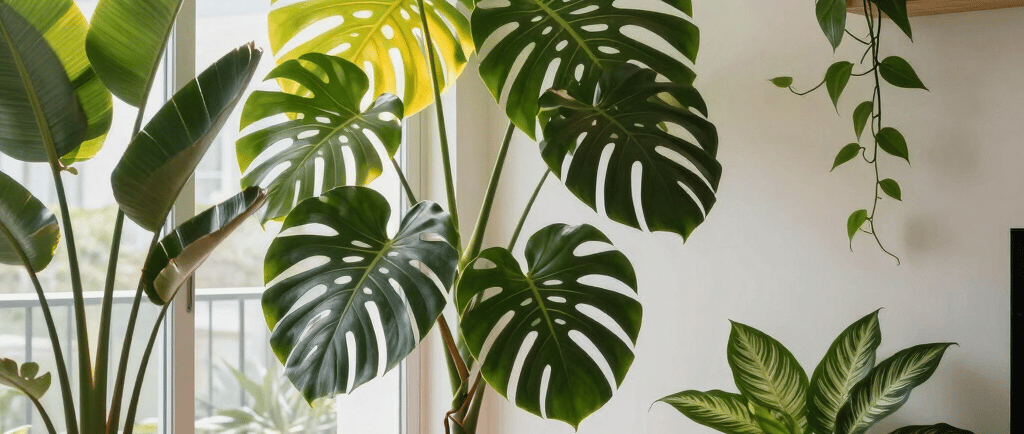
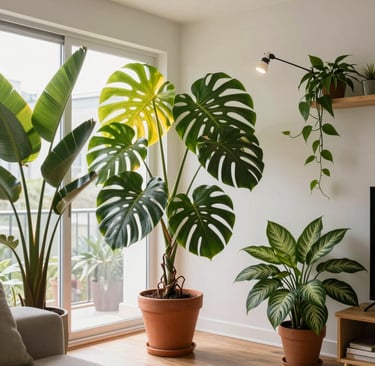
Did you know that houseplant sales jumped by over 50% in recent years, and tropical plants were leading the charge? I'm not surprised — the first time I dragged a giant Bird of Paradise through my apartment door, my whole living room looked like a resort lobby. Okay, that might be a stretch. But it felt that way.
Why Tropical House Plants Are Taking Over Living Rooms (And Why You Need One)
Let me tell you something I didn't expect: tropical plants made me a calmer person. I know, I know — that sounds like something you'd read on a yoga retreat pamphlet. But after I started filling my apartment with indoor tropical plants, I genuinely started looking forward to watering days. Studies actually back this up. NASA did research showing certain houseplants can remove toxins from the air, and a bunch of those happen to be tropical species.
But beyond the science, there's just something about a big leafy Monstera or a trailing Pothos that makes a space feel alive. They bring color, texture, and that jungle vibe that no amount of throw pillows can replicate. And the home décor world has caught on — everywhere you look, interiors magazines and Instagram feeds are dripping with tropical greenery. It's not just a trend, though. It's a lifestyle shift toward bringing the outdoors in.
Here's the thing most people get wrong: they assume tropical plants are hard. I mean, they grow in rainforests, right? Seems intense. But actually, indoor tropical plants evolved under forest canopies where direct sunlight barely reaches. That's why they're so well-suited to living inside our homes! They don't need blazing sun — they actually prefer the kind of bright-but-diffused light that comes through a sheer curtain.
I remember telling my neighbor that Monsteras don't need direct sun and she looked at me like I'd lost my mind. "But it's a jungle plant!" she said. Exactly — and in the jungle, giant trees block the sun above. These plants are built for shade-ish conditions. Once I figured that out, my whole approach changed and my plants actually started thriving instead of just surviving.
Another huge perk? Tropical house plants tend to be fast growers when they're happy. There's nothing more satisfying than watching a new leaf unfurl on your Monstera. It's like getting a little reward for good plant parenting. And once you've got a few going, propagating them is free plants forever. I've given away probably a hundred pothos cuttings to friends and coworkers. It becomes this whole thing.
So if you've been on the fence about getting into tropical houseplants, consider this your sign. They're forgiving (mostly), beautiful, and genuinely good for your mental health. Plus they make great conversation starters at dinner parties. Not that I've ever used my Fiddle Leaf Fig as a topic of conversation for forty-five minutes straight. Okay fine. I have.
Tropical plants indoors are having a serious moment right now. And honestly? They deserve it. For years I thought they were too fussy, too needy, too... tropical for a regular house. I killed a Monstera and swore off anything with "exotic" in the description. But then a friend handed me a pothos cutting and I haven't looked back since. That was my gateway drug, if we're being real about it.
This guide is everything I wish I had when I started. We're talking about which tropical house plants are actually beginner-friendly, how to keep them alive without a greenhouse, and how to style them so your home looks like you actually know what you're doing. Whether you've got a sunny bay window or a gloomy north-facing apartment (been there), there's a tropical plant for you.
The Best Tropical Plants for Indoor Spaces (Beginner to Pro)
Alright, let's get into the actual plants. I've grown a lot of these — some successfully, some catastrophically — so I'm going to give you my honest take, not just a list I pulled from thin air. These are the tropical house plants I'd actually recommend based on real experience.
Starting with the absolute easiest: Pothos (Epipremnum aureum). This thing is practically unkillable. I've left mine for three weeks without water and it was fine. A little dramatic, drooping around like it was auditioning for a soap opera — but fine. It thrives in low to medium light, trails beautifully off shelves, and comes in gorgeous varieties like Golden, Marble Queen, and Neon. If you're new to tropical plants indoors, start here. Full stop.
Next up is Monstera deliciosa, the unofficial mascot of the plant world. That iconic split-leaf look is everywhere for a reason — it's stunning and surprisingly easy. Give it bright indirect light, water it when the top inch of soil dries out, and it'll reward you with massive new leaves every few weeks. I was shocked by how fast mine grew once I figured out its rhythm.
ZZ Plants (Zamioculcas zamiifolia) are another must-mention. They store water in their rhizomes, which means they're incredibly drought-tolerant. Perfect for travelers or people who, uh, occasionally forget about their plants. Low light? No problem. Neglect? They practically prefer it. I have one in a bathroom with no window and it's been going strong for two years.
For something a little showier, try a Bird of Paradise (Strelitzia reginae). It needs more light than the others — ideally a south or west-facing window — but the payoff is those enormous, dramatic leaves that make any room look like a boutique hotel lobby. I mentioned dragging mine through my door earlier. Worth every awkward moment in the elevator.
If you've got pets, this is crucial: check toxicity before you buy. Monsteras and Pothos are toxic to cats and dogs. Pet-safe options include Calatheas (beautiful patterned leaves, loves humidity), Spider Plants (great air purifiers, super easy), and certain Peperomias. I found this out the hard way when my cat nibbled a Pothos leaf. She was fine — I panicked — but I learned to always check first.
For the more adventurous plant parent, Alocasias (Elephant Ears) and Anthuriums are gorgeous and dramatic but need more attention: higher humidity, consistent watering, and bright indirect light. I've killed more Alocasias than I care to admit. But when they thrive, they are absolutely spectacular — totally worth the effort once you've got your basics down.
How to Care for Tropical Plants Indoors: Light, Water, and Humidity Basics
Okay, I'm going to be straight with you: most plant deaths come down to three things. Light, water, and humidity. Get these three right and you're going to be just fine. Get them wrong and you'll be doing what I did — Googling "why are my plant's leaves turning yellow" at midnight with increasing desperation.
Light is probably the most misunderstood. "Bright indirect light" — you see it on every plant tag but what does it actually mean? It means your plant wants to be in a well-lit room but not in direct sunbeams. A few feet back from a south-facing window is perfect. Or right next to a north-facing window. Sheer curtains are your best friend if you've got intense afternoon sun. I ruined a beautiful Calathea by putting it in direct sun. The leaves curled up like paper. Lesson learned, expensively.
Watering is where people go wrong most often — and it's almost always too much, not too little. Tropical plants don't want to sit in soggy soil. Most of them want to partially dry out between waterings. My rule: stick your finger an inch into the soil. If it's dry, water thoroughly until it drains out the bottom. If it's still moist, check back in a few days. This simple test has saved more plants in my apartment than I can count.
Humidity is the wild card that nobody talks about enough. Tropical plants evolved in humid environments — rainforests, river banks, jungle floors. The average home is around 30–50% humidity, which is often too dry, especially in winter. I got a cheap hygrometer off Amazon and was genuinely shocked to find my apartment dropped to 20% humidity during winter. No wonder my Calathea was crispy!
Solutions? Group your plants together — they naturally create a mini humid microclimate as they transpire. Put a tray of pebbles with water under your pots (make sure the pot isn't sitting in the water though). Or just get a small humidifier. I have one running near my plant corner and my Anthuriums went from sad and brown-tipped to lush and blooming. It was a game-changer, honestly.
Seasonally, things shift. In summer, most tropical house plants are actively growing and will need more water and maybe some fertilizer. In winter they slow down — sometimes almost completely — and you should cut back on watering significantly. I overwatered all winter my first year and wondered why my plants looked miserable. They were basically dormant and I was drowning them. Adjust your care routine with the seasons and your plants will thank you for it.
Soil, Potting, and Fertilizing Your Indoor Tropical Plants
I used to think soil was just... dirt. You buy a bag, you fill a pot, done. Oh, past me was so naive. Soil is actually a huge deal for tropical indoor plants, and using the wrong mix is one of the most common reasons plants struggle. Most tropical houseplants need well-draining soil that holds some moisture but doesn't stay waterlogged. Regular potting mix straight out of the bag is often too dense.
My go-to mix for most tropical plants is about 60% good quality potting mix, 20% perlite (those little white volcanic glass bits that improve drainage), and 20% orchid bark or coco coir. It sounds fussy but once you've made one batch you'll do it on autopilot. For things like Monsteras and Pothos, this mix is basically foolproof. For succulents or cacti it'd be too rich — but we're talking tropicals here.
Repotting: do it when your plant is clearly root-bound — roots coming out the drainage holes, or the plant drying out way faster than it used to are both signs. Go up one pot size at a time, not three. I once moved a Monstera into a pot that was way too big, and it basically stopped growing for six months while the roots tried to fill all that extra soil. The oversized pot also held too much moisture, and I nearly got root rot. Lesson: bigger isn't always better.
Best time to repot is spring, when the plant is coming out of its winter slow-down and ready to grow. I always water the plant a day before repotting so it's hydrated and the roots slide out more easily. Work gently — you don't need to remove all the old soil, just loosen the roots a bit and pot into fresh mix.
Now, fertilizer. During the growing season (spring and summer), tropical plants benefit from regular feeding. I use a balanced liquid fertilizer diluted to half strength every two weeks. You can go with a slow-release granular option if you'd rather not think about it every two weeks — that works too. Just don't fertilize in fall and winter when the plant isn't actively growing. Unused fertilizer builds up as salts and can damage roots. I did this once. The tips of all my leaves went brown. Not a fun look.
One more thing: flush your soil every few months by watering heavily until water runs freely out the bottom. This washes out any mineral or salt buildup from tap water and fertilizer. It's a small step that makes a surprisingly big difference, especially if you're in an area with hard water like I am. My plants visibly perked up after I started doing this regularly.
Common Problems With Tropical Indoor Plants (And How to Fix Them)
Okay, real talk: even experienced plant people run into problems. I've had infestations, root rot, mystery yellowing, and one time my Fiddle Leaf Fig dropped every single leaf over the course of two weeks and I genuinely couldn't figure out why. (Turned out I'd moved it six inches closer to an air vent. Six inches.) Tropical plants can be sensitive, but most problems have clear signs and solutions once you know what to look for.
Yellow leaves are the number one panic-inducer. But they can mean a lot of different things. Yellow leaves all over, with wet soil? Overwatering. Yellow leaves on the lower part of the plant while everything else looks fine? Normal — older leaves die off naturally. Yellow leaves with dry soil and dusty, pale color? Could be underwatering or low light. Yellow with a sticky residue? Possibly pests. Context is everything. Take a breath, look at the whole plant, and check soil moisture first.
Brown crispy tips usually mean low humidity or inconsistent watering. Brown mushy spots are often rot or a fungal issue. Brown edges with yellow surrounding them can indicate a more serious problem like root rot or fertilizer burn. If you suspect root rot — that's when roots sit in too-wet soil for too long and start to decay — unpot the plant, trim off any black or mushy roots, let them air dry for an hour, and repot in fresh dry soil. I've saved several plants this way. It's scary but doable.
Pests are the bane of every plant parent's existence. Fungus gnats are tiny flies that live in moist soil — let your soil dry out more between waterings and they disappear. Spider mites look like tiny dots on leaves and leave fine webbing — wipe leaves with a damp cloth and spray with neem oil. Mealybugs look like little cotton tufts at leaf joints — use a cotton swab dipped in rubbing alcohol to remove them, then treat with insecticidal soap.
Pro tip: when you bring a new plant home, quarantine it for a week or two before putting it near your other plants. I learned this the hard way when one infested plant from a nursery spread spider mites to six of my others. It was a nightmare. Two weeks of isolation and inspection would have saved me weeks of treatment. Don't skip this step.
Drooping is usually thirst — water the plant and it'll perk back up within hours, often. But drooping with yellowing and soggy soil is the opposite problem: too much water. It's the exact same symptom with two opposite causes, which is confusing until you learn to check the soil first. Always check soil moisture before you do anything else. That one habit will solve like 80% of your plant problems, I promise.
Styling Your Home With Tropical House Plants: Design Tips That Actually Work
This is where it gets fun. Because honestly, growing tropical plants indoors is great — but styling them so your space actually looks intentional and beautiful is a whole other skill. I've had plants scattered randomly around my apartment that made it look like a plant hoarder's storage unit. I've also had the same plants, arranged thoughtfully, make my living room look like a page out of an interiors magazine. The plants were the same. The placement was the difference.
First principle: vary your heights. Mix tall floor plants (Bird of Paradise, Fiddle Leaf Fig, large Monstera) with mid-level plants on shelves or plant stands, and low-to-the-ground or trailing plants (Pothos, String of Pearls). This creates layers and depth. A wall of plants that are all the same height looks flat. Varying levels makes it look like an actual indoor jungle.
Leaf shape and texture matter more than most people realize. A huge, dramatic split-leaf Monstera next to a fine, feathery Areca Palm creates visual contrast that's really pleasing to the eye. Mix large bold leaves with smaller, more delicate ones. Mix upright growers with trailers and draping vines. This is basically interior design using plants, and once you start thinking about it that way, it becomes genuinely addictive.
Grouping plants together isn't just aesthetically pleasing — it also creates a shared humidity microclimate that benefits them all. I've got a cluster of Calatheas, an Anthurium, and a small Fern grouped in my bedroom corner and they all look better than they ever did on their own. Plus grouped plants just look more dramatic and intentional than lonely single plants scattered around a room.
For pots, I've learned that simple is usually better. Terracotta is great for plants that like to dry out between waterings (and it's cheap). Ceramic and glazed pots hold moisture longer, which works well for humidity-lovers. In terms of color, neutral tones — white, cream, terracotta, matte black — let the plant be the star. I went through a phase of buying wild patterned pots and they competed with the plants rather than complementing them. Less is more.
Best rooms for tropical house plants? Bathrooms are surprisingly great — naturally humid from showers, often with softer indirect light. Kitchens too, especially near windows. Living rooms are the most common choice and work well if you've got decent light. Bedrooms are a personal favorite — plants in the bedroom feel soothing and the slight oxygen boost at night from photosynthesis is a bonus. Just make sure your plants aren't right against a cold window in winter, or in the direct blast of an air vent. Those two spots kill more plants than neglect does.
Conclusion
So there you have it — everything I've learned about growing tropical plants indoors, condensed into one guide I really wish I'd had years ago. The short version? Tropical house plants are absolutely doable, even if you've killed plants before, even if your apartment doesn't get a ton of light, even if you forget to water for a week sometimes. There's a tropical plant out there for every space and every level of commitment.
Start with one easy plant — a Pothos or ZZ Plant — and build your confidence before moving on to the more demanding varieties. Your care routine should shift with the seasons. And please, always check toxicity before bringing a new plant into a home with pets or small kids. It's a quick Google search that could save you a lot of stress.
Most importantly: have fun with it. Plants aren't meant to be stressful. They're meant to bring a little joy and life into your home. Now I'd love to hear from you — which tropical house plants are you growing, and what's been your biggest challenge? Drop it in the comments below. We're all just figuring this out together.