Small Space Gardening Ideas for Apartments & Balconies
Discover the best small space gardening ideas, tips, and techniques for apartments, balconies, and tiny homes. Grow more food and beauty in less space — starting today.
BALCONY TINY PLOTS: TURN YOUR OUTDOOR SPACE INTO A MINI FARM
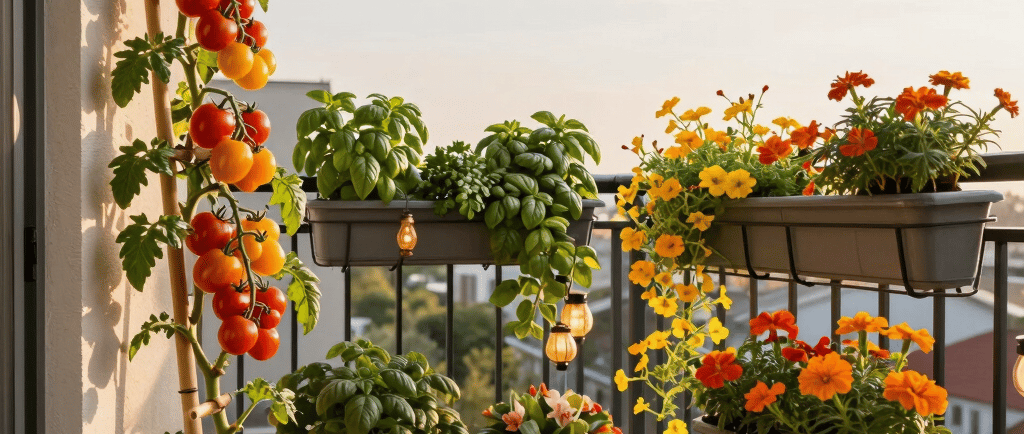
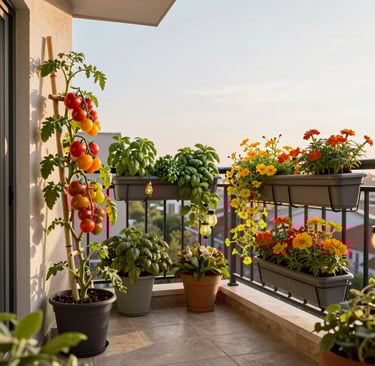
A well-managed container garden can produce up to four times more food per square foot than a traditional in-ground garden. Four times. I remember reading that for the first time and genuinely not believing it — mostly because I was standing on my tiny apartment balcony at the time, staring at a concrete rectangle roughly the size of a dining table, trying to convince myself that gardening here was even worth attempting.
That was five years ago. Today that same balcony produces cherry tomatoes, peppers, lettuce, four varieties of herbs, and enough marigolds to make the whole space look like something from a gardening magazine — at least on a good day. The point isn't that I'm especially talented. The point is that small space gardening is fundamentally different from how most of us imagine gardening to be, and once you understand how it actually works, the apparent limitation of a small space stops feeling like a limitation at all.
Small space gardening is having a cultural moment right now and for genuinely good reasons. More people are living in cities, in apartments, in homes without yards. Food costs are rising. Mental health conversations are everywhere, and gardening keeps showing up in the research as one of the most effective, accessible ways to reduce stress and improve mood. The combination of these forces has pushed millions of people toward the question: can I grow something, even here, even in this tiny space?
The answer — almost always — is yes. And this guide is going to show you exactly how. We're covering everything from assessing your space and choosing the right method, to the best plants, the smartest budgeting strategies, the mistakes that trip most people up, and how to make your small space garden genuinely beautiful as well as productive. Let's grow. 🌱
Why Small Space Gardening Is More Productive Than You Think
The biggest myth in gardening is that more space equals more food. It's intuitive — more ground, more plants, more harvest. But this logic falls apart the moment you look at how in-ground gardens actually work versus how well-managed container gardens perform.
Traditional in-ground gardens have to contend with all kinds of inefficiencies. Soil quality varies. Weeds compete constantly for nutrients and water. Drainage is unpredictable. Root systems spread wide to find what they need. Spacing requirements are generous because plants are competing for resources in a shared environment. The result is a lot of ground being used to produce a moderate amount of food with significant effort going into maintenance rather than production.
Container gardens eliminate most of these problems in one stroke. The soil is exactly what you choose — optimised, well-draining, nutrient-rich. There are no weeds competing for space. Water goes directly where it's needed. Nutrients are dialled in through deliberate fertilising. Plants grow in exactly the right amount of space because you've researched what they actually need rather than guessing. The productivity per square foot in a well-managed container setup is genuinely remarkable — a single five-gallon container of cherry tomatoes, properly cared for, can produce literally hundreds of tomatoes over a growing season from a footprint the size of a dinner plate.
Beyond productivity, there are real mental health benefits to small space gardening that are worth taking seriously. Research consistently shows that interacting with plants — even briefly, even in an urban environment — reduces cortisol levels, improves mood, and restores depleted mental energy in ways that screen-based activities cannot. There's something about tending a living thing, watching it respond to care, harvesting something you grew with your own hands and eating it that night — it connects you to a cycle that city living almost completely severs. That reconnection matters.
Here's the thing about constraints that most people don't realise until they've been gardening in a small space for a season or two: limitations make you better. When you have unlimited space, it's easy to be careless. You plant too much, you neglect things, you lose track. When your growing space is a single balcony or a set of windowsill containers, you pay attention. You know every plant. You catch problems early. You make deliberate, informed choices about what to grow and why. The constraint produces focus, and focus produces thriving plants.
Planning Your Small Space Garden — Start Here Before You Buy Anything
The single most common mistake in small space gardening — and I made it repeatedly before I figured this out — is going to the garden centre before you've done any planning at all. You walk in, you get excited, you buy things based on what looks beautiful or what you want to eat, you bring them home, and then you discover that your balcony faces north and your beautiful tomato plant is doomed. Planning first saves money, saves plants, and saves a lot of frustration.
Start by assessing your actual available space honestly. Not the total square footage of your balcony or patio, but the space you can realistically use for gardening after accounting for furniture, walking paths, and any areas that are structurally off-limits. Sketch it out roughly on paper — note where the door is, where you need to walk, where you'd sit if you use the space for anything else. The gardening space is what's left. On most apartment balconies, this is smaller than people initially think, which is exactly why vertical gardening becomes so important.
Next, understand your light conditions — and be brutally honest about them. This is the step most beginners rush through or skip entirely, and it causes more plant casualties than any other mistake. Spend a couple of days noting which direction your space faces and how many hours of direct sunlight it actually receives at different times of year. South-facing spaces get the most light and support the widest range of plants. East-facing spaces get gentle morning light — good for herbs and leafy greens, trickier for tomatoes and peppers. West-facing spaces get strong afternoon light, warm and productive. North-facing spaces get the least light and require careful plant selection — but they absolutely can support a garden, just a different one.
Then make a deliberate decision about what you want from your garden before you start buying plants. Food or flowers or both? Low maintenance or high engagement? A garden you visit once a week to harvest or one you spend time in every morning? There are no wrong answers, but knowing your answer before you start stops you from building a garden that doesn't actually match your life. The most beautiful small space garden is one you can maintain consistently — not one you set up enthusiastically in April and abandon by June because it requires more than you bargained for.
Finally, map your space before spending money. A rough sketch with dimensions, noting where the best light falls, where weight needs to be considered if you're on a balcony, where vertical space is available, and where you'd logically place different sized containers. Five minutes of planning saves fifty dollars of wrong purchases.
The Best Small Space Gardening Methods
There's no single right way to garden in a small space — there are several good methods and the best one for you depends on your specific conditions, goals, and how much time and money you want to invest. Here's an honest breakdown of the main options.
Container gardening is the foundation of almost all small space growing and the method most people start with for good reason. Containers are flexible — you can move them as light conditions change, you can swap out plants between seasons, you can start small and expand gradually. The key principles are simple: match container size to plant root requirements, always use pots with drainage holes, use purpose-made potting mix rather than garden soil, and water based on soil moisture rather than a fixed schedule. Almost any plant that can grow in the ground can grow in a container if the container is the right size — which is the single most important variable in container gardening success.
Vertical gardening is the method that transforms small space gardening from modest to genuinely impressive — I'll cover it in detail in its own section, but the short version is this: going vertical multiplies your growing space without adding any floor space. A wall covered with a modular pocket planter system, a trellis supporting climbing vegetables, railing planters along the full length of a balcony railing — these turn otherwise unused vertical surfaces into productive growing areas. If you only adopt one method beyond basic containers, make it vertical.
Square foot gardening is a soil-based system developed specifically for maximising production in small spaces. The concept is simple: divide your growing area into one-foot squares and plant each square with the appropriate number of plants for that variety — one tomato plant per square, nine bean plants per square, sixteen carrot seeds per square, and so on. The intensive spacing means every square inch of soil is productive. It works beautifully in raised beds or large deep containers and is one of the most efficient food production systems available for small spaces.
Window box gardening is the most accessible entry point for genuinely tiny spaces — a single windowsill or a section of railing. Window boxes are ideal for herbs, cut-and-come-again salad greens, radishes, green onions, and trailing flowers. They're shallow, which limits what you can grow, but within those limits they're remarkably productive. A single window box of cut-and-come-again lettuce mix kept regularly cut will supply salad greens for weeks on end.
Hydroponic and soil-free methods have become genuinely viable for small space gardeners over the past few years as countertop systems have improved dramatically and come down in price. A good countertop hydroponic system — AeroGarden is the most well-known — grows herbs, lettuce, and cherry tomatoes in water with nutrients and built-in grow lights, faster than soil and with no mess, no drainage issues, and no soil mixing. They're not cheap, but for someone with a very small space and limited access to natural light, they're one of the most productive square-foot-for-square-foot options available.
Best Plants for Small Space Gardens
Choosing the right plants is where small space gardening either succeeds or fails, and the rule is simple: grow plants that are compact, high-yield relative to their space requirements, and matched to your actual conditions. Here's what that looks like in practice.
Cherry tomatoes are the undisputed champions of small space food growing. A single compact variety — Tumbling Tom, Sweet 100, Tiny Tim, Patio Princess — in a five-gallon container in full sun will produce hundreds of tomatoes over a season from a single pot. They're prolific, they're delicious, they're deeply satisfying to grow, and they deliver the most impressive yield-to-space ratio of any vegetable I know of. If you have sun and you want to grow food, start here.
Lettuce and salad greens are perfectly designed for small spaces — shallow roots, fast growth, cut-and-come-again harvesting that gives you weeks of production from a single sowing. Arugula, mesclun mixes, spinach, and loose-leaf lettuce all work brilliantly in window boxes, railing planters, and shallow containers. Grow them in spring and autumn when temperatures are cool — they bolt in summer heat but the shoulder seasons give you continuous harvests.
Radishes are the secret weapon of small space gardening — they mature in as little as 25 days, grow in almost any container, take up minimal space, and can be succession planted every two weeks for a continuous harvest all season. They're ideal for impatient gardeners and for filling gaps between larger containers.
Peppers — both sweet and hot varieties — love the warm microclimate that balconies and patios generate from reflected heat off surrounding walls. They're compact, they're prolific over a long season, and honestly the plants look beautiful while they're producing — colourful fruits in red, yellow, orange, and deep green decorating the plant from midsummer into autumn.
Herbs are the most practical plants for any small space garden, period. Fresh herbs are expensive at the supermarket and remarkably easy to grow in small containers. Basil, chives, parsley, mint, rosemary, thyme, and oregano — all thrive in pots, all produce far more than most households can use, and all taste dramatically better fresh-grown than anything dried or from a grocery store bunch. Keep mint in its own container — it will aggressively colonise everything else if given shared soil.
Marigolds, petunias, and lavender earn their space in any small garden. Marigolds deter aphids and other common pests and look gorgeous alongside vegetables. Petunias bloom prolifically through summer with minimal care. Lavender handles heat and drought beautifully and attracts the pollinators that make your vegetable plants more productive. The combination of edibles and ornamentals in a small space is almost always more beautiful and more productive than either alone.
What to avoid: anything with an extensive root system or very large footprint relative to its yield. Corn, large squash varieties, watermelons, and artichokes are all essentially impossible to grow productively in small containers. The plants get large, the yields are poor, and the space would be dramatically better used for something more compact and prolific.
Vertical Gardening — The Small Space Gardener's Secret Weapon
The transformation of my small space garden from "a few pots" to something genuinely impressive happened almost entirely when I started thinking vertically. Floor space on a balcony or patio is fixed and limited. Vertical space — walls, railings, fences, ceilings — is largely untapped and often substantial. Learning to use it is the single highest-leverage change a small space gardener can make.
Trellises are the most straightforward vertical tool and the one I'd recommend starting with. A simple bamboo trellis or metal cage gives climbing plants — cucumbers, pole beans, compact squash varieties, even cherry tomatoes — somewhere to grow upward rather than outward. A six-foot trellis takes up roughly two square feet of floor space and converts that into twelve or more square feet of growing surface. The return on floor space invested is extraordinary. Secure your trellis to a wall, railing, or fence before planting — once a cucumber plant has gone vertical, repositioning the support is an exercise in frustration.
Railing planters are the most underutilised tool in small space gardening. Hook-over railing planters attach directly to your balcony or patio railing and take up zero floor space whatsoever. Along a twelve-foot railing, you gain the equivalent of a substantial window box garden that otherwise wouldn't exist. I grow herbs and trailing flowers along my full railing length — probably my most productive square footage relative to cost. Most hook-over railing planters require no drilling and no permanent modification, which makes them renter-friendly as well.
Wall-mounted planters work well for solid wall surfaces — particularly for herbs, lettuces, strawberries, and small flowering plants. Fabric pocket wall planters are a favourite because they're lightweight, flexible, and can hold a surprising number of plants in a small wall footprint. For renters, pressure-mounted systems and heavy-duty adhesive hooks can support lighter wall planters without drilling. I've had a fabric pocket planter on my interior balcony wall for three years — it grows chives, parsley, and mint and has never once required a screw.
Hanging baskets from ceiling hooks use the most underutilised real estate of all — the space above your head. Trailing plants look spectacular in hanging baskets and are completely out of the way of foot traffic and floor space. Spider plants, Boston ferns, trailing cherry tomatoes, strawberries, and sweet potato vine all make excellent hanging basket plants. If your balcony ceiling allows hooks — many do — this is an easy win for both beauty and productivity.
One important note about vertical gardening for renters specifically: almost all of these methods can be implemented without drilling. Freestanding trellis systems lean against walls. Hook-over railing planters clip on without modification. Pressure-mounted tension systems work for lightweight wall planters. Freestanding shelving units create vertical tiers without wall attachment. The no-drill toolkit for vertical gardening is extensive — don't let a rental situation stop you from going vertical.
Small Space Gardening on a Budget
One of the things I love most about small space gardening is that it genuinely does not have to be expensive. My current setup — which is productive, looks great, and grows food year-round — cost me less than $120 to build out over two years. Here's how to do it cheaply without sacrificing results.
Recycled containers are the starting point of budget small space gardening. Almost any container with drainage holes can grow plants. Large tin cans from tomatoes or coffee — drain holes added with a hammer and nail. Wooden wine crates lined with landscape fabric. Old colanders with their built-in drainage. Mason jars for herbs. Cracked ceramic bowls repurposed as succulent planters. Thrift stores are genuinely excellent sources of interesting cheap containers — mugs, bowls, baskets, and old enamelware that cost fifty cents and look beautiful with plants growing in them. The rule is simple: if it can hold soil and drain water, it can grow plants.
Seeds over seedlings is the most impactful budget decision you can make in gardening. A seed packet containing thirty to fifty seeds typically costs one to three dollars and produces far more plants than you'll ever have space for. Starting from seed requires a little more lead time and a small amount of indoor growing before outdoor planting, but the economics are compelling. Dollar stores frequently carry seed packets for a dollar or less. End-of-season sales at garden centres can get you quality seeds for almost nothing. Online seed communities and swap groups are vibrant and generous — I've received dozens of free seed packets through trades over the years.
Propagating plants for free is arguably the most powerful money-saving strategy in small space gardening. Many of the most common and useful plants propagate easily from cuttings placed in a glass of water. Mint, basil, rosemary, pothos, spider plants, and countless others develop roots within a week or two in water and can then be potted up. Ask friends, neighbours, or local plant communities for cuttings before buying anything — you'll be amazed how generously people share. I've built a significant portion of my current collection entirely through propagation and trading.
DIY potting mix can stretch your budget significantly if you're filling multiple containers. Basic commercial potting mix is fine but gets expensive at scale. Buying perlite, coconut coir, and compost separately and mixing your own blend costs a fraction of pre-made premium mixes. The basic ratio I use is roughly 60% potting mix or compost, 30% perlite for drainage, and 10% coconut coir for moisture retention — it works well for almost everything except succulents and cacti, which want more sand and less moisture retention.
Common Small Space Gardening Mistakes and How to Fix Them
Every small space gardener makes these mistakes — I made all of them. Knowing them in advance means you can skip the expensive, frustrating parts of the learning curve.
Overcrowding plants is the most common and most damaging mistake in small space gardening. It's counterintuitive — surely more plants in the same space means more harvest? In reality, crowded plants compete for light, water, nutrients, and air circulation. They grow slowly, produce poorly, and become far more susceptible to disease and pests. Crowded plants also stay perpetually damp because air can't circulate between them, which creates the conditions root rot and fungal disease need to thrive. Follow spacing guidelines — they exist for a reason — and resist the urge to fill every gap. Your plants will be larger, healthier, and more productive for the breathing room.
Wrong container size is a sneaky problem because the consequences are slow and subtle. A tomato plant in a two-gallon container will be stunted and unproductive regardless of how well you care for it — the root system simply doesn't have the space it needs to support fruit production. Most vegetables need at minimum three to five gallons of soil volume, and tomatoes do best in five gallons or more. When in doubt, size up. More soil volume means more nutrient and moisture reserves, more root space, and more resilient, productive plants.
Ignoring drainage leads to root rot — the number one killer of container plants. Every container needs drainage holes. No exceptions. Water that can't escape sits at the bottom of the pot and creates the waterlogged anaerobic conditions where root rot fungi thrive. If you have decorative pots without drainage holes, use them as cachepots — decorative outer covers over a plain nursery pot that does have drainage. The plant goes in the inner pot; the decorative outer pot simply conceals it.
Underestimating watering needs trips up most new small space gardeners, especially those with outdoor containers. Balcony and patio containers dry out significantly faster than in-ground plants or indoor pots — wind, direct sun, and the limited soil volume all accelerate moisture loss. In summer, outdoor containers may need daily watering. The finger test is the only reliable guide — stick your finger an inch into the soil, and water thoroughly when it's dry. Any fixed watering schedule will be wrong some of the time.
Buying plants that don't suit your conditions is the mistake I see most often and feel most strongly about preventing. A fiddle leaf fig in a north-facing apartment. Tomatoes on a shaded balcony. Rosemary in a constantly moist environment. These plants will struggle regardless of how much you love them or how carefully you try to care for them. Match the plant to your actual light conditions, humidity, and temperature — not to what you wish your conditions were. The right plant for your space will thrive almost effortlessly. The wrong one will slowly decline no matter what you do.
Small Space Gardening Through the Seasons
Small space gardening isn't a spring-to-summer activity — it's a year-round practice with different opportunities and priorities in each season. Understanding this seasonal rhythm is what separates gardeners who have thriving gardens all year from those who do a burst of planting in spring and then watch things wind down by July.
Spring is the big start — the season when the garden comes alive and the energy is highest. Use it well. Start seeds indoors six to eight weeks before your last frost date for tomatoes, peppers, and basil. Direct sow cool-season crops — lettuce, spinach, arugula, radishes, peas — as soon as the soil can be worked. Set up any new containers, trellises, or vertical systems before the planting rush begins. Spring is also the right time to refresh potting mix in existing containers — over a full season, soil loses structure and nutrients, and a top-dress of fresh compost does remarkable things for plant performance.
Summer is peak production — tomatoes loaded with fruit, peppers turning colour, herbs growing faster than you can harvest them. It's also the most demanding season for watering. Hot weather and full sun can dry out containers in under 24 hours, so daily checks become essential. Succession plant fast-growing crops like radishes and salad greens every two weeks for continuous harvest. Watch for pests — spider mites and aphids love hot dry conditions — and deal with problems early before they get established. Fertilise actively-growing fruiting plants every two weeks through midsummer.
Autumn is the second wind that many small space gardeners miss entirely. As summer heat fades, cool-season crops come back into their element. Plant a second round of lettuce, spinach, arugula, and radishes in early autumn — you'll get weeks of harvest before frost arrives. In mild climates, this second season runs almost to winter. Pull out spent summer crops as they finish and replace them immediately — every week of good autumn growing weather is too valuable to leave containers empty.
Winter doesn't have to mean no garden — it means a different garden. In mild climates, hardy herbs and some greens continue outdoors year-round. In colder climates, bring tender herbs indoors to a sunny windowsill where they'll continue producing through the cold months. A simple grow light setup — a $20-40 LED grow bulb in a regular lamp on a timer — keeps herbs, lettuces, and microgreens growing on a kitchen counter all winter. Microgreens in particular are the winter small space gardener's best friend — they grow incredibly fast (7-14 days from seed to harvest), require no outdoor space or strong light, and pack an impressive nutritional punch.
How to Make a Small Space Garden Beautiful as Well as Productive
Here's the thing that took me the longest to fully embrace: a small space garden doesn't have to choose between being productive and being beautiful. The most satisfying small space gardens I've seen — and eventually built — are both simultaneously, and the combination is more achievable than most people expect.
Mixing edibles and ornamentals is the single highest-impact thing you can do for the aesthetics of a small productive garden. Tomatoes and marigolds. Peppers and petunias. Herbs and lavender. Lettuce bordered by trailing lobelia. The combination of productive plants and purely decorative ones creates a garden that looks intentional and styled rather than purely utilitarian — and the flowers actively help the vegetables by attracting pollinators and deterring pests. There's no reason a productive garden can't be gorgeous.
Creating layers and visual depth transforms a flat collection of same-height containers into something that feels like a real garden. Tall plants at the back or on trellises, medium plants in the middle, low-growing or trailing plants at the front and edges. Different container heights — some on risers or overturned pots, some on shelving, some on the floor. Hanging plants above, floor plants below. These layers create visual interest and depth that makes even a tiny balcony feel lush and three-dimensional.
Choosing containers that work as decor matters more in a small space than in a large one — because in a small space, the containers are always visible, always part of the aesthetic. A cohesive container palette — all terracotta, or all white ceramic, or a mix of two complementary materials — looks deliberate and styled. Mismatched containers from whatever was on sale look chaotic. You don't have to spend a lot on containers to make them work together — you just need to be intentional about the combinations you choose.
Lighting for evening atmosphere extends both the enjoyment and the beauty of a small outdoor garden into the hours after dark. Solar string lights are my most enthusiastic recommendation — warm, ambient, zero electricity cost, and they make any outdoor space feel genuinely magical in the evening. Draped along railings, through trellises, over hanging baskets. Solar lanterns among containers. A well-lit small space garden at dusk is a completely different and deeply rewarding experience from the same space in daylight. The best small space gardens are places you want to live in — not just grow in — and good lighting is what makes that possible after sunset.
Conclusion
Small space gardening is one of those things that sounds like a compromise — a scaled-down, lesser version of the real thing. It isn't. It's a different discipline with its own techniques, its own rewards, and its own particular pleasures — and in many ways it produces more focused, more attentive, more genuinely engaged gardeners than vast sprawling plots ever could.
You don't need more space than you have. You need the right plants for that space, the right containers, a basic understanding of light and water, and the willingness to learn as you go. Start with one container — a cherry tomato plant on a sunny balcony, a window box of herbs on a kitchen windowsill, a pot of lettuce on a north-facing porch. Let that first success build your confidence. Add one more container when you're ready. Go vertical when you want more. Bring things indoors in winter. Follow the seasons.
The garden you can build in a small space is bigger, more productive, and more beautiful than you currently believe it to be. I know because I didn't believe it either, standing on that concrete rectangle five years ago — and I was completely wrong.
Start today. Start with what you have. The rest follows from there.
Now I want to hear from you — what are you growing in your small space right now? What's thriving and what's giving you trouble? Drop it all in the comments and let's figure it out together. And if this guide helped you see what's possible in your space, share it with someone who's been eyeing that empty balcony and wondering if it's worth trying. It absolutely is. 🌱