Indoor Plants Low Maintenance: The Best Houseplants That Basically Take Care of Themselves
Discover the best indoor plants low maintenance options for beginners and busy people. From snake plants to pothos, learn which houseplants thrive on neglect and how to care for them.
INDOOR TINY PLOTS: FRESH FOOD & GREENERY ALL YEAR
Introduction
Here's a number that genuinely surprised me when I first came across it: over 75% of houseplants die within the first year of being brought home. And the number one cause isn't neglect — it's actually overwatering. People love their plants too much. They water them too often, fuss over them constantly, and somehow still end up with a sad, droopy, yellowing mess on their windowsill.
I know because I was absolutely that person. For years, I thought I just didn't have a green thumb. I'd buy a beautiful plant, smother it with attention and water, and watch it slowly die over the course of a few weeks. It was demoralizing. I genuinely thought gardening just wasn't for me.
Then I discovered low maintenance indoor plants — and everything changed. Turns out, the secret to keeping plants alive isn't doing more. It's doing less. The right plants, in the right spot, with the right (minimal) care, will thrive without you hovering over them. And once you experience the confidence boost of actually keeping a plant alive? You're hooked.
In this guide, I'm sharing everything I know about indoor plants low maintenance — the best varieties, how to care for them without overthinking it, and the mistakes to avoid. Whether you're a total beginner, a busy person with zero time for fussy plants, or someone who's killed every plant they've ever owned (no judgment, we've all been there), this guide is for you. Let's do this! 🌱
Why Low Maintenance Indoor Plants Are Perfect for Beginners
When I started my plant journey, I made the classic beginner mistake of going straight for the dramatic, high-maintenance stuff. Fiddle leaf figs, orchids, maidenhair ferns. Beautiful plants, all of them. Also, notoriously difficult to keep alive, none of which I knew at the time. I killed all three within two months. It was rough.
The problem with starting with difficult plants isn't just that they die — it's what their death does to your confidence. You start to believe you're just bad at this. That you don't have what it takes. That plants are not for you. And that's such a shame, because the truth is you probably just picked the wrong plants to start with.
Low maintenance plants are perfect for beginners precisely because they're forgiving. Forgot to water for two weeks? Snake plant doesn't care. Put it in a low-light corner? ZZ plant is thriving. Watered it a little too enthusiastically? Pothos will bounce back. These plants are essentially designed to survive human error, and that forgiveness is exactly what a beginner needs to build confidence.
The most common reasons people kill houseplants are almost entirely avoidable with the right plant selection. Overwatering is the biggest killer — people assume plants always want water, but most houseplants actually prefer to dry out between waterings. Wrong light is the second biggest issue — putting a sun-loving plant in a dark corner, or a shade plant in a blazing window. And the third is just starting with a plant that has complex needs before you've learned the basics.
Low maintenance plants sidestep most of these pitfalls. They tolerate irregular watering. They adapt to a range of light conditions. They don't throw a tantrum if the humidity isn't perfect. They just... grow. Quietly and steadily, without demanding constant attention.
And here's the thing that people don't expect: easy plants are still incredibly rewarding. When your snake plant sends up a new leaf, or your pothos trails halfway down a shelf, or your ZZ plant doubles in size over a season — you feel genuinely proud. It doesn't matter that it was "easy." You grew that. That's yours. The wins feel just as good, I promise.
Top 10 Low Maintenance Indoor Plants
I've grown all of these plants personally at some point, and these are the ones I'd recommend without hesitation to anyone who wants beautiful, thriving houseplants without the drama.
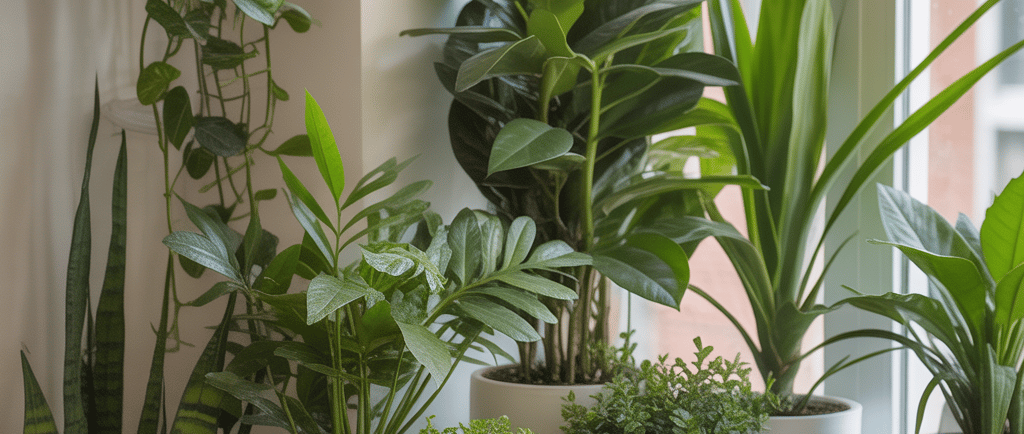
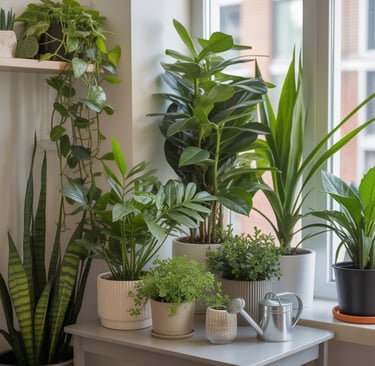
Snake Plant (Sansevieria) — If there's a single most forgiving houseplant on the planet, it's the snake plant. It tolerates low light, irregular watering, dry air, and general neglect with remarkable grace. The upright, architectural leaves look great in any space, and it's one of the few plants NASA has identified as an air purifier. I have three of them and I water them maybe once every three weeks. They're thriving.
Pothos — The ultimate trailing plant for beginners. Pothos grows in almost any light condition, tolerates drought, and bounces back from almost anything. It looks gorgeous on a high shelf with the vines trailing down, and it propagates so easily that you can turn one plant into ten. Just remember — it's toxic to pets, so keep it out of reach if you have dogs or cats.
ZZ Plant (Zamioculcas zamiifolia) — The ZZ plant looks like it should be high maintenance. Those dark, waxy, perfectly formed leaves look almost artificial. But this plant is absolutely bulletproof. It stores water in its thick rhizomes underground, meaning it can go weeks without watering. It thrives in low light. It grows slowly but steadily. It's basically the perfect plant.
Spider Plant — Cheerful, fast-growing, and practically indestructible. Spider plants produce cute little "spiderettes" — baby plants on long trailing stems — that you can propagate into new plants endlessly. They're non-toxic (great for pet owners), adaptable to most light conditions, and very forgiving with watering.
Cast Iron Plant (Aspidistra) — True to its name, this plant is tough as iron. Low light? Fine. Irregular watering? Fine. Temperature fluctuations? Fine. The cast iron plant grows slowly, but it's virtually impossible to kill and adds a lush, tropical feel to any corner.
Peace Lily — One of the few flowering plants that actually thrives in low light. The peace lily produces elegant white blooms and tells you when it's thirsty by drooping slightly — then perks right back up after watering. It's wonderfully communicative for a plant. Note that it is toxic to pets, so keep that in mind.
Rubber Plant (Ficus elastica) — Bold, beautiful, and surprisingly easy. Rubber plants have large, glossy leaves in deep green or burgundy and grow into stunning floor plants over time. They like bright indirect light and regular watering during growing season, but they're much more forgiving than other ficus varieties.
Aloe Vera — The ultimate low-maintenance succulent. Aloe needs almost no water (once every few weeks in summer, even less in winter), loves bright light, and is genuinely useful — the gel inside the leaves soothes burns and skin irritation. Just keep it away from pets, as it's toxic to dogs and cats.
Dracaena — There are dozens of dracaena varieties, and most of them are easy-care workhorses. They tolerate low light, infrequent watering, and a range of temperatures. The striped or variegated leaves add visual interest, and they grow tall and impressive over time.
Chinese Evergreen (Aglaonema) — One of the most adaptable plants you can own. Chinese evergreens come in a range of colors from deep green to pink and red, they tolerate low light brilliantly, and they're very forgiving with watering. A genuinely underrated beginner plant.
Low Maintenance Succulents and Cacti for Indoors
If you are a self-described "plant killer" — specifically of the forgetful-waterer variety — succulents and cacti were basically made for you. These plants evolved in arid environments where water is scarce, so they've developed the ability to store moisture in their leaves, stems, or roots. That means they can go long stretches without water and genuinely prefer it that way.
I went through a big succulent phase about three years ago. I collected about thirty different varieties, arranged them on a sunny windowsill, and they were absolutely thriving — until I made the classic mistake of treating them like regular houseplants and watering them on a regular schedule. Root rot city. Lesson very much learned.
Haworthia is my top succulent recommendation for indoor growing, especially for low-light spaces. Unlike most succulents, haworthia actually prefers indirect light and will sunburn in a south-facing window. It's tiny, it's adorable, it grows slowly, and it's nearly impossible to kill. It's also non-toxic to dogs, which puts it in a very exclusive club among succulents.
Echeveria is the classic rosette succulent — the one that looks like a perfect little stone flower. It needs bright light (a south or west-facing window is ideal) and very infrequent watering. The trick with echeveria is to water thoroughly and then let the soil dry out completely before watering again. "Soak and dry" is the method, and it works brilliantly.
Jade Plant is practically a rite of passage for succulent beginners. It grows slowly into a small tree-like shape, it lives for decades (I have one that's been in my family for over fifteen years), and it needs almost nothing from you. Bright light, occasional water, that's about it.
The biggest mistakes people make with succulents are: using regular potting soil (you need well-draining cactus mix), using pots without drainage holes (root rot will happen), and watering too frequently. Get those three things right and your succulents will basically take care of themselves.
Cacti are even more drought-tolerant than succulents, but they do need significant direct light to thrive indoors — a very sunny south-facing window or a grow light. If you have that kind of light available, a small cactus collection is one of the lowest-maintenance, most visually interesting setups you can have.
How to Care for Low Maintenance Indoor Plants
Low maintenance doesn't mean no maintenance. It means smart, minimal, intentional care. Here's the basic framework I use for all my easy plants — and it genuinely works.
Watering — less is almost always more. The single most important thing you can do for low maintenance plants is resist the urge to water on a fixed schedule. Instead, check the soil. Stick your finger an inch into the soil — if it's still moist, leave it alone. If it's dry, water thoroughly until it drains from the bottom. Most of my low-maintenance plants get watered every 10-14 days in summer and every 3-4 weeks in winter. That's it.
Light — match the plant to the spot. Most low-maintenance plants tolerate a range of light conditions, but they still have preferences. Snake plants, ZZ plants, and Chinese evergreens handle low light well. Pothos prefers medium to bright indirect light but tolerates low light. Rubber plants and aloe want bright indirect light. Take five minutes to understand your plant's light preference and put it in the right spot — it makes a massive difference.
Soil and potting — drainage is everything. Use well-draining potting mix for most houseplants, and cactus/succulent mix for succulents and cacti. Always use pots with drainage holes. If water can't escape the bottom of the pot, roots will sit in standing water and rot. I learned this lesson the hard way more times than I'd like to admit.
Fertilizing — simple and seasonal. Most low-maintenance plants don't need much feeding. A balanced liquid fertilizer diluted to half strength, applied once a month during the growing season (spring through summer), is plenty for most of them. Don't fertilize in fall and winter when most plants are resting. Over-fertilizing can actually damage plants, so when in doubt, do less.
Repotting — only when necessary. Low-maintenance plants generally like being slightly root-bound. Don't rush to repot unless you can see roots coming out of the drainage holes or the plant is visibly struggling. When you do repot, go up only one pot size — jumping to a much bigger pot can cause root rot because there's too much soil holding moisture.
Low Maintenance Indoor Plants for Low Light Spaces
Not having great natural light used to feel like a dealbreaker for indoor gardening. I lived in a basement apartment for two years with essentially no direct sunlight, and I genuinely thought I couldn't have plants. Turns out, I was wrong — I just needed the right ones.
The best plants for truly low light are ZZ plants, snake plants, cast iron plants, Chinese evergreens, and pothos. These plants have adapted to survive on very little light — in their natural habitats, they grow on the forest floor under dense canopy, where only filtered, dim light reaches them. They're not just tolerating low light; they actually prefer it in some cases.
Peace lilies are another excellent low-light option and have the added bonus of blooming even in dim conditions. The white flowers brighten up a dark corner beautifully. Dracaena varieties also do well in lower light, though they grow more slowly with less light than bright.
Low light doesn't mean no light, though — and this is an important distinction. "Low light" in plant terms means no direct sun but some ambient light. A room with windows, even north-facing ones, generally works. A room with no windows at all is a different story. No plant can survive in total darkness indefinitely.
Grow lights bridge the gap beautifully for genuinely dark spaces. A simple full-spectrum LED grow bulb in a regular lamp, set on a timer for 12-14 hours a day, can make almost any space plant-friendly. I used a $15 LED grow bulb in my basement apartment and it was genuinely enough to keep pothos, snake plants, and a peace lily alive and healthy.
Rotate your plants occasionally if they're in lower light — maybe a quarter turn every few weeks — so all sides get some exposure and the plant grows evenly rather than leaning dramatically toward the light source. It's a small thing that makes a real difference in how your plants look over time.
Low Maintenance Indoor Plants for Busy People and Frequent Travelers
This section is near and dear to my heart because I spent several years in a job that had me traveling every other week. Keeping plants alive on that schedule felt impossible at first. But I figured out a system, and now I can leave for two or even three weeks and come home to plants that are completely fine.
Self-watering pots are genuinely life-changing for busy plant parents. These pots have a reservoir at the bottom that the plant draws water from as needed, through a wicking system. You fill the reservoir, and the plant helps itself when it's thirsty. I converted most of my pots to self-watering versions and it extended my worry-free travel window significantly.
Choose plants that survive extended drought. Snake plants, ZZ plants, cast iron plants, succulents, and cacti can all go two to four weeks without water without any real problem. If you know you travel frequently, build your collection around these varieties. I made the mistake of having a fiddle leaf fig when I was traveling constantly. That was a bad time for everyone involved.
Before a long trip, water thoroughly and then let drain completely. Wet soil sitting in a pot for two weeks is a recipe for root rot, so make sure excess water drains before you leave. Move plants away from direct sun if you'll be gone a while — less light means slower water evaporation, which means the soil stays moist longer.
The plastic bag greenhouse trick is weird but it works for longer absences. Put your pot inside a clear plastic bag, loosely sealed, and the condensation creates a mini greenhouse effect that keeps the soil moist for much longer. It looks ridiculous but it's saved more than one of my plants during a long trip.
Find a plant sitter if you're going to be gone more than three weeks. Even just someone who comes in once while you're away to water makes a huge difference. I have a deal with my neighbor — she waters my plants when I travel, I bring her back something from wherever I went. Works great.
Common Mistakes People Make With "Easy" Plants
I want to be real with you here: I've made every single mistake on this list. Every one. Some of them multiple times. I'm sharing them not to make you feel bad but because knowing what not to do is just as important as knowing what to do — and forewarned is forearmed.
Overwatering is the number one killer of houseplants, including so-called easy ones. People set a watering schedule — every Sunday, say — and stick to it religiously regardless of whether the plant actually needs water. The soil is still moist from last week? Doesn't matter, it's Sunday. This is how you get root rot. Always check the soil before watering. Always.
Using the wrong pot size is a sneaky problem. People see their plant and think "it needs room to grow!" and put it in a massive pot. But too much soil around the roots holds too much moisture, which leads to — you guessed it — root rot. Most houseplants want to be slightly snug in their pots. Go up only one size when repotting.
Ignoring drainage holes. I can't stress this enough. If your pot doesn't have drainage holes, water has nowhere to go and your roots will rot. I know some decorative pots don't have holes and they look beautiful — use those as cachepots (outer decorative covers) over a plain nursery pot that does have drainage.
Too much fertilizer is a real thing. More fertilizer does not equal faster, better growth. Over-fertilizing causes salt buildup in the soil, which burns roots and causes leaf tips to brown. Less is more with feeding. Half the recommended dose, once a month in growing season, is plenty for most plants.
Ignoring pests until it's too late. Even easy plants can get pests — fungus gnats, spider mites, mealybugs. The key is catching them early. I do a quick check on my plants once a week when I'm watering — just a glance at the undersides of leaves and the soil surface. Caught early, most pest problems are very manageable. Left unchecked, they can take out a whole collection.
Putting a low-light plant in bright direct sun — or vice versa. Even forgiving plants have limits. A ZZ plant in a blazing south window will get scorched, yellowed leaves. An aloe vera in a dark corner will go pale and leggy. It takes two minutes to Google a plant's light requirements. Worth it every time.
Conclusion
Here's what it all comes down to: the best indoor plant is the one that's still alive six months from now — and the way to make that happen is to start with low maintenance plants that are genuinely built for real human life. Busy schedules. Imperfect light. Occasional forgetfulness. These plants get it.
Start with just one. Seriously — pick one plant from this list, put it in the right spot, resist the urge to overwater it, and see what happens. I'm willing to bet it'll still be alive and thriving in a month, and that small win is going to make you want another one. And another one. That's how it starts. That's how everyone becomes a plant person.
The plants I'd recommend most for absolute beginners? Snake plant, ZZ plant, or pothos. They're cheap, widely available, nearly impossible to kill, and they look great in any space. Start there. Build your confidence. Then branch out when you're ready.
Now I want to hear from you! What low maintenance plants are thriving in your home right now? Or if you're a fellow reformed plant-killer, tell me about the plant that finally survived — I love those stories. Drop everything in the comments below, and share this guide with someone who keeps saying they can't keep plants alive. Because after reading this? They absolutely can. 🌿