How to Start Apartment Gardening: The Complete Beginner's Guide for 2026
Learn exactly how to start apartment gardening from scratch — best plants, containers, lighting, and setup tips for any space. Real advice from someone who built a thriving apartment garden step by step.
TINY PLOT BEGINNERS: YOUR FIRST HARVEST STARTS HERE
Introduction
Urban apartment gardening has grown by over 60% since 2020, and if you spend any time on social media you've probably seen the evidence — lush kitchen herb shelves, balcony container gardens overflowing with tomatoes, living room setups with layered plant stands and grow lights glowing warmly in the corner. What you might not have seen is how those gardens started: with one plant, usually something forgiving like a pothos or a pot of basil, in someone's first apartment, tended with more enthusiasm than knowledge and enough beginner's luck to get the habit started.
I started my apartment garden with three supermarket herb plants on a south-facing windowsill. Basil, mint, and chives — the most unambitious possible beginning. Within six months I had a kitchen shelf under a grow light, a worm bin in the corner, microgreens on the counter, and more lettuce than I could eat. I'm not telling you that to be impressive. I'm telling you because the progression from three grocery store herb plants to a genuinely productive apartment garden happened almost without my noticing it — each small success created curiosity about the next thing, and the thing after that, and eventually I had a setup I was genuinely proud of and that made a real difference to my cooking and my daily mood.
That's how apartment gardening works for most people who stick with it. It builds on itself, slowly and pleasurably, one plant at a time. The intimidating part is usually just starting — the feeling that you need to know everything before you can begin, or that your apartment isn't suitable, or that you'll just kill everything. None of those things are true. You don't need to know everything. Almost every apartment is more suitable than you think. And the plants that are right for beginners are genuinely hard to kill when you understand a few basic principles. This guide covers those principles and everything else you need to start growing in your apartment right now. Let's begin.
Why Apartment Gardening Is More Accessible Than You Think
The biggest barrier to starting an apartment garden isn't space or light or knowledge — it's the mental model most people carry around of what gardening requires. Gardening, in the conventional imagination, means a yard, a garden bed, a trowel, good outdoor soil, and the right climate. Apartment gardening requires none of those things. It's a fundamentally different activity that happens to produce some of the same results — living plants, sometimes food — through completely different means. Getting that mental shift right at the beginning saves a lot of unnecessary discouragement.
What you actually need to start apartment gardening is genuinely minimal. A container with drainage holes. Some potting mix. A plant or some seeds. A spot near a window. That's it for the most basic version. Everything else — grow lights, specialized soil amendments, multiple container types, watering systems — comes later, incrementally, as your interest and confidence grow. The barrier to entry is low enough that you can literally start today with a supermarket herb plant in a ceramic mug with a hole drilled in the bottom and some potting mix from a hardware store. I have done exactly this, more than once, and it worked.
The spectrum of what apartment gardening can be is wider than most beginners realize, which means there's an appropriate version for every level of interest, every budget, and every apartment condition. At one end: a single pothos in a corner that you water once a week and otherwise ignore. At the other end: a multi-shelf, grow-light-equipped, worm-bin-composting, year-round food production setup. Both are apartment gardening. Most people end up somewhere in the middle, with a few plants they genuinely care about and a small food-growing setup they actively use. The progression from beginning to wherever you end up happens naturally if you start and keep going — it doesn't need to be planned or rushed.
The wellbeing benefits of apartment gardening are real and increasingly well-documented. Research consistently shows that tending to plants reduces cortisol levels, improves mood, and provides a sense of purpose and accomplishment that's different in quality from other activities. There's something about the responsibility of keeping living things alive — checking on them, responding to their needs, watching them grow — that grounds people in a genuinely useful way. Many apartment gardeners describe their plant tending routine as a form of mindfulness practice. The physical act of checking soil moisture, watering carefully, pruning spent growth, and harvesting herbs or greens provides a brief, tactile engagement with the physical world that screen-heavy modern life doesn't otherwise offer much of. Starting an apartment garden gives you all of this alongside whatever food or aesthetic value the plants provide.
Assessing Your Apartment — Light, Space, and Conditions
Before buying a single plant or container, spend some time genuinely understanding what your apartment offers as a growing environment. This assessment — done honestly, taking maybe thirty minutes on a bright day — informs every subsequent decision and prevents the frustration of buying plants that are wrong for your conditions.
Light assessment is the most important part of the process and requires watching your apartment at different times of day on a clear day. Start by identifying which direction each of your windows faces — use your phone's compass app. South-facing windows in the northern hemisphere receive the most direct sunlight throughout the day and are your best growing spots for light-hungry plants. East-facing windows receive gentle morning sun — good for plants that want moderate light without the intensity of afternoon sun. West-facing windows receive afternoon and evening sun — warmer and more intense than east-facing but suitable for many plants. North-facing windows receive no direct sun — only ambient indirect light, which limits what you can grow there to shade-tolerant plants.
Beyond compass direction, observe what actually happens to the light in each window position throughout the day. Is there an overhanging roof, balcony above, or neighboring building that blocks direct sun even in a theoretically good orientation? Does a neighboring building cast shade across your window for part of the day? Are there trees outside that filter the light? The real light situation in your specific apartment may differ significantly from what the compass direction suggests, and only observation tells you what's actually happening. The quick test I use: hold your hand about a foot above a white piece of paper near each window at different times of day and check the shadow quality. Sharp, defined shadow equals bright direct light. Soft shadow equals bright indirect light. No visible shadow equals dim light.
Space assessment is less critical than light assessment because space constraints in apartment gardening are far more manageable than light constraints. Light can be supplemented with grow lights — that costs money but solves the problem reliably. Space, beyond a certain minimum, is less about quantity and more about configuration. A south-facing windowsill that's eight inches deep and thirty inches wide is enough growing space for a meaningful herb garden. A small balcony — even five or six feet wide — is enough for container tomatoes and several pots of greens. A corner with a floor-standing plant stand and a grow light above it is enough for a productive indoor food garden that makes a real contribution to your kitchen. Think about your available space in terms of where light falls rather than total square footage.
Temperature and humidity checks round out the environmental assessment. Most plants suitable for apartment growing are comfortable in the same temperature range comfortable for humans — roughly 60°F to 80°F — so temperature is rarely a limiting factor in climate-controlled apartments. What does matter is identifying specific micro-conditions that could harm plants: cold drafts near windows in winter, heat blasts from radiators or vents, extremely dry air from forced-air heating. These spots should either be avoided or adjusted for the plants placed there. A digital hygrometer — available for under ten dollars — tells you the humidity level in different parts of your apartment, which matters particularly if you want to grow tropical herbs or fruiting plants that prefer higher humidity than most apartments naturally maintain in winter.
Choosing Your First Plants — Starting Smart
First plant selection is where the apartment gardening journey either gets off to a confidence-building start or experiences the early discouragement that causes many beginners to give up. The right first plant is not necessarily the one you most want to grow — it's the one most likely to succeed in your specific conditions and teach you the basic skills of plant care through a forgiving, resilient growing experience.
For edible plants, the beginner hierarchy runs roughly: green onions, microgreens, herbs, lettuce, then everything else. Green onions regrown from grocery store roots in a glass of water cost nothing and succeed almost every time — the perfect confidence builder. Microgreens in a shallow tray on any reasonably bright surface produce results in a week and require only basic attention. Herbs — basil, chives, mint, parsley — in a sunny window or under a grow light provide ongoing culinary value while teaching you the basics of container care, watering judgment, and harvesting technique. Lettuce follows herbs as a slightly more demanding but still beginner-friendly crop with excellent reward-to-effort ratio. This progression builds both skill and confidence in a natural sequence.
For ornamental plants, the beginner hierarchy prioritizes resilience and tolerance for the inevitable mistakes of inexperienced care. Pothos — Epipremnum aureum — is the plant I recommend to every single beginner without hesitation. It tolerates low light, irregular watering, temperature fluctuation, and essentially every mistake a beginner can make while continuing to grow and look reasonably healthy. It's also beautiful — cascading from a shelf or trained up a simple trellis, it creates the lush, green-filled apartment aesthetic that inspires many people to start gardening in the first place. Snake plant — Sansevieria — is similarly forgiving, with the added benefit of tolerating drought extremely well, making it ideal for people who travel or tend to forget watering. ZZ plant handles genuinely low light better than almost any other plant while maintaining attractive, glossy foliage.
The honest matching of plant choice to light conditions is something to take seriously rather than wishfully bypassing. I've seen many beginners fall in love with a plant at a garden center — often a sun-loving Mediterranean herb or a fruiting plant with beautiful packaging — and buy it for an apartment that genuinely can't support it, then feel like a failure when it declines. A plant in conditions it can't thrive in isn't a skill failure — it's a mismatch problem. Check the light requirement of any plant you're considering and compare it honestly to what your best growing spots actually provide. Buying a shade-tolerant plant for your dim corner and a light-hungry herb for your brightest window isn't a compromise — it's the right decision that sets both plants up for success.
For the absolute beginner, starting with two to three plants rather than ten is the right call. Two to three plants is enough to learn from without becoming overwhelming. It lets you develop a feel for watering, light management, and plant observation without the cognitive load of tracking many different plants with different needs simultaneously. When those first plants are doing well — and with the right selection they will be — adding more is a natural, enjoyable next step rather than an overwhelming commitment.
Containers, Soil, and Basic Setup
The physical infrastructure of your apartment garden — containers, soil, and how everything is arranged — doesn't need to be expensive or elaborate to work well, but a few key decisions matter significantly for plant health and growing success.
Container sizing is the first important decision and the principle is simple: match the pot size to the plant's root system, not to your aesthetic preference for large dramatic pots. A small herb seedling in a massive pot is surrounded by a huge volume of soil that the root system can't access, stays wet for too long between waterings, and creates root rot risk. The container should be just large enough to comfortably accommodate the current root system with a few inches of growing room in all directions. As the plant grows and its roots fill the container, you move up to the next size. For herbs, four to six inch diameter pots are appropriate starting sizes. For lettuce, six to eight inches. For tomatoes and peppers, at minimum five gallons. For leafy greens in mixed plantings, window boxes or wider shallow trays work well.
Drainage is the single most important container characteristic and the one most commonly overlooked by beginners who choose containers based on aesthetics without checking for drainage holes. Every container must have drainage holes. The reason is fundamental: without drainage, water accumulates at the bottom of the container, soil becomes waterlogged, and roots suffocate in oxygen-depleted conditions. Root rot follows, and the plant declines and dies from what looks like unclear causes. If you fall in love with a beautiful container that lacks drainage holes, either drill holes in the base — feasible for ceramic and plastic with the right drill bit — or use it as a decorative outer cover for a plain nursery pot with drainage inside. Never use a drainage-free container as the actual growing vessel.
Potting mix selection should be guided by the type of plants you're growing rather than defaulting to one all-purpose product for everything. Standard quality potting mix works well for most herbs, leafy greens, and general houseplants. Cactus and succulent mix is specifically formulated for the sharp drainage that cacti and succulents require. A mix amended with extra perlite works better for carrots and root vegetables. For fruiting plants, a richer mix with more organic matter and good moisture retention supports their higher nutritional demands. The universal rule is never use garden soil in containers — it compacts, drains poorly, and can introduce pests and diseases into your indoor growing space.
Setting up your first growing space efficiently means thinking about access, aesthetics, and practicality together. Plants near windows should be positioned to maximize light exposure — larger plants toward the back, smaller ones toward the front, no plant blocking another's access to the window. A simple plant tray under grouped containers catches water drips and makes the arrangement look more intentional. A small watering can kept nearby makes the regular watering routine more convenient. If you're planning to add a grow light later, position shelves and plant stands under suitable hanging points so the light can be added without rearranging everything.
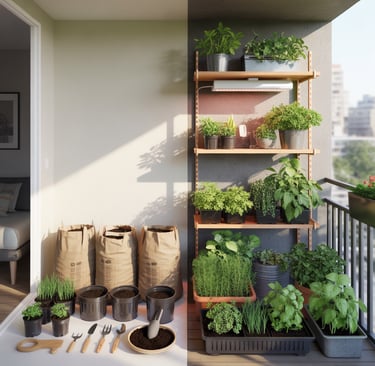
Budget setup for a beginner apartment garden can be genuinely minimal — plastic nursery pots from a hardware store, a bag of standard potting mix, seeds from a supermarket, and whatever windowsill space you have available can get you started for under twenty dollars. The upgraded version — quality fabric grow bags, premium potting mixes, dedicated plant stands, a grow light — costs more but delivers better results and more growing flexibility. The smart approach for most beginners is starting minimal, identifying what your specific setup needs based on real growing experience, and investing in upgrades that address actual bottlenecks rather than buying everything upfront before you know what you need.
Watering — The Skill That Makes or Breaks Apartment Gardening
More apartment plants die from overwatering than from any other cause, and this is the single most important fact for any beginner to internalize before touching a watering can. The instinct to water generously and regularly — to show your plants you're caring for them through consistent watering — is well-intentioned and almost universally counterproductive. Plants need consistent moisture, not constant moisture, and the difference between those two things is what watering skill is about.
The finger test is the only watering guidance a beginner needs and it works for the vast majority of common apartment plants. Press your finger about an inch into the soil. If the soil feels moist at that depth, don't water. If it feels dry, water. That's it. The elegance of this approach is that it automatically adjusts for the many variables that affect how quickly soil dries out — container size, pot material, room temperature, humidity, plant size, soil type, season. No schedule can account for all of those variables accurately. The finger test accounts for all of them because it's measuring the actual result of all those variables rather than trying to predict it.
When you do water, water thoroughly. Pour water slowly around the base of the plant until it flows freely from the drainage holes, indicating the entire root ball has been moistened. Shallow watering that wets only the top inch or two of soil encourages shallow root growth and leaves the deeper root zone dry. Thorough watering followed by appropriate drying time before the next watering cycle mimics the natural pattern of rain followed by dry periods that most plants evolved with. After watering, tip out any water that has collected in the saucer within an hour — standing water in a saucer keeps the soil at the base of the pot saturated and creates the root rot conditions you're trying to avoid.
Different plants have dramatically different watering needs and learning these differences is part of building plant care knowledge. Succulents and cacti want to dry out completely between waterings — sometimes for weeks. Moisture-loving herbs like basil want consistently moist soil and will visibly wilt if allowed to dry too much. Most common houseplants like pothos and snake plant want to dry out to about halfway down the container before watering. Mediterranean herbs like rosemary, thyme, and oregano prefer to dry out more than most herbs before watering. These differences mean that a one-size-fits-all watering schedule — water everything every three days, for example — will overwater some plants and underwater others simultaneously. Plant-specific attention is the only reliable approach.
Self-watering containers are a genuinely useful tool for beginners who are still developing watering intuition or who travel regularly. These containers have a reservoir in the base that wicks moisture up into the root zone as the plant needs it, creating a more consistent moisture environment than manual top watering. They prevent both overwatering (the plant only draws what it needs from the reservoir) and underwatering (the reservoir provides a buffer during periods of inattention). They're particularly good for moisture-sensitive plants like basil that wilt dramatically when stressed by drought. The learning limitation of self-watering containers is that they reduce the need to develop watering judgment — but for the early stages of apartment gardening, that's a reasonable trade-off for keeping plants alive while skills develop.
Light — Making the Most of What You Have
Light is the variable most likely to limit what you can successfully grow in your apartment, and the approach to it should be strategic rather than wishful. Working with your apartment's actual light — placing plants appropriately, supplementing where needed, choosing varieties suited to available conditions — produces far better results than fighting against inadequate light by trying to grow sun-loving plants in dim positions.
Maximizing natural light starts with placement decisions that most beginners don't think carefully enough about. Position light-hungry plants as close to the brightest window as possible — not on a shelf across the room from the window, which receives dramatically less light than the windowsill itself. Clean windows regularly — surprisingly significant amounts of light are blocked by dirty glass. Remove or open blinds and curtains during daylight hours when plants need light. Reflective surfaces — white walls, mirrors positioned at angles, light-colored furniture near windows — bounce light back onto plants and improve the effective light environment beyond what the window alone provides. These are all free improvements that often make a meaningful difference before any investment in grow lights is necessary.
Grow lights become necessary or strongly beneficial when your best available window provides less than four hours of direct or bright indirect light daily, when you want to grow light-hungry plants like basil or fruiting vegetables in a position without adequate natural light, or when you want to grow food through winter months when natural light is reduced. The basic principles of grow light selection for apartment beginners are covered in detail in the dedicated grow lights article earlier in this series — but the short version for this beginner's guide is: LED bar lights from brands like Spider Farmer or Mars Hydro, positioned six to twelve inches above plant canopies, on a timer set for fourteen to sixteen hours daily, solve most apartment light problems for herbs and leafy greens at a cost of thirty to sixty dollars for a basic setup.
The timer is the grow light accessory that most significantly determines success, and it costs under ten dollars for a mechanical plug-in timer. Plants benefit from consistent light schedules — not because they're keeping track of exact hours, but because consistent day length signals support healthy growth rhythms and prevent the stress that comes from erratic light patterns. Setting a timer and forgetting it is genuinely one of the highest-value, lowest-effort improvements in any apartment growing setup. Fourteen hours of light, ten hours of dark, every day — set it once and move on.
Rotating plants for even light exposure is a simple practice that dramatically improves the symmetry and quality of light-grown plants. Plants grow toward their light source — a plant sitting in one position relative to a window will develop unevenly, with the side facing the window growing more vigorously than the shaded side. A quarter turn every few days — a two-second action — keeps growth even and maintains the symmetrical, full form that makes plants both healthy and attractive. This is especially important for herbs grown in window positions, where unrotated plants develop a distinctly leaning, lopsided form over time.
Growing Food in Your Apartment — Where to Start
Growing your own food in an apartment is one of the most satisfying extensions of the basic apartment gardening practice, and the entry points are genuinely accessible even for true beginners with modest light and limited space. The key is starting with crops that reward beginners quickly and reliably rather than attempting more demanding crops before the foundational skills are developed.
Windowsill herb gardens are where most apartment food growing begins and where it often stays as a permanent feature even as the broader garden grows more ambitious. A row of herbs on a sunny windowsill — basil, chives, parsley, and mint at minimum — provides fresh herbs for cooking year-round, saves money on grocery store herb purchases, and creates a visible, fragrant, daily-use part of the kitchen that most apartment cooks find genuinely transformative. The setup requirements are minimal: individual four to six inch pots or a long window box, good potting mix, adequate sunlight or a small grow light, and regular harvesting that encourages bushy, productive growth. The most important maintenance habit for windowsill herbs is harvesting regularly — snipping stems frequently rather than letting plants grow unpruned keeps them bushy and extends their productive life significantly.
Microgreens on the kitchen counter are the fastest food production available to apartment growers and the easiest entry point into apartment food growing. Seeds in a shallow tray, watered carefully, produce harvestable greens in seven to fourteen days with almost no skill requirement beyond keeping seeds moist during germination. The full process is covered in detail in the microgreens article earlier in this series, but the starting point is genuinely as simple as a recycled food container, a bag of radish seeds, some potting mix, and a bright windowsill. The nutrition, the flavor, and the speed of results make microgreens the single best first food-growing project for apartment beginners.
Lettuce and salad greens in a container are the step up from microgreens that provides longer-lasting, more substantial harvests from a modest growing setup. A window box or wide shallow container in a reasonably bright window, filled with quality potting mix and direct-seeded with a loose-leaf lettuce mix, provides cut-and-come-again salad greens for weeks to months. The cut-and-come-again approach — harvesting outer leaves while leaving the growing center intact — extends the productive life of each planting dramatically. Combined with the succession planting principle — starting a new container every three weeks so you always have one at peak production — lettuce becomes a near-continuous kitchen staple from a setup that takes up minimal space.
Container tomatoes and peppers represent the more ambitious end of beginner apartment food growing and require a genuine investment in light intensity — either a very bright south-facing window supplemented with grow lights, or a dedicated LED panel providing adequate PPFD for fruiting plants. The full guidance on fruiting plant growing is covered in earlier articles in this series. For a beginner just starting to explore apartment food growing, I'd suggest getting comfortable with herbs, microgreens, and lettuce before attempting fruiting plants. The success with the simpler crops builds the skills and confidence that make fruiting plant growing achievable rather than frustrating.
Dealing with Common Apartment Gardening Challenges
Every apartment gardener encounters challenges — plants that struggle despite apparent good care, pests that appear seemingly from nowhere, seasonal changes that disrupt an established routine. Knowing what the most common challenges are and how to address them removes the discouragement that these inevitable occurrences can cause when they come as a complete surprise.
Fungus gnats are the most common pest in apartment gardens and the one beginners most frequently encounter. They're tiny flies — smaller than a fruit fly — whose larvae live in moist potting soil and whose adults hover annoyingly around plants and in your face. They're not directly harmful to established plants in small numbers, but heavy infestations can damage roots through larval feeding. The cause is almost always overwatering — fungus gnat larvae need consistently moist soil to survive, and a soil surface that dries out between waterings breaks their life cycle. The fix is addressing the watering habit first, allowing the soil surface to dry more thoroughly between waterings, and using yellow sticky traps to catch adults while the population declines. For persistent infestations, treating soil with BTi (Bacillus thuringiensis israelensis) products kills larvae without harming plants or humans.
Spider mites are the second most common indoor plant pest, thriving in the warm, dry conditions that apartment heating creates in winter. They're tiny — barely visible to the naked eye — and identifiable by the fine webbing they produce on leaves and stems and the characteristic stippled, pale surface damage on leaves. They hate humidity, which means increasing the humidity around affected plants through misting, grouping plants together, or using a small humidifier disrupts them significantly. For active infestations, neem oil spray applied to all leaf surfaces — particularly undersides where mites congregate — treats effectively and safely.
Overwatering recovery is a skill worth learning because even experienced gardeners occasionally overwater, and catching root rot early enough to save a plant is completely possible. Signs of an overwatered plant include yellowing leaves, soft or mushy stem at the base, wilting despite moist soil, and a soil surface that stays wet for unusually long periods. If you suspect overwatering, unpot the plant and examine the roots. White, firm roots are healthy. Brown, black, or mushy roots indicate rot. Remove all rotted root material with clean scissors, let the plant dry for several hours before repotting in fresh, barely moist soil, and resume watering only when the top inch is clearly dry.
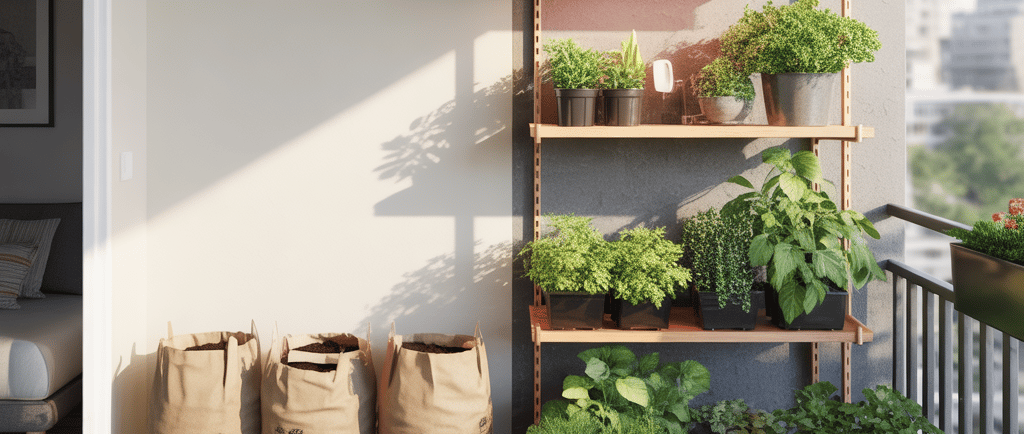
Managing space constraints creatively is an ongoing apartment gardening challenge that rewards inventiveness more than investment. Vertical space is the most underused dimension in most apartment gardens — walls and windows offer hanging and mounting opportunities that take nothing from the floor space. A tension rod in a window frame holds hanging planters in a cascade that uses no floor or shelf space at all. A wall-mounted grid of pegboard holds pots, tools, and supplies in a visually organized vertical display. A tall, narrow ladder shelf provides multiple growing levels in a footprint of less than two square feet. These solutions aren't complicated or expensive — they're just the result of thinking vertically rather than horizontally when space feels limited.
Building Your Apartment Garden Over Time
The most important thing to understand about apartment gardening as a long-term practice is that it naturally grows and evolves as your knowledge, confidence, and interest develop — and that this growth doesn't require a master plan or significant upfront investment. It happens organically, one plant and one experiment at a time, in response to what you're curious about and what's working in your specific setup.
The natural progression from beginner to confident grower follows a pattern that I've seen repeat across dozens of people I've introduced to apartment gardening. It starts with one or two forgiving plants that survive and eventually thrive under beginner care — that success creates curiosity about what else might grow. A herb shelf develops from a single pot of basil. A grow light gets added when the herb shelf outgrows its window. A worm bin starts composting kitchen scraps after a few months of wondering what to do with food waste. A shelf of microgreens supplements the herb garden. Container tomatoes appear on the balcony one spring. Each addition is motivated by genuine interest and the confidence built from previous success — not by a predetermined plan.
Connecting with the apartment gardening community accelerates the learning curve and makes the practice more enjoyable in a specific way that solo learning doesn't. Online communities — subreddits like r/IndoorGarden and r/UrbanGardening, Facebook groups, plant-specific forums — are full of people at every experience level sharing their setups, asking questions, troubleshooting problems, and celebrating harvests. The collective knowledge in these communities is extraordinary and available freely to anyone who asks. More practically useful, the communities are populated by people growing in similar conditions — apartments, limited light, small spaces — whose experience is directly relevant in ways that general gardening advice aimed at outdoor growers often isn't.
Keeping a simple plant journal transforms casual plant growing into an accumulating body of knowledge that improves your outcomes over time. It doesn't need to be elaborate — a small notebook kept near your growing space, where you jot the date you planted something, the variety, the container, the conditions, and what happened is genuinely enough. Over months and years, that record tells you which varieties reliably perform well in your specific apartment, what time of year your different crops do best, what problems you've encountered and how you solved them. This knowledge is more valuable than any general guide because it's specific to your conditions — and it's available to you every time you make a new planting decision.
The bigger picture of what apartment gardening gives back is something that's hard to fully articulate but worth trying to express. At the practical level, it gives you fresher, cheaper, better-tasting food than most alternatives. At the aesthetic level, it gives your living space a quality of life and visual richness that furniture and decor alone can't provide. At the psychological level, it gives you a daily point of connection with natural systems and living things that the built indoor environment otherwise lacks. And at the level that's hardest to quantify but easiest to feel — the quiet satisfaction of watching something you've tended grow, change, produce — it gives back something that I can only describe as a small but genuine sense of sufficiency. Of being someone who can make things grow. That's worth starting for.
Conclusion
Apartment gardening is one of those things that sounds more complicated than it is, looks more intimidating than it is, and delivers more than most people expect when they actually try it. The gap between "I can't garden, I live in an apartment" and "I have a thriving indoor garden that I love" is usually bridged by a single first plant — something forgiving, something small, something that survives your beginner mistakes and grows anyway and shows you that this is actually something you can do.
Start this week. One plant. If you want something to grow and eat quickly, get a packet of radish microgreen seeds and a small tray. If you want something beautiful and forgiving, buy a pothos from a garden center or grocery store. If you want to immediately improve your cooking, grab a pot of basil and put it in your sunniest window. Any of these costs under five dollars and takes five minutes to set up. That's your apartment garden started — everything else grows from there.
Share your first plant, your setup photo, your first harvest, or your biggest beginner question in the comments below. The apartment gardening community is one of the most welcoming in the growing world, and whether you're setting up your first pot of herbs or expanding a setup you've been building for years, there's something genuinely valuable in sharing what you're doing and connecting with people doing the same thing in their own small indoor spaces around the world. Now go get a plant. 🌿