How to Choose the Right Container Size for Any Plant: Complete Guide to Getting It Right Every Time
Learn how to choose the right container size for any plant! Discover the perfect pot dimensions for vegetables, flowers, herbs, and houseplants to maximize growth and prevent common problems.
CONTAINER TINY PLOTS: CROPS, SOIL & CLEVER HACKS
Introduction
I'll never forget the beautiful tomato plant I killed in my second year of container gardening. I'd bought a cute 8-inch pot at a craft fair—it was hand-painted and gorgeous. I planted a tomato seedling in it thinking "the pot is pretty, the plant is healthy, what could go wrong?" Everything, it turns out. The plant grew to about 12 inches tall, then just... stopped. Leaves turned yellow. Growth stalled completely. It eventually produced three sad tiny tomatoes before giving up entirely.
My experienced gardener neighbor took one look and said "your pot is way too small—that tomato needs at least a 5-gallon container." I was shocked. Five gallons seemed massive compared to my cute little 8-inch pot. But she was absolutely right. The next season, I put the same tomato variety in a proper 7-gallon container and got 40+ full-size tomatoes from one plant. Same variety, same care, different container size—completely different results.
Here's what really drove this home: a study by the University of Illinois found that container size is the single most important factor affecting plant growth in containers—more than fertilizer, more than watering frequency, more than anything except light. Container size determines root space, which determines everything else. Too small and you're fighting an unwinnable battle. Too large and you're creating problems that wouldn't exist in a properly-sized container.
I've been container gardening for over a decade now and I've made every possible container sizing mistake. I've killed plants in too-small pots. I've caused root rot in too-large pots. I've wasted money on containers that didn't fit plants' needs. I've also learned through hundreds of plants what actually works—which sizes work for which plants, how to measure and choose containers, and the rules that prevent expensive mistakes.
In this guide, I'm sharing everything I've learned about choosing the right container size for any plant you want to grow. We'll cover basic sizing rules, specific requirements for different plants, how to measure containers, signs you've sized wrong, and troubleshooting strategies. Whether you're growing vegetables, flowers, herbs, or houseplants, getting container size right is the foundation that makes everything else easier. Let's dive in!
Why Container Size Matters More Than You Think
Container size isn't just about aesthetics or having enough room. It affects literally every aspect of plant health and growth.
Root space determines plant size and health in a direct cause-and-effect relationship. Roots are where plants absorb water and nutrients. Limited root space = limited water and nutrient uptake = limited plant growth. A tomato plant in a 2-gallon container might grow 2 feet tall. The same variety in a 7-gallon container grows 5+ feet tall and produces 3-4x more fruit. The above-ground plant size is directly limited by below-ground root space. You cannot make a plant in a too-small container perform like one in an adequate container through better care—the physical limitation of root space is absolute.
Container volume affects watering frequency dramatically. Small containers dry out fast—sometimes multiple times per day in summer. Large containers stay moist longer. A 4-inch pot might need watering twice daily in hot weather. A 14-inch pot might go 2-3 days between waterings. This isn't just convenience—it's about plant stress. Plants that repeatedly dry out completely and then get watered experience stress cycles that slow growth and reduce yields. I've tracked this: my cherry tomatoes in 3-gallon containers needed daily watering and produced moderately. The same variety in 7-gallon containers needed watering every 2-3 days and produced 50% more fruit.
Soil volume equals nutrient availability because nutrients exist in the soil. More soil = more nutrients. Small containers deplete quickly and need constant fertilizing. Large containers have nutrient reserves that last weeks or months. I fertilize my 3-gallon containers weekly. My 10-gallon containers get fertilized every 3-4 weeks. The soil volume buffers against nutrient depletion. This isn't just about fertilizer cost—it's about plant health. Constant fertilizing in small containers risks nutrient burn. Adequate soil volume in large containers prevents deficiency without excessive feeding.
Drainage and aeration depend on proper sizing in ways that aren't obvious. Containers that are too large for the plant hold excess wet soil (the roots haven't penetrated the whole volume yet). This unpenetrated soil stays soggy and becomes anaerobic. The result is root rot even in well-draining potting mix. Properly sized containers are fully penetrated by roots relatively quickly—all the soil is used, so all of it drains and aerates properly. I've caused root rot by putting small plants in oversized containers. The wet unused soil became a swamp.
Too-small containers stunt growth permanently through several mechanisms. Roots circle the pot looking for space, becoming root-bound. Root-bound plants can't absorb water efficiently even when watered—water runs through without soaking in. Nutrients are constantly depleted. The plant puts all energy into survival, not growth. I've had plants in too-small containers that were technically alive but completely stunted—no new growth for months despite good care. Moving them to larger containers resulted in explosive growth within two weeks.
Too-large containers cause overwatering and root rot, which seems counterintuitive. More soil should be better, right? Not for small plants. A seedling in a 10-gallon container has roots in maybe 5% of the soil volume. The other 95% stays wet because there are no roots to absorb the water. That constant wetness causes root rot and fungal issues. I learned this the expensive way by losing a dozen seedlings to root rot in large containers. Now I size appropriately for current plant size and pot up as plants grow.
Temperature regulation in different container sizes affects roots directly. Small containers heat up and cool down quickly—root temperatures fluctuate wildly. Large containers have thermal mass that stabilizes temperature. In summer, small containers can heat roots to damaging temperatures (90°F+). Large containers stay cooler. In winter, small containers freeze solid while large containers protect roots. I've measured soil temperature and found 15-20°F differences between small and large containers in the same location.
Cost-effectiveness of right-sizing from the start saves money multiple ways. Right-sized containers mean less frequent watering (saves time and water), less fertilizer needed, fewer plant replacements from failures, and no need to buy multiple progressive sizes if you can go straight to final size. I calculated that my too-small container mistakes (dead plants, low yields, wasted materials) cost me probably $200-300 in my first two years. Getting sizing right from the start would have saved all that.
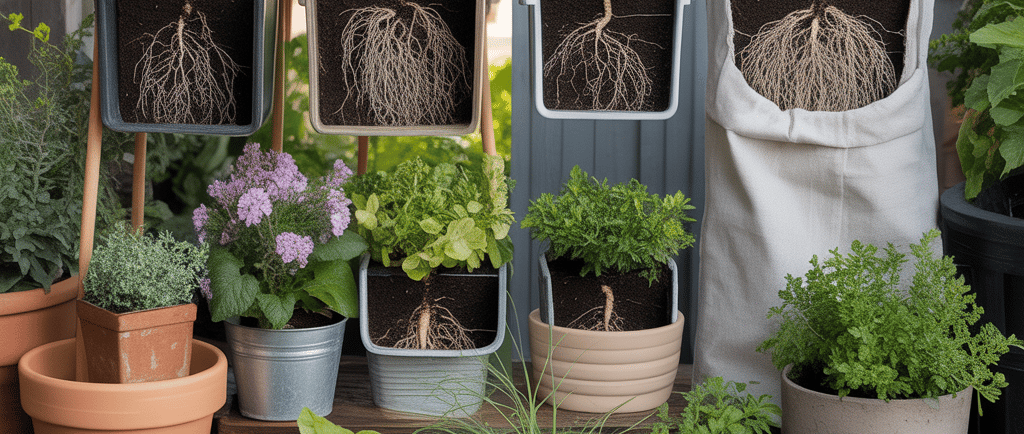
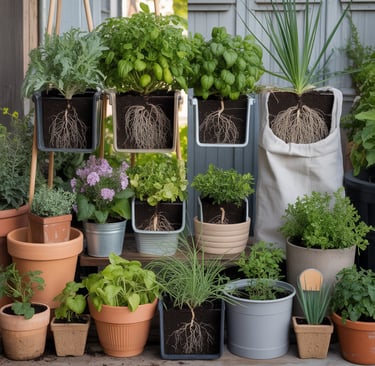
Understanding Root Systems and Container Needs
Before you can choose container sizes, you need to understand what's happening underground.
Shallow-rooted versus deep-rooted plants have completely different container needs. Shallow-rooted plants (lettuce, spinach, most herbs, strawberries) have fibrous roots in the top 6-8 inches of soil. They do fine in shallow wide containers. Deep-rooted plants (tomatoes, carrots, most perennials) send roots down 12-24+ inches. They need deep containers. I made the mistake of growing carrots in an 8-inch-deep container—they grew to 3 inches long then forked and stopped because they hit bottom. Carrots need 12+ inches of depth.
Fibrous roots versus tap roots affect container shape requirements. Fibrous root systems (like most grasses, lettuce, onions) spread horizontally more than vertically—they want width more than depth. Tap root systems (carrots, parsnips, some trees) go straight down—they want depth more than width. A lettuce plant does great in a wide shallow container. A carrot does great in a narrow deep container. Matching container shape to root type maximizes the useful volume.
How root systems grow in containers versus ground is fundamentally different. In the ground, roots spread indefinitely in all directions seeking water and nutrients. In containers, roots hit the wall and either stop or circle. Container-grown plants develop more compact, dense root systems than ground-grown plants. This is why container plants need rich soil and frequent feeding—they're accessing less total volume than ground plants. Understanding this difference helps you appreciate why container size matters so much.
Root-bound plants and when it's actually a problem is more nuanced than "root-bound is bad." Some plants (snake plants, peace lilies, certain orchids) actually perform better when slightly pot-bound. Others (tomatoes, fast-growing annuals) suffer significantly when root-bound. I've seen snake plants that are severely root-bound still thriving and blooming. But I've also seen tomatoes that are root-bound stop producing fruit entirely. Know your plant's preferences.
Pot-bound symptoms to watch for include: roots circling the surface of the soil, roots growing out drainage holes, water running straight through without absorbing, rapid drying (needs water twice daily), stunted growth despite good care, and yellowing leaves despite fertilizing. When I see these signs, it's time to size up. The exception is plants that prefer being pot-bound—for those, these symptoms are normal and don't require action.
Root pruning and when larger isn't necessary is a technique I use for plants I want to keep in current containers. I unpot the plant, trim away the outer 1-2 inches of circling roots with clean shears, shake off some old soil, and repot in fresh soil in the same container. This rejuvenates the plant without sizing up. I do this with houseplants that are at my maximum size preference, or with plants that actually like being pot-bound. It works well but shouldn't be done more than annually.
Annual versus perennial root development affects long-term sizing strategy. Annuals live one season—you can size for that season's needs and start fresh next year. Perennials live for years and their roots keep growing—you need to either size large enough for several years of growth, plan to pot up periodically, or commit to root pruning. I size annual vegetables for the season. I size perennials generously or plan on repotting every 2-3 years.
Matching container depth to root characteristics is the fundamental sizing skill. Shallow fibrous roots: 6-10 inch depth. Medium fibrous roots: 10-14 inch depth. Deep tap roots or large fibrous systems: 14-24+ inch depth. I keep this simple chart in mind when choosing containers and it prevents most sizing mistakes. Depth is often more critical than diameter for successful growing.
The Basic Rules: Container Size by Plant Type
Here are the tried-and-true sizing guidelines that work for common plants.
Seedlings and starter plants start in 2-4 inch containers maximum. I start most seeds in 2-inch cells or small pots. This is large enough for initial growth but small enough that roots fill the container quickly. Once roots fill the 2-inch pot (usually 3-4 weeks for fast growers), I pot up to 4-inch containers. Starting too large causes the overwatering issues I mentioned—unused wet soil around tiny roots. Small containers for seedlings work better and develop better root systems.
Herbs vary by type but most do well in 6-8 inch containers. Compact herbs like thyme, oregano, and chives work in 6-inch pots. Larger herbs like basil, parsley, and cilantro prefer 8-inch pots minimum. Rosemary and other woody herbs want 10-12 inch pots for long-term health. I've grown basil successfully in 6-inch pots for a season, but 8-inch pots produced more and required less frequent watering. For perennial herbs you'll keep for years, size up to 10+ inches.
Lettuce and greens need 6-8 inches deep minimum, but width matters more than depth. A wide shallow container (8-10 inches wide, 6-8 inches deep) holds 4-6 lettuce plants comfortably. I use window boxes 8 inches deep for lettuces and they do great. Deeper is fine but not necessary—lettuce roots are shallow. I've grown lettuce in 4-inch-deep containers in a pinch and it worked, but 6 inches is better and plants are more vigorous.
Tomatoes need 5-7 gallons minimum (14-18 inch diameter, 12-18 inches deep). This is for full-size varieties. Determinate (bush) tomatoes can manage in 5-gallon containers. Indeterminate (vining) tomatoes really want 7-10 gallons. Cherry tomatoes can produce okay in 3-5 gallons but perform way better in 5-7 gallons. I've tested this extensively. Three-gallon containers produced 20-30 cherry tomatoes per plant. Seven-gallon containers produced 100+ per plant. The size difference is massive.
Peppers need 3-5 gallons (12-14 inch diameter, 10-12 inches deep). Sweet bell peppers want the larger end (5 gallons). Hot peppers produce well in 3 gallons. I grow jalapeños in 3-gallon fabric bags and get excellent production. I grow bell peppers in 5-gallon containers and they produce all season. Peppers are more forgiving of smaller containers than tomatoes, but adequate size still matters for yield.
Root vegetables have specific depth requirements: radishes 6 inches, beets 10 inches, carrots 12 inches, parsnips 18 inches, potatoes 12-18 inches. The vegetable needs room to develop downward. I tried growing beets in 6-inch-deep containers and got tiny deformed roots. In 10-inch containers, I got beautiful full-size beets. Depth is non-negotiable for root vegetables—width can be minimal, but depth must match the vegetable's length.
Flowering annuals should be sized based on mature plant dimensions. A plant that gets 12 inches wide wants a 12-14 inch container. A plant that gets 6 inches wide works in an 8-inch container. The general rule is container diameter should equal or slightly exceed mature plant width. I follow this and my annuals thrive. Too-small containers produce leggy plants with fewer flowers. Right-sized containers produce compact plants covered in blooms.
Houseplants follow the 2-inch up-pot rule: when repotting, move to a container 2 inches larger in diameter than current. A plant in a 6-inch pot moves to an 8-inch pot, not a 12-inch pot. This gradual sizing allows roots to fill each container before moving up. Jumping sizes (6 inches to 12 inches) creates that overwatering risk from unused soil. I learned this rule after killing several houseplants by jumping too large. Now I follow it religiously.
Measuring Containers: Gallons, Inches, and Liters
Container sizing is confusing because different measurement systems are used. Here's how to make sense of it all.
How gallon ratings translate to dimensions is approximately: 1 gallon ≈ 6-7 inch diameter, 2 gallon ≈ 8-9 inch diameter, 3 gallon ≈ 10 inch diameter, 5 gallon ≈ 12 inch diameter, 7 gallon ≈ 14 inch diameter, 10 gallon ≈ 16 inch diameter. These are approximations because pot shape varies. A tall narrow pot and a short wide pot might both be 5 gallons but have very different dimensions. I use these as rough guidelines when shopping.
Converting between gallons and liters: 1 gallon = 3.78 liters. So a 5-gallon container is about 19 liters. European containers are often labeled in liters. A 10-liter container is about 2.6 gallons. I keep a simple conversion in mind: 4 liters ≈ 1 gallon. This lets me quickly convert when shopping. My 20-liter containers are roughly 5 gallons.
Diameter versus depth—which matters more depends on the plant. For shallow-rooted plants, diameter matters more (lettuce wants 10-inch diameter, only 6-inch depth). For deep-rooted plants, depth matters more (carrots want 12-inch depth, diameter can be 6 inches). For most plants, both matter and you want containers that are roughly proportional (12 inches diameter, 10-12 inches deep). I check both measurements before buying.
Standard container sizes and their dimensions create consistency in the industry: 4-inch (quart), 6-inch (1 gallon), 8-inch (2 gallon), 10-inch (3 gallon), 12-inch (5 gallon), 14-inch (7 gallon), 16-inch (10 gallon). These are the most common sizes you'll find. Not all manufacturers follow these exactly, but they're close enough for planning. I stock these standard sizes and they cover 90% of my needs.
Measuring containers that aren't labeled requires simple math. For round pots: measure diameter at the top and depth. Volume (gallons) ≈ (diameter² × depth) ÷ 200 (for measurements in inches). This is approximate but close enough. For square/rectangular pots: (length × width × depth) ÷ 230 ≈ gallons. I've measured unlabeled pots this way many times. A calculator makes it quick. Knowing the volume helps you compare to standard sizes.
Volume calculations for non-standard shapes get complex, but there's an easier way: fill the container with water from a measuring container and track how much water it holds. One gallon of water = one gallon of volume. I've done this when I really needed to know the exact volume of an odd-shaped container. It's messy but accurate. For most purposes, approximation is fine.
Trade pots versus retail pots have a size difference that confuses people. "Trade pots" (what nurseries use) are smaller than their stated size. A "1-gallon trade pot" might only hold 0.7 gallons. Retail pots sold to consumers are usually closer to true size. This matters when you're trying to replicate nursery growing—your "1-gallon" retail pot might be larger than the nursery's "1-gallon" pot. I've learned to focus on actual dimensions rather than the gallon label.
Understanding grow pot sizing systems: pots are typically measured by diameter at the top. A "10-inch pot" means 10 inches across the top. Depth varies by style (standard, azalea, bulb pan, etc.). Always check depth separately—don't assume it matches diameter. I've bought "12-inch pots" that were 12 inches across but only 8 inches deep. They were azalea pots, not standard depth. Read labels carefully or measure before buying.
Vegetables and Their Container Size Requirements
Let me get specific about what different vegetables actually need, based on my own growing experience.
Tomatoes require different sizing for determinate versus indeterminate varieties. Determinate (bush) tomatoes stay compact—5-gallon containers (12-inch diameter minimum) work reasonably well. I've grown patio varieties successfully in 5-gallon buckets. Indeterminate (vining) tomatoes get huge—they need 7-10 gallon containers minimum. I grow 'Sungold' cherry tomatoes (indeterminate) in 7-gallon fabric grow bags and they produce prolifically. When I tried them in 3-gallon containers, production dropped by 60%.
Peppers and eggplants have similar needs: 3-5 gallons depending on variety. Hot peppers (jalapeños, cayennes, thai chilies) produce great in 3-gallon containers. I grow 4-5 jalapeño plants every year in 3-gallon pots and get more peppers than I can use. Bell peppers want 5 gallons—they're larger plants. Eggplant, especially the large Italian varieties, want 5 gallons minimum. Asian eggplant varieties work in 3-5 gallons. I've found that adequate container size eliminates blossom drop issues in peppers.
Cucumbers and squash need large containers because of their extensive root systems. Bush cucumbers need 5-gallon minimum. Vining cucumbers want 5-7 gallons. Zucchini needs 10+ gallons—yes, really. I tried zucchini in 5-gallon containers and got maybe 4 zucchinis per plant. In 15-gallon containers, I got 20+ zucchinis. The size difference for large vegetables is critical. Summer squash needs 10+ gallons too. Winter squash varieties want 15-20 gallons for good production.
Beans and peas are more flexible. Bush beans do fine in 8-10 inch deep containers with 6-8 inches of width per plant. Pole beans want 10-12 inches deep. I grow bush beans in window boxes 8 inches deep with three plants per 24-inch box—works great. Peas need 8-10 inches depth. The key is adequate depth for roots and appropriate spacing (4-6 inches between plants). Both beans and peas are fairly drought-tolerant so smaller containers are more forgiving than for water-hungry crops.
Root vegetables have non-negotiable depth requirements. Radishes: 6 inches deep minimum (they're short). Beets: 10 inches deep minimum. Carrots: depends on variety—short varieties need 8-10 inches, long varieties need 12-14 inches. Parsnips need 18 inches—they're huge. Potatoes need 12-18 inches depending on method (tower growing can use less depth). I've grown potatoes in 5-gallon buckets (12 inches deep) and got 2-3 pounds per bucket. Width can be minimal—carrots in a 6-inch diameter pot work if the depth is adequate.
Leafy greens like lettuce, kale, spinach, and chard need 6-10 inches deep depending on the green. Lettuce and spinach (shallow roots) work in 6-8 inches. Kale and chard (deeper roots, longer-lived) prefer 8-10 inches. Width matters for leaf development—give them 6-8 inches of width per plant. I grow lettuce in 8-inch-deep window boxes with plants spaced 6 inches apart. They produce continuously for weeks. Too-small containers cause bolting and bitterness.
Herbs have individual requirements. Basil: 6-8 inch pot per plant. Cilantro: 6-8 inches. Parsley: 8-10 inches. Thyme, oregano: 6 inches is adequate. Rosemary (if keeping long-term): 10-12 inches minimum. Mint: 8-10 inches (and keep it contained or it spreads). Chives: 6-8 inches. Dill: 10-12 inches (it gets tall). I keep most annual herbs in 8-inch pots as my standard. Woody perennial herbs get 10-12 inch pots.
Compact versus standard vegetable varieties make a big difference. Compact varieties bred for containers have smaller root systems and smaller plants. A compact tomato variety might thrive in a 3-gallon container where a standard variety needs 7 gallons. When shopping for container vegetables, look for compact, patio, dwarf, or bush varieties. These are bred specifically for container growing and need less space. I prioritize compact varieties for my limited space.
Container Sizes for Ornamental Plants
Ornamentals have different sizing needs based on their growth habits and longevity.
Annual flowers should be sized by mature plant dimensions. A petunia that spreads 12 inches wide wants a 12-14 inch container minimum. A marigold that gets 8 inches wide works in a 10-inch container. Larger annuals like tall zinnias or cosmos need 12-14 inch containers for stability and adequate water. I follow the rule: container diameter = mature plant spread, or slightly larger. This produces full, balanced plants. Too-small containers produce leggy stretched plants.
Perennials in containers need long-term sizing because they'll be in the container for years. I size perennials 2-4 inches larger than immediate needs to allow for 2-3 years of growth. A perennial with a current 8-inch root ball goes into a 12-inch container. This gives it room to grow without needing annual repotting. Perennials in too-small containers decline over time—less flowering, more disease susceptibility. Generous sizing pays off for multi-year plants.
Shrubs and dwarf trees need minimum requirements based on their mature root ball size. The general rule is container diameter should be at least 2x the root ball diameter. A shrub with a 12-inch root ball needs a 24-inch container minimum. Trees need even more generous sizing—plan on very large containers (20+ gallon) for even dwarf varieties. I grow dwarf citrus in 20-gallon containers and they do well. Smaller containers stress trees and reduce fruiting.
Roses in containers need generous sizing for their extensive root systems. Miniature roses can manage in 8-10 inch pots. Standard roses need 14-18 inch containers (7-10 gallons) minimum. Climbing roses want 15+ gallons. I've grown hybrid tea roses in 7-gallon containers successfully but they performed better when I moved them to 10-gallon containers. Roses are heavy feeders and drinkers—adequate soil volume is essential.
Bulbs have specific depth and spacing requirements. The general rule is plant bulbs at a depth equal to 2-3x the bulb height, so container depth needs to accommodate this plus roots. Tulips and daffodils need 10-12 inches depth minimum. Smaller bulbs like crocuses need 6-8 inches. Width depends on spacing—bulbs should be 1-2 inches apart. I plant 6-9 tulip bulbs in a 12-inch diameter pot. Bulb pans (short wide containers) work great for spring bulbs.
Tropical plants vary widely but most want adequate space for their growth rate. Fast-growers like pothos or monstera need regular potting up—I move mine to the next size every year or two. Slow-growers like ZZ plants can stay in the same container for 3-5 years. Tropical plants with large leaves (like elephant ears) need large containers for stability and water—10-15 gallon minimum. I keep my monstera in a 10-gallon container and pot up every 2 years.
Cacti and succulents actually prefer smaller containers relative to plant size. They like being slightly pot-bound and hate excess wet soil. I keep most succulents in containers just large enough for the roots with minimal extra space. A 4-inch succulent stays in a 4-5 inch pot, not an 8-inch pot. Overpotting succulents causes root rot from wet unused soil. This is the opposite of the rule for most plants. When in doubt with succulents, size down rather than up.
Climbers and vining plants need support considerations beyond root space. The container needs to be large enough for roots and heavy enough to support the weight of the vine and trellis without tipping. I grow clematis in 7-gallon containers with sturdy obelisk supports. The large container provides root space and weight for stability. Lighter vines (like sweet peas) work in 3-5 gallon containers. Match container size to both root needs and support requirements.
Houseplant Container Sizing Strategies
Indoor plants have special considerations because they're permanent residents, not seasonal crops.
The 2-inch rule for repotting is the golden standard for houseplants. When a plant is pot-bound and needs sizing up, move to a container 2 inches larger in diameter. A plant in a 6-inch pot moves to an 8-inch pot. This gradual sizing allows roots to fill the new container within a reasonable time (usually 1-2 years). I follow this rule strictly for all my houseplants. The exception is very slow-growing plants—those might only need sizing up every 3-5 years or never.
Slow growers versus fast growers need different strategies. Slow growers (ZZ plants, snake plants, many succulents) can stay in the same container for years. I have a snake plant that's been in the same 10-inch pot for 5 years and is thriving. Fast growers (pothos, philodendron, spider plants) need potting up annually or every two years. I pot up my pothos every 18 months or so. Knowing your plant's growth rate helps you plan sizing strategy.
Pothos, philodendron, and trailing plants are fast-growing vining plants that need regular attention. I start these in 4-6 inch pots and pot up to 6-8 inch pots within a year. Eventually they end up in 8-10 inch pots where I maintain them through pruning. These plants tolerate being pot-bound reasonably well—I've seen gorgeous pothos in cramped pots. But they perform better with adequate space. The key is regular pruning to control size without constantly sizing up.
Snake plants and ZZ plants tolerate (and somewhat prefer) being pot-bound. They're very slow-growing and can stay in the same container for 3-5+ years. When I do repot them, I only go up one size (2 inches) because oversizing causes rot issues. These plants store water in their roots/rhizomes and hate wet soil. Small containers that dry out between waterings are actually safer than large containers. I've killed both by overwatering in too-large containers.
Fiddle leaf figs and statement plants need stability considerations beyond root space. A 6-foot fiddle leaf fig in a too-small container is top-heavy and tips over. The container needs to be large enough for roots and heavy enough for stability. I keep my 5-foot fiddle leaf fig in a 12-inch container (about 7 gallons) which provides both root space and stability through soil mass. Going smaller would create tipping issues. Large plants need proportionally large containers.
Palms need containers chosen for stability because their top-heavy growth habit makes them prone to tipping. I size palms generously—a 4-foot palm goes in a 14-16 inch container minimum. The mass of soil in the large container prevents tipping. Palms also have extensive root systems that need space. I've had success with majesty palms in 10-gallon containers. Too-small containers not only restrict growth but also create instability issues.
Succulents avoid the too-big trap by staying in snug containers. I keep most succulents in small containers—4-6 inches for most individual plants. Only large or mature succulents go into 6-8 inch containers. Overpotting kills more succulents than underpotting ever will. The unused wet soil in oversized containers causes root rot. When in doubt, I keep succulents in their current container or size up by just 1 inch, not 2.
When to size up versus root prune is a strategic choice for plants at your maximum size preference. If a plant is in a 10-inch pot and that's the largest container I want to deal with, I root prune instead of sizing up. I unpot, trim away circling roots, remove some old soil, and repot in fresh soil in the same 10-inch container. This rejuvenates the plant without increasing size. I do this with plants where size control matters more than maximum growth.
Signs Your Container Is Too Small
Recognizing these signs prevents plant stress and failure.
Roots growing through drainage holes is an obvious sign. If roots are emerging from the bottom of the container in abundance (a few visible roots is fine), the plant is pot-bound. I check drainage holes regularly when plants seem stressed. Long roots emerging from holes mean it's past time to size up. Some plants tolerate this better than others, but it's always a sign the container is on the small side.
Water running straight through without absorbing happens when roots are too dense to allow water penetration. I pour water on top and it immediately runs out the bottom without soaking into the soil. The root mass has displaced so much soil that water can't be retained. This is a severe pot-bound symptom. When this happens, I bottom-water (soak the whole container in water) to rehydrate, then repot to a larger container as soon as possible.
Plant drying out within hours of watering is a symptom I see in summer with pot-bound plants. I water in the morning and by afternoon the plant is wilting. The limited soil volume can't hold enough moisture for the plant's needs. This creates constant stress and is unsustainable. Sizing up solves this immediately. I've had tomatoes in 3-gallon containers that needed twice-daily watering. In 7-gallon containers, the same variety went 2-3 days between waterings.
Stunted growth despite good care (adequate light, water, fertilizer) indicates root restriction. The plant has hit its limit for the available root space. I've had houseplants that were healthy but just stopped growing for months. Repotting to larger containers resulted in immediate new growth within 2 weeks. The difference is dramatic. If all other factors are good and growth has stalled, container size is likely the issue.
Top-heavy plants tipping over indicate that the container is too small for the plant's size. The above-ground mass exceeds what the container can stabilize. I've had this with tomatoes that got tall and kept falling over despite staking. Moving to larger containers solved it—more soil mass = more stability. This is particularly common with tall narrow plants in small containers. The container needs to match the plant's proportions.
Roots circling the pot surface means the plant has exhausted downward root space and is growing horizontally in circles. When I see roots on the soil surface winding around in circles, it's time to size up. Sometimes I can gently pull the plant and see roots wrapped in circles around the root ball—classic pot-bound condition. This needs addressing soon or the circling roots become permanent and don't spread properly even after repotting.
Soil level dropping as roots dominate the container is a subtle sign. The visible soil level drops because roots are displacing soil volume. I've noticed this in long-term containers—what was once full to the rim is now 2 inches below the rim because roots have filled the space. This indicates the plant could use more room. I top-dress with fresh soil temporarily but plan to repot soon.
Yellowing despite adequate fertilizer can indicate root restriction limiting nutrient uptake. Even with regular fertilizing, a pot-bound plant can't efficiently absorb nutrients. The roots are stressed and inefficient. I've seen this repeatedly—a plant that's been fertilized regularly still shows deficiency symptoms. After repotting to a larger container and fresh soil, the yellowing resolves within weeks. Pot-bound roots simply can't function optimally.
Signs Your Container Is Too Large
Overpotting causes different problems that are equally harmful.
Soil staying wet for days after watering is the primary symptom of oversized containers. The excess soil that roots haven't penetrated yet stays saturated because there are no roots to absorb the moisture. I stick my finger in and find wet soil 3-4 days after watering. This constant wetness is a root rot setup. Properly-sized containers dry within 1-3 days in active growing conditions. Week-long wetness indicates too much soil volume.
Algae or mold on soil surface grows in constantly wet conditions. Green algae on the soil surface or white fuzzy mold indicates that the top soil never dries out. This is common in oversized containers with small plants. The unused wet soil is a perfect environment for algae and fungal growth. I've seen this in containers where I overpotted—the surface stayed wet enough to grow algae. Properly-sized containers have drying cycles that prevent this.
Slow growth and yellowing leaves from oversized containers seems counterintuitive—shouldn't more space equal better growth? Not for small plants. Oversized containers stay too wet, which limits root oxygen availability. Roots effectively suffocate in wet oxygen-poor soil. The result is slow growth and yellowing leaves despite adequate nutrients. I've caused this by potting seedlings into large containers. Growth was terrible until I moved them to appropriate sizes.
Fungus gnats thriving in constantly moist soil is a pest problem directly caused by oversized containers. Fungus gnat larvae live in wet soil. Constantly wet oversized containers are fungus gnat paradise. I've battled fungus gnats in situations where the problem was really overwatering from oversizing. Once I sized down to appropriate containers that could dry properly, the fungus gnat problem disappeared without pesticides. Proper sizing = better moisture management = fewer pests.
Root rot symptoms (mushy stems, wilting despite wet soil) are the worst-case scenario from oversized containers. The constant wet conditions cause root rot fungal disease. The plant wilts even though soil is wet because rotten roots can't absorb water. This is often fatal. I've lost plants to root rot from overpotting. Prevention through proper sizing is way easier than treating root rot. By the time symptoms appear, significant damage has occurred.
Difficulty judging when to water happens because the soil surface can be dry while deeper soil is still saturated. In properly-sized containers, I can judge watering needs by checking the top 2 inches of soil. In oversized containers, the top is dry but the bottom is soggy—confusing and difficult to manage. This leads to inconsistent watering and stressed plants. Proper sizing makes watering decisions straightforward.
Salt buildup from fertilizer in unused soil creates problems over time. The unused soil accumulates salts from fertilizer but doesn't have roots to absorb them. This salt concentration builds up and can damage roots when they eventually reach that area. I've seen white crusty deposits on soil in oversized containers—salt accumulation. This requires leaching (flushing with excess water) or repotting to fresh soil. Properly-sized containers don't accumulate salts because roots are throughout the volume.
Disproportionate pot to plant ratio is an aesthetic issue that signals functional problems. A tiny seedling in a huge pot looks odd—and that visual cue is accurate. The proportion is wrong, which indicates sizing is wrong. If the pot visually dwarfs the plant, it's probably too large. Conversely, if the plant looks cramped or oversized for its pot, that's also a visual cue of poor sizing. I've learned to trust visual proportion as an indicator of proper sizing.
Container Depth vs. Width: What Matters When
Understanding when depth matters more than width (or vice versa) optimizes container selection.
Deep containers for tap-rooted plants are non-negotiable. Carrots, parsnips, some radish varieties, and many perennial flowers have tap roots that go straight down. They need depth more than width. A 6-inch diameter container that's 18 inches deep works better for carrots than a 12-inch diameter container that's 8 inches deep. I prioritize depth for these plants. The width can be minimal but the depth must accommodate the root.
Shallow wide containers for fibrous roots maximize usable volume for spreading root systems. Lettuce, strawberries, herbs, and most grasses have shallow fibrous roots that spread horizontally. An 8-inch deep, 18-inch wide container is ideal. Compare this to an 18-inch deep, 8-inch wide container with the same volume—the shallow wide one works way better for fibrous roots. I use window boxes (typically 8 inches deep, 36 inches wide) for lettuce and they're perfect.
Azalea pots are shorter than standard pots (about 3/4 the height of diameter). An azalea pot might be 10 inches wide and 7.5 inches tall. These work great for plants with shallow root systems or plants that prefer being pot-bound (like, obviously, azaleas, but also many succulents and some ferns). I use azalea-style pots for snake plants and succulents. The proportions prevent excess deep soil that would stay wet.
Long toms are tall narrow containers (height exceeds diameter). A long tom might be 6 inches wide and 10 inches tall. These are perfect for deep-rooted plants in limited space. I've used long toms for carrots and deep-rooted herbs. The narrow footprint saves space while providing needed depth. They're less common than standard pots but valuable for specific applications.
Bulb pans are wide and shallow (height is about 1/2 the diameter). A bulb pan might be 12 inches wide and 6 inches tall. Despite the name, they're useful for more than bulbs. I use them for shallow-rooted plants like some succulents, lettuce, or sprawling herbs. The wide surface area allows multiple plants in shallow soil. Good for displays where you want full coverage from many small plants.
Standard depth containers are roughly proportional (depth is 80-100% of diameter). A 10-inch pot is typically 8-10 inches deep. These all-purpose proportions work for the widest range of plants. Most vegetables, flowers, and houseplants do well in standard proportions. When I'm unsure what depth a plant needs, I default to standard depth containers. They're the safe middle ground.
Window boxes have depth limitations (typically 6-8 inches) that determine what you can grow. This depth is adequate for lettuce, herbs, flowers, and shallow-rooted vegetables. It's not adequate for tomatoes, carrots, or deep-rooted plants. I work within the window box depth constraint by choosing appropriate plants. The length provides growing space that compensates for limited depth—a 36-inch window box holds many plants despite being shallow.
Hanging baskets have depth versus drainage considerations. Hanging baskets are often 8-10 inches deep but drainage needs to be managed carefully. Excess depth without perfect drainage causes waterlogging. I prefer hanging baskets that are slightly shallower (6-8 inches) with excellent drainage. The hanging position means they dry faster (more air circulation) so depth can be limited without causing drought stress. The key is matching depth to the specific hanging conditions.
Starting Small and Sizing Up: The Progressive Approach
This is the strategy I use for most plants, especially those I'm growing from seed.
Why starting in appropriately small containers works better than starting large: small containers allow faster root development (roots fill the space quickly), easier moisture management (the whole container dries relatively evenly), better root structure (roots develop throughout the container, not just at the edges), and less risk of overwatering. I start most seeds in 2-inch cells. The seedlings establish quickly and I can easily monitor moisture. Starting the same seeds in 6-inch pots would risk overwatering and slower establishment.
The 2-4-6 inch progression for seedlings is my standard protocol. Seeds start in 2-inch cells or pots. After 3-4 weeks (when roots fill the container), I pot up to 4-inch pots. After another 4-6 weeks (when roots fill the 4-inch pot), I pot up to 6-inch pots or final container size. This progression produces strong root systems and healthy plants. I've compared this to starting seeds directly in large containers—the progressive approach consistently produces better plants.
When to pot up and how to know: check roots by gently sliding the plant out of its container. If roots are circling or densely packed, it's time to pot up. If you see mostly soil with scattered roots, the plant isn't ready yet. Another indicator is top growth—when the plant is growing vigorously and seems large for its container, check roots. I typically pot up when I see roots emerging from drainage holes or when the plant seems to dry out very quickly.
Transplant shock from jumping sizes too fast is real and can set plants back weeks. I learned this by moving a 4-inch plant directly to a 12-inch pot. The plant went into shock, growth stalled, and some leaves yellowed. It eventually recovered but lost several weeks of growth. Now I follow the 2-inch rule—pot up gradually, not in giant jumps. The plant adjusts better to gradual changes.
Root development benefits of gradual sizing are significant. Progressive potting encourages roots to develop throughout the soil volume rather than just at the container edges. The root system becomes dense and fibrous rather than sparse and circling. I've unpotted progressively-sized plants and seen beautiful dense root balls filling the entire container. Plants jumped to large sizes show sparse roots clustered at edges with empty soil in the middle.
Time and cost savings of progressive potting exist despite using multiple containers. You're only buying/filling large containers for plants that actually make it to that size. If a seedling dies in a 2-inch pot, you've only invested in 2 inches of soil. If it dies in a 10-inch pot, you've wasted way more soil and a more expensive container. Progressive potting means you invest in size as the plant proves itself viable. I've saved money this way when plants failed at earlier stages.
Final container size timing depends on the specific plant and how long it'll be in that container. For annuals (tomatoes, peppers, flowers), I move to final size about 4-6 weeks before their final outdoor placement. For perennials or houseplants, I pot to final size when the plant reaches the size I want to maintain long-term. There's no rush to hit final size—progressive potting can continue as long as the plant keeps growing and you want it larger.
Plants that prefer to be pot-bound are the exception to progressive sizing. Snake plants, peace lilies, spider plants, and some orchids actually perform better when slightly pot-bound. For these, I pot up less frequently (every 3-5 years instead of annually) and I might only go up 1 inch instead of 2. The restriction doesn't hurt them and may actually encourage flowering. I follow the plant's preference rather than forcing progressive sizing.
Material Matters: How Container Type Affects Sizing
The container material impacts how you should size because different materials affect moisture retention and root temperature.
Terracotta containers dry out faster than plastic due to porosity—the clay breathes and moisture evaporates through the pot walls. This means I often size up slightly when using terracotta versus plastic. A plant in a 10-inch plastic pot might need a 12-inch terracotta pot to have equivalent moisture availability. Or I accept that terracotta containers need more frequent watering. The benefit of terracotta is better aeration and forgiving of overwatering. The downside is faster drying.
Plastic containers retain moisture longer, so I can sometimes size down slightly versus terracotta. A plant that needs a 12-inch terracotta pot might do fine in a 10-inch plastic pot because the plastic retains moisture better. Plastic is also lighter and cheaper. The downside is less aeration and less forgiving of overwatering. I use plastic for plants that like consistent moisture and for locations where I can't water daily.
Fabric grow bags size equivalents are tricky—a 5-gallon fabric bag is typically smaller in dimensions than a 5-gallon plastic pot but provides better aeration. The fabric allows "air pruning" of roots (roots that hit the fabric dry out and branch rather than circling). This means plants in fabric bags can sometimes use smaller sizes than in plastic. A tomato in a 7-gallon fabric bag might perform like a tomato in a 10-gallon plastic pot. I've found fabric bags very efficient for vegetables.
Ceramic glazed containers behave similarly to plastic in terms of moisture retention—the glaze seals the ceramic and prevents evaporation through walls. I size ceramic glazed pots the same as plastic pots. The main difference is weight (ceramic is much heavier) and cost (ceramic is more expensive). For indoor decorative containers, I often use plastic grow pots inside decorative ceramic cache pots.
Self-watering containers have depth requirements that differ from standard pots. The reservoir at the bottom takes up 2-4 inches of the total container depth. A 12-inch-tall self-watering container might only have 8-10 inches of soil depth. I account for this when sizing—a plant that needs 10 inches of depth needs a 12-14 inch self-watering container to have equivalent soil depth. Self-watering containers also allow me to size down slightly in some cases because moisture is consistently available.
Hanging baskets dry out faster than ground containers due to increased air circulation. I size hanging baskets slightly larger than I would for the same plant at ground level. A plant in an 8-inch ground container might need a 10-inch hanging basket. Or I use self-watering hanging baskets to compensate for the faster drying. Wind exposure significantly increases how fast hanging baskets dry—account for this in sizing decisions.
Metal containers heat up significantly in sun, which affects root temperature and drying speed. Roots can be damaged by overheating in small metal containers in direct sun. I either size metal containers generously (so the soil mass buffers temperature), use them only in shade, or line them with insulating material. Metal containers also dry faster due to heat. I've had plants in metal containers dry out twice as fast as plants in plastic—sizing up compensates for this.
Wood planters have size and weight limits based on construction. Large wood planters are heavy even before adding soil and plants. I consider weight restrictions carefully, especially for balconies or elevated surfaces. Wood planters also degrade over time from moisture—expect 5-10 year lifespan depending on wood type and conditions. I size wood planters knowing they'll eventually need replacement, so I don't commit to permanent plantings in wood containers that might outlive the container.
Special Considerations for Specific Plants
Some plants have quirks that require special sizing approaches.
Trees in containers need at minimum 2x the root ball diameter. A tree with a 12-inch root ball (when you buy it) needs a 24-inch container minimum. Better is 30-36 inches for long-term health. Trees want to be permanent in containers (repotting a large tree is difficult), so size generously from the start. I've grown dwarf citrus trees in 20-24 inch containers (roughly 20-25 gallons) and they've done well for 5+ years without repotting.
Citrus trees need large containers for good production—15-25 gallons minimum for dwarf varieties. Larger citrus want 25-30+ gallons. Citrus are heavy feeders and drinkers, and fruit production requires significant resources. I grow a Meyer lemon in a 20-gallon container and get 20-30 lemons per year. When I tried growing citrus in a 10-gallon container, production was minimal—maybe 5-10 fruit. The size difference directly impacts yield.
Strawberries have shallow roots but send out runners—they need width more than depth. An 8-10 inch deep container works well if it's 12-18 inches wide. I've grown strawberries in hanging baskets (shallow but wide) with success. The runners can cascade over the edges or be rooted back into the same container if there's room. Strawberry towers (vertical planters) work but each planting pocket needs to be 6-8 inches deep minimum.
Potatoes can be grown in towers or traditional containers with different depth requirements. Traditional growing in buckets/containers needs 12-18 inches depth—plant potatoes at the bottom, cover with 4-6 inches of soil, add more soil as plants grow. Potato towers (where you continuously add soil around growing plants) can be 24-36 inches deep. I've grown potatoes in 5-gallon buckets (12 inches deep) with good success—2-3 pounds per bucket. Deeper containers or towers can increase yield.
Ginger and turmeric prefer wide shallow containers rather than deep ones. Their rhizomes spread horizontally just below the soil surface. An 8-10 inch deep container that's 14-18 inches wide is ideal. I grew ginger in a 16-inch diameter pot that was only 8 inches deep—worked perfectly. The wide surface area allowed the rhizomes to spread. Deep narrow containers waste space since ginger roots don't go deep.
Orchids need snug pots versus overpotting—they prefer being pot-bound. Most orchids should be in containers where roots fit snugly with minimal extra space. Overpotting orchids causes root rot from wet unused medium. I keep orchids in the smallest container that accommodates the roots. When repotting, I often use the same size container with fresh medium rather than sizing up. Orchids perform better when slightly cramped.
Bonsai involves restricted growth by design through small container use. Bonsai trees are kept small partially through aggressive pruning but also through root restriction in small shallow containers. This is intentional—the small container limits growth as part of the bonsai technique. This is the opposite of most gardening advice and is a specialized case where small containers are the goal, not a problem.
Aquatic plants have depth and volume needs based on whether they're submerged, floating, or marginal. Water lilies need 12-18 inch depth minimum for their tubers to sit at the bottom while leaves reach the surface. Lotus need even more—18-24 inches. Marginal plants (like cattails) can grow in 6-12 inches of water depth. I've grown dwarf water lilies in containers with 12 inches of water depth successfully. Full-size varieties need more.
Multiple Plants in One Container: Sizing Calculations
Growing multiple plants in one container requires different math than single plants.
Combining plants with similar needs is the foundation—don't mix drought-tolerant and water-hungry plants in one container. They'll have the same soil moisture, so they need similar watering preferences. I combine herbs with similar needs (Mediterranean herbs together, tender herbs together). Combining incompatible plants means one will always be incorrectly watered. This is a recipe for at least one plant failing.
Calculating total volume needed for multiple plants: add up individual plant requirements and add 20-30% for competition. If one lettuce needs 0.5 gallons and I want 4 lettuces, I need 4 × 0.5 = 2 gallons, plus 20% = 2.4 gallons minimum. A 3-gallon container would be appropriate. This prevents overcrowding and ensures adequate resources. I've made the mistake of just cramming multiple plants into barely adequate space—they survive but don't thrive.
Spacing requirements in shared containers prevent crowding and competition. Even if container volume is adequate, plants need physical space. Lettuce plants should be 6-8 inches apart. Herbs should be 4-6 inches apart. I've planted too densely and ended up with spindly stretched plants competing for light and air. Proper spacing in adequate volume produces healthy individuals. Measure spacing from stem to stem, not leaf to leaf.
Thriller-filler-spiller combinations need size considerations for each component. The thriller (tall focal plant) needs the most root space. Fillers (medium plants around the thriller) need moderate space. Spillers (trailing plants at edges) need less space individually but collectively need adequate room. I might use a 14-16 inch container for a combination with one thriller, 3-4 fillers, and 2-3 spillers. The total volume needs to support all plants.
Herb gardens—how many plants per container depends on container size and herb type. In an 8-inch pot, I grow 1 large herb (like basil) or 2-3 smaller herbs (like thyme and oregano together). In a 12-inch pot, I grow 3-4 herbs if they're compatible. A 14-16 inch container can hold 5-7 small herbs or 3-4 larger herbs. I've learned through trial that overcrowding herbs reduces flavor and vigor. Better to have fewer healthy plants than many struggling ones.
Salad bowls (mixed greens in one container) allow fairly dense planting because you harvest frequently. In a 12-inch container, I plant 6-8 lettuce plants or mixed greens. I harvest outer leaves continuously, which provides space for new growth. The density works because I'm harvesting before plants reach full size. This is different from spacing for full-size plants—salad bowls assume you'll harvest at baby or partial size.
Succulent arrangements in shallow containers can be planted densely because succulents are small and slow-growing. In a 10-inch diameter, 4-inch deep bowl, I might plant 8-12 small succulents. They'll stay compact and grow slowly. The shallow container prevents overwatering (which succulents hate), and the density creates visual fullness. Over time some may outgrow the container, but for 2-3 years the dense arrangement works beautifully.
Managing different root systems together requires understanding depth needs. If I combine shallow-rooted lettuce with deeper-rooted carrots in one container, I need enough depth for the carrots (12 inches) even though lettuce only needs 6 inches. The deeper roots get their space and the shallow roots use the upper portion. This works but requires a container sized for the deepest-rooted plant in the mix. Shared containers must meet the most demanding plant's requirements.
Budget and Practical Considerations
Sometimes ideal sizing isn't possible due to budget, space, or other constraints. Here's how to work within limitations.
Cost per gallon varies significantly—larger containers often have better cost per gallon than small containers. A 3-gallon pot might cost $8 ($2.67/gallon). A 10-gallon pot might cost $15 ($1.50/gallon). Buying the larger container upfront costs more initially but is actually more economical per gallon of capacity. I stock up on larger containers when I find good prices because the per-gallon cost is better and they're more versatile.
Soil volume and cost calculations matter when filling many containers. A 3-gallon container needs 3 gallons of potting mix (obviously). At $10 per cubic foot of potting mix (7.5 gallons), that's $4 worth of soil. A 10-gallon container needs $13 worth of soil. If I'm filling 10 containers, soil costs add up to $40 (for 3-gallon) or $130 (for 10-gallon). I budget for soil costs when planning container gardens—it's a significant expense beyond the containers themselves.
Weight considerations for balconies and shelves are safety issues. Balconies have weight limits (typically 40-60 pounds per square foot). A 10-gallon container with wet soil weighs 80-100 pounds. Multiple large containers can exceed balcony limits. I calculate weight carefully: container + soil + water + plant. I use lightweight containers (resin, fabric) and lightweight soil (perlite-amended mixes) to stay under limits. Shelves also have weight limits—check before loading with containers.
Storage and space limitations affect how many and what size containers I can realistically manage. I live in a small apartment—I don't have room to store 20 large containers when not in use. I prioritize containers I use year-round and limit seasonal containers. Stackable containers save storage space. Collapsible fabric bags store flat. I've learned to be realistic about storage—buying containers I don't have room to store creates clutter.
Using what you have versus buying optimal is sometimes necessary. I've repurposed buckets, storage bins, and other found containers rather than buying ideal containers. These compromises work but may require adjustments—drilling drainage holes, accepting non-ideal depth, more frequent watering, etc. A 5-gallon bucket isn't ideal for tomatoes but it works. An old storage bin can become a lettuce planter. Using what you have is legitimate budget gardening.
Long-term savings from proper initial sizing prevents having to replace plants and containers. I've made the mistake of buying cheap small containers, then having to replace them with larger containers when plants outgrew them. Buying the right size the first time (even if more expensive initially) costs less than buying small then large. I also waste less on plants that fail in inadequate containers. Proper sizing is an investment that pays off in plant success.
When to compromise on ideal size: when budget is truly limited, use slightly smaller containers and increase maintenance (more frequent watering, more fertilizing). When space is the limitation, use the maximum size your space allows even if it's not ideal. I've grown tomatoes in 3-gallon containers when I didn't have room for 7-gallon—they still produced, just less. Some production is better than none. Compromise intelligently rather than not growing at all.
Creative solutions for size constraints include: vertical growing (hang containers to save floor space), using every dimension (shelves create multiple levels), prioritizing high-value crops (herbs and greens in small containers produce a lot for their space), using compact varieties bred for containers (they need less space), succession planting (one small container rotating through multiple crops). I've made small spaces work through creativity rather than just accepting limitations.
Seasonal and Climate Adjustments
Your climate affects how you should size containers.
Larger containers for hot dry climates make sense because the extra soil volume retains moisture longer. In Arizona or similar climates, I'd size up by 25-50% compared to temperate climates. A tomato that needs 5 gallons in temperate climates might need 7-10 gallons in hot dry climates to provide adequate moisture buffering. The larger soil mass also insulates roots from extreme heat. I don't garden in extreme heat but I've consulted with people who do—generous sizing is critical.
Smaller acceptable in cool humid areas because evaporation is slower. In Pacific Northwest climates, containers dry slowly. A plant might do fine in a 3-gallon container in Seattle when it would need 5 gallons in Colorado. The consistent moisture from humidity and frequent rain compensates for smaller soil volume. I'd still follow minimum requirements but wouldn't need to size up as much for moisture buffering.
Winter container size for cold hardiness relates to root protection. Larger containers insulate roots better from freezing. In-ground plants are protected by earth's thermal mass. Small containers freeze solid quickly. I use larger containers (minimum 12-14 inches diameter) for any plant that will stay outdoors through winter. The soil mass prevents rapid temperature fluctuations and provides some insulation. Smaller containers would need to come indoors or get insulation.
Seasonal plants versus year-round plants allow different sizing strategies. Annual vegetables are in containers for one season—I can size them just adequately for that season. Perennials are in containers for years—I size generously for multi-year growth. I don't mind if an annual tomato is slightly cramped by season end. But I want perennials to have room for 2-3 years of growth without repotting.
Indoor versus outdoor sizing differences exist because indoor conditions are more stable. Indoor containers don't experience temperature extremes or high evaporation from sun and wind. I can sometimes size down slightly for indoor plants versus the same plant outdoors. An outdoor tomato needs 7 gallons, an indoor tomato might manage in 5 gallons. The reduced stress indoors means smaller containers are more tolerable.
Microclimate effects on container size can be significant within a single garden. My south-facing patio is hot and dry—containers there dry fast and need generous sizing. My shaded north side is cool and moist—containers dry slowly and can be sized smaller. I account for microclimates when deciding container sizes for specific locations. A plant in a hot exposed location needs a larger container than the same plant in a cool sheltered location.
Evaporation rates and container volume need matching. Windy locations have high evaporation—containers need to be larger to maintain adequate moisture between waterings. Calm locations have lower evaporation—containers can be moderately sized. I've noticed containers in windy spots dry 2-3x faster than containers in sheltered spots. I compensate by sizing up in windy locations or using self-watering containers.
Freeze protection and container mass matters for winter survival. Water expands when freezing and can crack containers. But more importantly, the freeze-thaw cycle damages roots. Larger containers with more soil mass freeze and thaw more slowly, reducing damage. I've overwintered perennials successfully in 10+ gallon containers. Smaller containers (5 gallons or less) experienced more plant loss from freeze damage. Size matters for winter hardiness.
Troubleshooting Common Container Size Mistakes
Here's how to fix things when you've sized wrong.
Rescuing plants from too-small containers involves carefully repotting to a larger size. If the plant is severely pot-bound, I sometimes need to gently tease apart circling roots before repotting. I soak the root ball in water for 10-15 minutes to make roots more pliable. Then I carefully loosen the outer roots and spread them outward in the new container. Fresh soil and adequate room usually results in rapid recovery. I've saved severely pot-bound plants this way—they respond almost immediately to adequate space.
Dealing with overwatered large-container plants requires reducing watering frequency and possibly improving drainage. If the container is too large and staying too wet, I might drill additional drainage holes, move the container to better sun/wind exposure (faster drying), or in extreme cases, repot to a smaller container with the same plant. Better is prevention, but if it's happened, reduce watering to bare minimum until roots expand into the available soil.
Emergency repotting techniques for severely stressed plants: if a plant is dying from wrong container size, immediate repotting may be necessary even if it's not ideal timing. I've emergency-repotted pot-bound plants in mid-summer when I'd normally wait for cooler weather. The key is providing excellent aftercare—shade for a few days, careful watering, protection from stress. Most plants recover if you catch them before damage is too severe.
Splitting overgrown plants instead of sizing up is an option for plants that tolerate division. I've had plants outgrow their containers where I didn't want to size up further (space limitations). For plants like snake plants, peace lilies, or hostas, I divide the plant into 2-3 smaller plants and repot in smaller containers. This maintains manageable sizes while keeping the plants healthy. Not all plants tolerate division, but for those that do, it's a great solution.
Adding soil to containers that are too large (with small plants) can help temporarily. If I've overpotted, I sometimes add more soil around the plant to raise the soil level and reduce the volume of unused soil below the roots. This is a band-aid, not a solution. Better is to repot to a smaller container. But if I want to make it work, adding soil to reduce the wet zone helps somewhat.
Knowing when size isn't the real problem prevents wasted effort. Sometimes I think container size is the issue when it's actually: poor drainage (need better soil or drainage holes), inadequate light (need more light, not larger container), disease (need treatment, not bigger pot), or wrong plant for the location (need different plant, not different size). I troubleshoot systematically before assuming size is the problem. Sometimes repotting doesn't help because size wasn't the issue.
Adjusting watering for non-optimal sizes requires extra attention. If a container is too small, I water more frequently and possibly twice daily in hot weather. If a container is too large, I water very carefully to avoid overwatering—maybe bottom-watering to ensure roots get moisture without saturating unused soil. I can make non-optimal sizes work with adjusted care, but it requires more attention than if sizing was right.
When to start over versus try to fix: if a plant is severely damaged (most roots rotten, most leaves dead), sometimes starting over with a new plant in the right size makes more sense than trying to rescue a dying plant. I've spent weeks nursing failing plants when starting over would have been faster and more successful. If the plant is mostly healthy but just stressed from wrong sizing, fixing is worthwhile. If the plant is mostly dead, start over.
Advanced Sizing Strategies
Once you master basic sizing, these advanced techniques offer more control.
Intentionally restricting growth for size control is a bonsai-adjacent technique. I keep some plants in smaller containers than optimal specifically to limit their size. My pothos that I want to keep at 3 feet long stays in a 6-inch pot instead of the 8-inch pot it would thrive in. This restricts growth and keeps it manageable. The plant is healthy but compact. This only works for plants that tolerate restriction (not all do).
Bonsai techniques in regular containers include root pruning to maintain current size, tip pruning to control shape, and using small containers for mature plants. I've used these techniques on non-bonsai plants—keeping a 10-year-old jade plant in a 6-inch pot through annual root pruning. This maintains the plant at a specific size indefinitely. It's more advanced and requires skill to do without harming the plant, but it's possible.
Root pruning to maintain current container size is a technique I use for plants that have outgrown their container but where I don't want to size up. I unpot the plant, trim 1-2 inches of roots from the outside of the root ball, remove some old soil, and repot in fresh soil in the same container. This rejuvenates the plant without increasing size. I do this every 1-2 years on select plants. It works well for plants that tolerate root disturbance.
Container size for maximizing flower production: some plants flower better when slightly pot-bound (restricted root space triggers flowering). Peace lilies, Christmas cactus, and some orchids flower more when roots are cramped. I keep these in smaller containers than their vigorous growth would suggest—specifically to encourage flowering. This is counterintuitive but effective. The slight stress from restricted space triggers bloom.
Size manipulation for earlier fruiting in tomatoes and peppers can be achieved by using smaller containers (3-5 gallons instead of 7-10). The restricted space triggers earlier fruit set. The tradeoff is total yield—earlier fruiting but less total fruit. I've experimented with this for early-season tomatoes. A tomato in a 3-gallon container produces fruit 2-3 weeks earlier than the same variety in a 7-gallon container, but total season yield is lower. Use this technique when early harvest is more important than total yield.
Using container size to control plant vigor is useful for plants that can get overgrown. I keep vigorous growers (like mint) in smaller containers to limit their aggressive growth. The restricted roots slow the plant down. This is the opposite of how I treat most plants but it's appropriate for plants that would otherwise take over. Restricting mint to a 6-inch pot keeps it manageable. In a 12-inch pot, mint would be overwhelming.
Competition and density strategies in containers can actually improve some plants. Garlic, onions, and carrots can be planted fairly densely—the competition produces smaller but more numerous vegetables. I plant carrots 1-2 inches apart knowing they'll be smaller than carrots spaced 3-4 inches apart. But I get more total volume. This works for vegetables where smaller size is acceptable. It doesn't work for plants where you want maximum individual size.
Experimenting to find your optimal sizes is ultimately how you learn what works in your specific conditions. My "rules" are guidelines based on my experience in my climate with my watering habits. Your optimal sizes might differ based on your climate, watering frequency, and growing conditions. I encourage experimentation—try different sizes and track results. You'll develop personalized knowledge of what works for you. Keep notes on what succeeds and what fails—this builds expertise faster than following rigid rules.
Conclusion
After all this, here's my core message: container size is the foundation that everything else builds on. Get it right and your plants will thrive with normal care. Get it wrong and you'll struggle despite perfect light, water, and fertilizer.
The key principles I want you to remember: match container depth to root system type (shallow vs. deep roots), follow the 2-inch rule for repotting (gradual sizing up), ensure minimum volumes for specific plants (tomatoes need 5+ gallons, not 2 gallons), watch for symptoms of wrong sizing (roots through drainage holes, constant watering needs, stunted growth), and when in doubt, err slightly on the larger side rather than smaller.
Don't be intimidated by all these guidelines. Start simple: measure your plants and their current containers. When buying new containers, measure before you buy rather than guessing. Follow the basic size guidelines for common plants (I've provided specific sizes throughout this guide). You'll develop intuition quickly.
And remember that mistakes are learning opportunities. I killed that tomato in the too-small pretty pot, but I learned from it. Every wrong-sized container I've used taught me something about what plants actually need. The knowledge you're building now will serve you for decades of container gardening.
The investment in proper container sizing pays off immediately in healthier plants, better yields, less maintenance, and more success. It's one of the highest-impact choices you can make as a container gardener.
I'd love to hear about your container sizing experiences! Have you made sizing mistakes that taught you important lessons? Have you discovered optimal sizes for specific plants through experimentation? What questions do you still have about sizing? Share in the comments—container gardeners helping each other learn is how we all improve.
Now go measure those plants and containers, apply these guidelines, and watch your container garden thrive from having the right-sized homes for your plants!