
How to Create a Japanese Garden: Design Ideas, Plants & Zen Principles for Small Spaces
Learn how to create a Japanese garden with authentic design principles, the best plants, rocks, water features, and zen elements — perfect for balconies, patios, and small outdoor spaces.
BALCONY GARDEN DESIGN & THEMES FOR SMALL SPACES
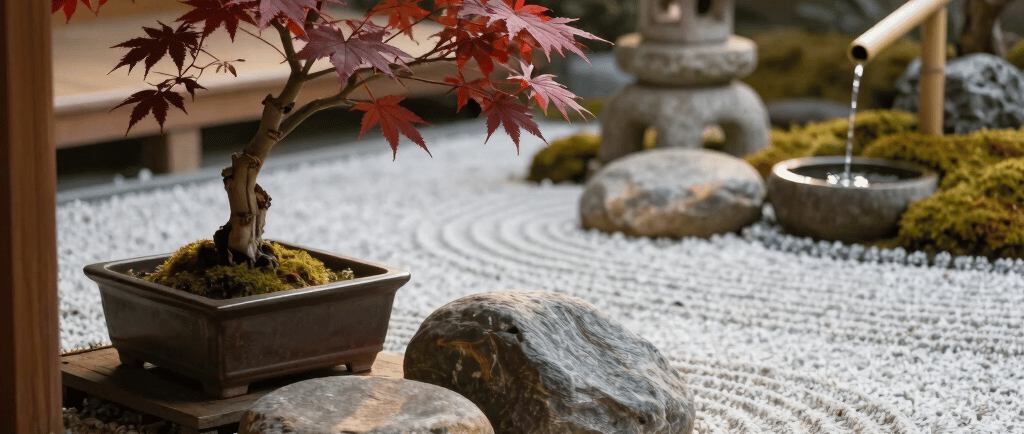
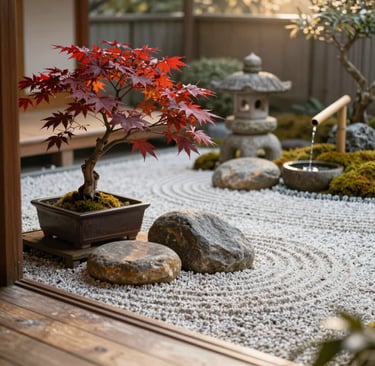
There's a reason Japanese gardens have been studied, photographed, and recreated for centuries. They just work. Walk into one — even a tiny one — and something in your brain immediately exhales. The tension drops. The noise fades. And for a few minutes, everything feels intentional and right.
Here's what surprised me the most when I started learning about Japanese garden design: it's not about having a huge space. It's actually the opposite. Japanese gardens have always been about creating the feeling of vast, natural landscapes in small, carefully controlled areas. A few rocks, some gravel, a little moss, and one perfectly placed tree can evoke mountains, rivers, and ancient forests — all in a space the size of a balcony.
In fact, some of the most famous Japanese gardens in the world are incredibly compact. The Zen dry gardens of Kyoto were designed specifically for contemplation in tight monastery courtyards — not sweeping estates.
In this guide, I'll walk you through:
The core design principles behind every authentic Japanese garden,
The six key elements you need to know,
The best plants for a Japanese garden (including small-space options),
How to build a Japanese garden on a balcony or patio,
Water features, stone lanterns, and accessories that get the look right,
And simple maintenance tips to keep your zen garden looking serene.
Whether you have a backyard, a balcony, or even just a corner of a patio — you can do this. Let's build some calm.
The 5 Core Design Principles of Japanese Gardens
Before you buy a single plant or stone, you need to understand why Japanese gardens look the way they do. These five principles are behind every authentic design — and once you understand them, every decision becomes clearer.
1. Asymmetry
Japanese gardens deliberately avoid symmetry. Where Western garden design often places things in balanced, mirrored arrangements, Japanese design is intentionally off-centre. A single rock placed slightly to the left of a path. A tree that leans gently toward the water. These asymmetries feel more natural because nature itself is asymmetric.
When you're arranging elements in your garden, resist the urge to "balance" everything evenly. Odd numbers — three rocks instead of two, five plants instead of four — are a cornerstone of Japanese design.
2. Enclosure
Japanese gardens create a sense of being held — enclosed within a world separate from the noise outside. This is achieved through bamboo fences, hedges, walls, or even the natural edge of a container.
Even on a balcony, you can create enclosure using bamboo screening along railings, tall grasses as "walls," or strategic plant placement that defines the space as its own little world.
3. Borrowed Scenery (Shakkei)
This is one of the most beautiful concepts in Japanese garden design. Shakkei — meaning "borrowed scenery" — is the practice of incorporating the natural landscape beyond the garden into the overall composition. If you can see a tree, a hill, or even a distant building from your garden, you position elements to "frame" that view rather than block it.
On a balcony, this might mean framing a view of the sky through a cluster of bamboo, or positioning a stone lantern so it draws the eye toward a treeline beyond the railing.
4. Balance
Not symmetrical balance — visual balance. Heavy elements (large rocks, dense shrubs) need to be offset by lighter elements (fine gravel, delicate moss, open space).
In a Japanese garden, the empty space — the gravel, the path, the still water — is just as important as the plants and stones. Sometimes more so. The Japanese concept of ma (negative space) teaches that what you leave out is as powerful as what you include.
5. Symbolism
Almost every element in a traditional Japanese garden carries symbolic meaning. Rocks represent mountains or islands. Gravel raked into wave patterns represents water. Moss symbolises age, patience, and the passage of time. Pine trees represent longevity.
You don't need to follow the symbolism strictly — but understanding it helps you make choices that feel cohesive rather than random.
The 6 Key Elements of a Japanese Garden
These are the building blocks. Mix and match them based on your space, your budget, and your style.
1. Water
Water is the most essential element in a Japanese garden — representing life, movement, and reflection.
In a full garden, this means a pond, stream, or waterfall. In a small space or balcony, a bamboo water spout (shishi-odoshi) dripping into a stone basin (tsukubai) gives you the same calming effect in an incredibly compact form.
Even a small glazed ceramic bowl filled with water and a single floating lotus leaf counts. The point is the presence of water — its sound, its stillness, its reflection.
2. Rocks and Stones
Rocks are the structural backbone of a Japanese garden. They're not decoration — they're the landscape itself. Large rocks represent mountains. Flat stones create paths. Smaller pebbles fill spaces and suggest riverbeds or ocean floors.
The rules for placing rocks in a Japanese garden:
Always bury them slightly so they look "rooted" rather than dropped,
Use odd numbers — groups of three, five, or seven,
Position them at angles, never perfectly upright or flat,
Match the colour and texture of rocks throughout the garden for cohesion.
3. Gravel and Sand
Raked gravel or sand is the defining feature of a karesansui (dry rock garden, or Zen garden). The gravel represents water — raked into patterns that suggest ripples, waves, or flowing streams.
For containers or small balcony gardens, a shallow tray of fine gravel with a small rake is a complete Zen garden on its own. It's meditative to maintain, it's beautiful to look at, and it takes up almost no space.
4. Plants
Plants in Japanese gardens are chosen with enormous care and restraint. The goal is never abundance — it's intention. A single well-placed Japanese maple says more than a dozen randomly chosen shrubs.
Key plants include:
Japanese maple (Acer palmatum) — the quintessential Japanese garden plant, with stunning seasonal colour changes,
Moss — used extensively as ground cover to suggest age and softness,
Bamboo — for screening, structure, and sound,
Pine — shaped and pruned to represent longevity and strength,
Cherry blossom (Prunus) — for spring colour and the Japanese concept of mono no aware (the beauty of transience),
Azalea and camellia — flowering shrubs used as accent colour,
Black mondo grass — for contrast and drama in small containers.
5. Paths and Stepping Stones
Paths in Japanese gardens are never straight. They wind, pause, and change direction — encouraging you to slow down, look around, and be present.
Stepping stones set into gravel or moss create a path that feels natural rather than constructed. In a container or small balcony garden, even three or four flat stones arranged in a gentle curve suggest a path without needing actual walking space.
6. Ornaments and Structures
The most common Japanese garden ornaments are:
Stone lanterns (tōrō) — originally used to light temple paths, now a classic garden feature,
Water basins (tsukubai) — low stone basins used in traditional tea ceremony gardens,
Bamboo fences (take-gaki) — defining the garden boundary with natural materials,
Bridges — arched wooden or stone bridges over water or gravel "rivers,"
Torii gates — traditional red gates that mark the entrance to sacred space.
For a balcony or small container garden, a single stone lantern and a small bamboo water feature are enough to establish the aesthetic completely.
Types of Japanese Gardens
Not all Japanese gardens are the same. Knowing the different types helps you choose the right style for your space.
Karesansui (Dry Rock Garden / Zen Garden)
The most minimal type — gravel, rocks, and moss, with no water. Everything is symbolic. This is the easiest type to recreate in a container or small balcony because it requires no plumbing, no pond, and very little maintenance.
Best for: Balconies, tabletops, and indoor spaces.
Tsukiyama (Hill Garden)
Uses mounded soil to create "hills" and "valleys," representing natural landscapes in miniature. Small bonsai or shaped shrubs represent trees on hillsides.
Best for: Ground-level patios or terrace gardens with more space.
Chaniwa (Tea Garden)
Designed for the approach to a traditional tea house (chashitsu). Emphasises simplicity, wabi-sabi (the beauty of imperfection), stepping stone paths, stone water basins, and lanterns.
Best for: Anyone who wants a deeply traditional, ceremonial aesthetic.
Kaiyu-shiki (Strolling Garden)
A larger style built around a central pond, with paths that circle it so the view changes at every turn.
Best for: Larger balconies, terraces, or rooftop gardens.
How to Build a Japanese Garden on a Balcony or Small Patio
This is where it gets really practical. You don't need a yard. You need intention, a few key elements, and a willingness to embrace simplicity.
Step 1: Define the boundary
Use bamboo screening along railings or the backs of containers to create that sense of enclosure. Even a simple roll of bamboo fence creates an immediate shift in atmosphere.
Step 2: Choose your anchor element
Every Japanese garden has one dominant feature — a bonsai tree, a stone lantern, a water basin, or a large rock. Choose yours first and build around it.
Step 3: Add gravel or moss
Fill containers or a defined tray area with fine gravel or plant moss as ground cover. Rake the gravel into gentle wave or ripple patterns.
Step 4: Place rocks in odd-numbered groups
Position three or five rocks at varying angles, partially buried so they look grounded. Don't overthink it — trust your eye and aim for asymmetry.
Step 5: Add plants sparingly
One bonsai, one small Japanese maple in a container, or one clump of black mondo grass. Resist the urge to add more. Restraint is the whole point.
Step 6: Add a water element
Even a small ceramic bowl filled with water and a floating stone adds the essential element of water to your design. A solar-powered bamboo water spout is a beautiful upgrade.
Step 7: Add one accessory
A stone lantern. A small torii gate. A bamboo water basin. Just one.
Best Plants for a Small Japanese Garden
Here's a curated list of plants that work in containers and small spaces while staying true to the Japanese garden aesthetic.
Dwarf Japanese maple (Acer palmatum 'Shaina' or 'Tamukeyama') — compact, stunning autumn colour, perfect for containers,
Moss (various species) — thrives in shade, creates that ancient, soft look,
Bonsai (juniper, ficus, or trident maple) — the ultimate Japanese container plant,
Black mondo grass (Ophiopogon planiscapus 'Nigrescens') — dramatic, low-maintenance, striking,
Dwarf bamboo (Pleioblastus or Sasa varieties) — provides screening without the invasive spread of full bamboo,
Japanese forest grass (Hakonechloa macra) — golden-green, flowing, beautiful in a container,
Azalea (compact varieties) — for spring accent colour,
Creeping thyme or mind-your-own-business (Soleirolia) — as ground cover in lieu of moss,
Japanese iris (Iris ensata) — elegant, minimal flowering for wet or damp spots.
Water Features for Small Japanese Gardens
Water is non-negotiable in most Japanese garden styles — but it doesn't have to be complicated.
Bamboo water spout (Shishi-odoshi)
A bamboo tube that fills with water and tips, releasing the water with a satisfying "clunk" — traditionally used to scare deer away from gardens. Today it's a beautiful, rhythmic water feature available in solar-powered versions perfect for balconies.
Stone water basin (Tsukubai)
A low stone basin filled with water, often with a small bamboo spout trickling into it. In traditional tea gardens, visitors would crouch (tsukubau) to rinse their hands before entering the tea house — a gesture of humility and mindfulness.
Small container pond
As we covered in our container pond blog — a half barrel or glazed ceramic pot filled with water, a dwarf water lily, and a few small fish creates a complete water garden that fits perfectly into a Japanese garden aesthetic.
Dry "water" (karesansui)
No actual water at all — gravel raked into wave patterns symbolises water beautifully and requires zero maintenance beyond occasional raking. For balconies with weight restrictions, this is the perfect solution.
Stone Lanterns, Accessories, and Finishing Touches
The accessories in a Japanese garden are never random. Each one has a purpose — historically, aesthetically, and symbolically.
Stone lanterns
Originally used to light pathways to Buddhist temples, stone lanterns are now the most recognisable Japanese garden ornament. Position yours near a water feature, at the corner of a path, or nestled among rocks — never in the centre of a space.
Bamboo fencing
Take-gaki (bamboo fences) come in dozens of traditional styles. For small spaces, a simple rolled bamboo screen along a railing or wall defines the garden edge and blocks distracting views behind.
Garden bridges
Even a small flat-stone or wooden "bridge" spanning a gravel "river" in a container garden adds an authentic touch. It doesn't need to be functional — it just needs to suggest the idea of crossing water.
Wabi-sabi touches
Wabi-sabi is the Japanese aesthetic of finding beauty in imperfection, age, and impermanence. Let your moss grow a little unevenly. Allow a stone to develop a patina. Don't rush to replace a weathered lantern. These signs of age are the point — they make the garden feel ancient and earned.
Maintaining Your Japanese Garden
The good news: Japanese gardens are designed to be low maintenance by philosophy. Restraint in planting means fewer weeds. Gravel needs occasional raking, not watering. Moss thrives on neglect.
Regular tasks
Rake gravel every week or two to restore patterns and remove fallen leaves,
Prune plants with intention — one branch at a time, stepping back often to check the silhouette,
Top up water features during hot weather when evaporation increases,
Remove fallen leaves promptly — they disturb the clean, minimalist look.
Seasonal care
Spring — prune winter damage, refresh moss with a light misting, check water features after frost,
Summer — shade-sensitive plants like moss may need protection from harsh afternoon sun,
Autumn — enjoy the spectacular colour of Japanese maples; collect fallen leaves for compost,
Winter — wrap tender container plants in fleece; bring frost-sensitive bonsai indoors.
Conclusion
A Japanese garden isn't about perfection — it's about presence. It's about creating a space that slows you down, clears your head, and reminds you that beauty doesn't require abundance. It requires intention.
Whether you go full Zen dry garden with raked gravel and a single lantern, or build a lush balcony garden with a bonsai, bamboo water feature, and dwarf Japanese maple — the principles are the same. Simplicity. Asymmetry. Symbolism. Restraint.
Start with one element. One rock, one plant, one bowl of water. Let the garden tell you what it needs next. That's the most Japanese approach of all.
Have you tried creating a Japanese-inspired garden in a small space? I'd love to hear what worked for you — drop a comment, share a photo, or tag us on social media. Let's build something peaceful together.