Growing Compact Fruit Trees Indoors: The Complete Dwarf Variety Guide
Learn everything about growing compact fruit trees indoors — from choosing the best dwarf varieties to harvesting real fruit in your apartment. A practical guide from someone who's actually done it.
INDOOR TINY PLOTS: FRESH FOOD & GREENERY ALL YEAR
Introduction
Sales of dwarf and compact fruit trees for indoor growing have surged by over 70% in the last four years — and if you've spent any time on gardening social media recently, you've probably seen why. People growing actual lemons in their apartments. Fig trees fruiting in living rooms. Dwarf pomegranates producing fruit on balconies in the middle of winter. What used to seem like an eccentric horticultural fantasy has become a legitimate, accessible, genuinely rewarding way to grow food indoors. And I'm here to tell you — from personal experience — that it's even better than it looks on Instagram.
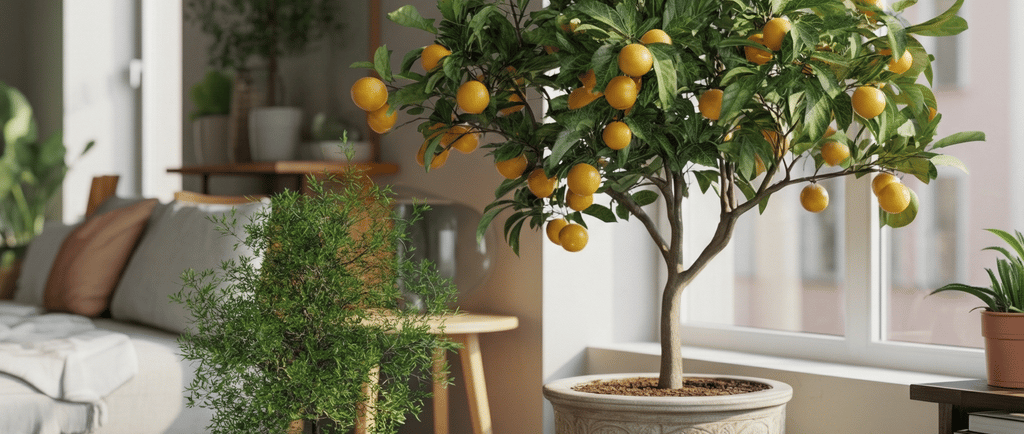
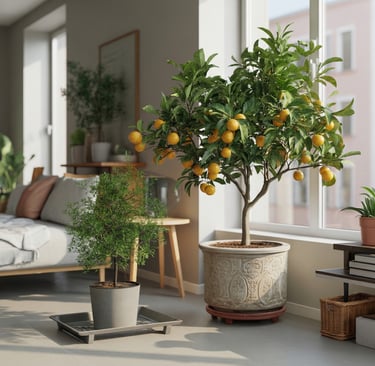
I grew my first indoor fruit tree about seven years ago. It was a dwarf Meyer lemon, bought on impulse from a garden center because it was covered in fragrant white blossoms and I simply couldn't leave without it. I had no idea what I was doing. I put it in the wrong pot, used the wrong soil, watered it completely wrong, and watched it drop most of its leaves within three weeks. I was devastated. But instead of giving up, I went deep on research, fixed my mistakes, and that tree — now seven years old and living in a large terracotta pot in my sunniest window — produced over sixty lemons last year. Sixty. In an apartment.
The truth about growing compact fruit trees indoors is this: it requires more specific knowledge than growing herbs or leafy greens, but it's absolutely achievable with the right information. The trees that work indoors genuinely work. The results — fragrant blossoms filling your home with scent, actual fruit developing and ripening on trees you can touch and tend — are extraordinary in a way that's hard to fully convey until you've experienced it. This guide is everything I know about choosing, setting up, growing, and troubleshooting indoor fruit trees. Let's grow something remarkable.
Can You Really Grow Fruit Trees Indoors? (The Honest Answer)
Yes — but with important caveats that I want to be upfront about, because going in with unrealistic expectations is how people end up disappointed and convinced that indoor fruit trees don't work. They do work. They just work differently than outdoor fruit trees, and managing your expectations correctly from the start is what separates successful indoor fruit tree growers from frustrated ones.
"Dwarf" in fruit tree terminology can mean several different things depending on the species and how the tree was produced. Some trees are genetically dwarf — naturally small-growing varieties that were selected or bred for compact size. Others are dwarfed through grafting, where a desirable fruiting variety is grafted onto a rootstock that limits the overall size of the resulting tree. Both approaches produce trees that stay manageable in containers. What "dwarf" doesn't mean is "miniature" — even a dwarf fruit tree can reach four to eight feet tall at maturity if grown in a large container with ideal conditions. For most indoor growing situations, you're managing the tree's size through container choice and pruning rather than relying entirely on genetic dwarfism.
Realistic fruit production expectations vary significantly by species. A mature dwarf Meyer lemon in a twelve to fifteen-gallon container with adequate light can produce anywhere from twenty to a hundred or more fruits per year — genuinely meaningful food production. A fig tree can produce dozens of figs over a season once established. Columnar apple trees produce more modestly indoors — maybe a handful to a few dozen apples depending on light and pollination success. Tropical varieties like dwarf bananas produce one bunch per stem over a longer timeline. The key word across all of these is "established" — indoor fruit trees typically need two to four years to settle into their containers, develop sufficient root systems and canopy, and begin producing fruit reliably. First-year fruit production is often limited or nonexistent, and that's completely normal.
The fruit trees that genuinely work long-term as indoor container plants share certain characteristics: they tolerate the relatively stable temperatures of an indoor environment (or can be managed through dormancy), they can be maintained at a container-appropriate size through pruning, they either don't require cross-pollination or can be hand-pollinated, and they produce fruit of meaningful quality and quantity relative to the effort involved. The clear winners in this category are citrus, figs, and several tropical species. Columnar apples and dwarf pears are achievable but more demanding. Large temperate fruit trees — standard cherries, full-size apples, peaches — are genuinely not suitable for long-term indoor container growing and shouldn't be attempted.
The Best Dwarf Citrus Trees for Indoor Growing
Citrus trees are the reigning champions of indoor fruit tree growing, and they've held that title for good reason. They're evergreen — no dramatic seasonal leaf drop or dormancy period to manage. They produce fragrant flowers that are among the most beautiful scents in the plant kingdom. They fruit relatively reliably in indoor conditions. And several species and varieties stay genuinely compact in containers without becoming an unmanageable presence in your home. If you're going to grow one indoor fruit tree, and especially if it's your first, start with citrus.
Meyer lemon is the indoor citrus gold standard and the variety I recommend to virtually everyone starting out. It's a cross between a lemon and a mandarin orange, which gives it a slightly sweeter, less intensely acidic flavor than a standard lemon and makes it more cold-tolerant than many citrus species. That cold tolerance — Meyer lemons are happy down to around 20°F — makes them far more forgiving of the temperature fluctuations that indoor environments can produce. The trees stay compact in containers, typically reaching four to six feet at most with management, and they bloom multiple times per year under good indoor conditions. The fruit is genuinely delicious — slightly sweeter and more complex than grocery store lemons — and production on an established tree is impressive. My seven-year-old Meyer lemon is the plant I'm proudest of in my entire indoor garden.
Calamondin orange is the variety I recommend when people specifically want something highly ornamental as well as productive. The tree is naturally compact — often under three feet in a container — and produces masses of tiny, bright orange fruits that look like ornamental decorations. The fruit is tart and sour rather than sweet, not ideal for eating out of hand but excellent for marmalade, cocktails, and cooking. What makes calamondin special is the sheer quantity of fruit it produces and the visual impact of a small, compact tree absolutely loaded with tiny orange globes. It's one of the most striking-looking plants you can keep indoors. It also seems to adjust to indoor conditions more readily than some other citrus species, which makes it genuinely beginner-friendly.
Kaffir lime — now sometimes called makrut lime — is grown as much or more for its leaves as its fruit. The distinctive double-lobed leaves are essential in Thai and Southeast Asian cooking, and the fragrance of fresh kaffir lime leaves is extraordinary — bright, floral, intensely citrusy in a way that's completely different from regular citrus. The fruit itself is knobby and aromatic, used primarily for its zest rather than juice. As an indoor tree, kaffir lime stays reasonably compact, tolerates slightly lower light than some other citrus, and provides a continuous harvest of fresh leaves that will transform your cooking. It's a tree with a devoted following among people who cook Southeast Asian food at home.
All indoor citrus share certain non-negotiable care requirements worth understanding upfront. They want the absolute maximum light you can provide — ideally a south-facing window with supplemental grow lighting, especially in winter when day length drops. They're sensitive to overwatering — the single most common cause of citrus decline indoors. They need regular feeding with a fertilizer specifically formulated for citrus, which provides the elevated magnesium and iron these trees need to maintain deep green foliage and productive fruiting. And they appreciate being moved outdoors in summer when temperatures allow — a summer outside dramatically reinvigorates an indoor citrus tree and often triggers a flush of new growth and flower buds that pays dividends in fruit production through the winter months.
Dwarf Fig Trees — Bold, Beautiful, and Surprisingly Productive
Fig trees have become increasingly popular as indoor plants over the last few years — and not just the ornamental Ficus lyrata (fiddle leaf fig) that's been a design staple for a decade. I'm talking about actual fruiting fig trees, Ficus carica, in compact varieties that produce real, edible figs in your living room or apartment. When I first tried growing one, I expected it to be finicky and difficult. It was one of the most straightforward indoor trees I've grown.
The appeal of indoor fig trees is multifaceted. The leaves are dramatically beautiful — large, deeply lobed, with a prehistoric quality that gives the tree a bold, architectural presence. The overall form of a container fig is attractive and sculptural in a way that works beautifully in modern, Mediterranean, and eclectic interior styles. The tree goes dormant in winter, dropping its leaves and entering a rest period — which is actually useful because it reduces watering and maintenance demands during the months when you're least likely to want to spend time on plant care. And in the growing season, established indoor figs produce fruit that is genuinely, deeply delicious in a way that grocery store figs — which are almost always picked underripe and never fully develop their flavor — simply aren't.
For indoor container growing, variety selection matters a lot. 'Little Miss Figgy' is probably the most popular choice specifically for containers — it's a true genetic dwarf that stays under five feet, produces two crops per year, and has attractive, smaller-than-standard leaves that suit container scale beautifully. 'Petite Negra' is another excellent compact variety with dark-skinned, richly flavored fruit and a naturally contained growth habit. 'Violette de Bordeaux' — also sold as 'Negronne' — is a variety with exceptional fruit flavor that's highly regarded among fig enthusiasts. It stays compact in containers and produces small to medium fruit with intense, jammy sweetness. 'Brown Turkey' is a more widely available variety that works in containers though it's not a genetic dwarf — it needs more active size management through pruning.
One of the most appealing things about figs for indoor growing is their pollination situation. The common fig varieties grown for containers are parthenocarpic — they produce fruit without pollination. No insects needed, no hand pollination required. You plant the tree, care for it well, and it fruits on its own. This is a significant practical advantage over many other fruit tree species for indoor growing, where controlling pollination is one of the trickier management challenges.
Understanding and managing the fig's dormancy cycle is the main thing that trips up indoor fig growers. In autumn, as day length shortens and temperatures cool, your indoor fig will naturally begin dropping its leaves and preparing for dormancy. This is completely normal and should not be treated as a problem. During dormancy — typically November through February in the northern hemisphere — the tree needs very little water (just enough to prevent the roots from completely desiccating), no fertilizer, and can tolerate lower light and cooler temperatures. An unheated spare room, a garage that stays above freezing, or a cool basement corner is ideal for overwintering a dormant fig. In late winter, when you see new buds beginning to swell on the branches, move the tree back to its growing position, resume regular watering, and watch it come dramatically back to life.
Dwarf Apple and Pear Trees — Yes, Really Indoors
I want to be upfront with you: indoor apples and pears are more challenging than citrus or figs. They require dormancy management, active pollination in most cases, and very high light levels to produce fruit reliably. That said — and I want to be equally clear about this — they absolutely can be done, and when they work, the experience of harvesting an apple from a tree growing in your apartment is genuinely extraordinary. Go in with your eyes open about the requirements and you'll be fine.
Columnar apple varieties — sometimes called Ballerina apples — are the most realistic option for indoor growing. Unlike standard or even regular dwarf apple trees, columnar varieties grow as a single, largely branchless vertical column with short fruiting spurs growing directly from the central trunk. They can reach eight feet tall but typically stay two to three feet wide, making them unusually space-efficient for a fruit tree. In a container indoors, they can be kept to five or six feet with management. Varieties like 'Scarlet Sentinel', 'Golden Sentinel', and 'Urban Columnar' are specifically bred for compact, columnar growth and produce decent-sized apples on a manageable plant.
Self-fertility is a critical consideration for indoor apple growing. Most apple varieties require cross-pollination with a different compatible variety to produce fruit — which means you'd normally need two trees. In an indoor setting, that's a significant ask. Fortunately, some apple varieties are self-fertile — they can set fruit with their own pollen — which makes single-tree indoor growing feasible. 'Fuji', 'Golden Delicious', and certain columnar varieties including 'Starkspur Supreme' have meaningful self-fertility. Even with self-fertile varieties, fruit set is improved by hand pollination — using a small paintbrush or cotton swab to transfer pollen between flowers on the same tree, mimicking what bees do outdoors. I do this every morning during bloom period and it makes a noticeable difference in fruit set.
Dormancy management is the most demanding aspect of indoor apple growing. Unlike citrus, which stays evergreen and active year-round, apples require a genuine chilling period — a certain number of hours below 45°F (7°C) — to break dormancy and flower properly the following season. Without adequate chilling, apple trees flower poorly or not at all. For indoor growers, this means the tree needs to spend part of the year in a genuinely cool location — an unheated garage, a cold basement, or even briefly outdoors during mild winter days. The required chilling hours vary by variety — low-chill varieties like 'Dorsett Golden' and 'Anna' need as few as 200 to 300 hours below 45°F, making them the most practical choices for indoor growing where achieving extended cold periods is logistically challenging.
Dwarf pear trees follow similar principles to columnar apples — they need chilling hours, benefit from self-fertile variety selection, and require hand pollination indoors. 'Conference' pear has partial self-fertility and is one of the more reliable options for indoor container growing. The trees are attractive — pear foliage is glossy and pleasant-looking — and pear blossoms in spring are genuinely beautiful. Fruit production indoors tends to be modest, but the experience of growing even a handful of pears on an indoor tree is deeply satisfying. Approach indoor pears as an ambitious project with moderate production expectations and you'll enjoy the journey.
Tropical Fruit Trees That Thrive Indoors
Tropical fruit trees occupy an interesting position in the indoor growing world — in some ways, they're actually better suited to indoor conditions than temperate varieties because they never need a cold dormancy period and actively prefer the warm, stable temperatures that most heated homes provide. The trade-off is that they generally need higher humidity and more consistent warmth than temperate species. For anyone willing to meet those requirements, tropical fruit trees offer some of the most dramatic, visually exciting options in indoor fruit growing.
Dwarf banana plants are among the most dramatic-looking plants you can grow indoors at any scale, edible or otherwise. The enormous, paddle-shaped leaves — which can reach several feet long on established plants — create a genuinely tropical presence that transforms a room. Dwarf varieties like 'Dwarf Cavendish', 'Super Dwarf Cavendish', and 'Truly Tiny' stay manageable in containers while producing actual, edible bananas. I need to be honest with you about timelines here: bananas take twelve to eighteen months from planting to first fruit, and each stem produces only one bunch before it dies back — though new pup shoots grow from the base to continue the cycle. The fruit, when it finally comes, is noticeably better than grocery store bananas — sweeter, more complex, with a creamier texture. But the waiting is real and requires genuine patience.
Dwarf pomegranate is a plant that I think is one of the best-kept secrets in indoor fruit growing. The full-size species, Punica granatum, is too large for most indoor settings, but the dwarf variety — Punica granatum 'Nana' — stays genuinely compact, typically under three feet, and is one of the most beautiful ornamental edible plants you can grow. The flowers are a vivid, almost neon orange-red that's visually arresting, and they're followed by small but fully formed pomegranates. The fruit of the dwarf variety is smaller and somewhat more tart than commercial pomegranates but fully edible. As a decorative plant alone — even without considering the fruit — a flowering dwarf pomegranate is spectacular, and the fact that it's genuinely productive makes it one of the highest-value indoor fruit plants available.
Guava is a fruit tree that genuinely surprises people when they discover how well it does in indoor containers. The tropical strawberry guava — Psidium cattleianum — and the standard common guava — Psidium guajava — in dwarf forms both adapt well to container growing. They produce fragrant white flowers and fruit with that distinctive tropical guava aroma that's immediately recognizable. Guava trees tolerate slightly lower humidity than many tropicals, grow at a manageable pace in containers, and produce fruit that's extraordinarily nutritious — guavas contain more vitamin C than virtually any other fruit. The flavor fresh from a home-grown tree is significantly better than anything you'll find in a store.
Passion fruit is a slightly different proposition — it's a vigorous climbing vine rather than a tree — but it deserves mention here because it's highly productive, visually spectacular, and works beautifully trained on a trellis or frame indoors in a large, bright space. The flowers are among the most intricate and beautiful of any plant you can grow indoors — complex, otherworldly, looking like something from a science fiction film. The fruit follows reliably if you hand-pollinate. Varieties like 'Possum Purple' or 'Frederick' are more manageable in indoor conditions than the most vigorous commercial varieties. Train it on a bamboo trellis in a south-facing window or under grow lights and it will reward you with blossoms and fruit that will absolutely astound anyone who sees them.
Containers, Soil, and Repotting for Indoor Fruit Trees
Getting the physical foundation right — the container, the soil, the drainage — is what separates trees that thrive long-term from trees that slowly decline despite your best care efforts. I've learned this through a combination of research and personal mistakes, and the principles I'm sharing here are ones I now follow consistently with all my indoor trees.
Container size is a question I get asked constantly, and my answer is always: start smaller than you think and move up gradually. It's counterintuitive — surely a bigger pot means more root space means a healthier tree, right? Not quite. An oversized container holds more soil than the tree's roots can access, and that excess soil stays wet for too long between waterings, creating anaerobic conditions that damage roots. Start a new tree in a container just a few inches larger than the nursery pot it came in — typically a five to seven-gallon pot for most young dwarf fruit trees. As the tree grows and its roots fill the container, move up to the next size. A fully established indoor fruit tree will eventually live in a fifteen to twenty-five gallon container, but getting there gradually over several years produces healthier, better-adjusted trees than jumping straight to a large container.
Soil selection for indoor fruit trees should not be an afterthought. Standard all-purpose potting mix is generally too moisture-retentive and too quickly depleted of nutrients for long-term fruit tree growing. For citrus, I use a mix specifically formulated for citrus and palms — these are available commercially and have the excellent drainage and slightly acidic pH that citrus demand. Alternatively, mix standard potting mix with about thirty percent perlite for drainage and a small amount of sand for weight and stability. For figs, a similar well-draining mix works well — figs are relatively forgiving about soil composition as long as drainage is good. For tropical trees, a mix with higher organic matter content — some added compost or worm castings — provides the richer growing medium that tropicals often prefer.
Drainage is absolutely non-negotiable for all indoor fruit trees. Every container must have drainage holes — multiple holes in the base — and those holes must actually drain freely rather than being clogged or sitting in standing water. I elevate my containers on pot feet or a layer of pebbles to ensure water flows freely from the drainage holes. I check my saucers after every watering and empty any standing water within an hour. Root rot from poor drainage is probably the most common cause of indoor fruit tree death, and it's entirely preventable.
Repotting timing and technique matter more for fruit trees than for most other indoor plants. The best time to repot is in late winter or early spring — just before the tree breaks dormancy and begins its active growing season. This gives the tree maximum time to establish in its new container before the demands of the growing and fruiting season. Signs that a tree needs repotting include roots growing through drainage holes, roots circling visibly around the inside of the container when you slip it out, noticeably slowed growth despite good care, and soil that dries out extremely quickly after watering. When repotting, gently loosen circling roots rather than leaving them to continue growing in their constricted pattern. Move up only one container size at a time and disturb the root ball as little as possible.
Light, Temperature, and Humidity for Indoor Fruit Trees
Environmental conditions determine whether your indoor fruit tree merely survives or genuinely thrives and produces fruit. Of all the factors involved in indoor fruit tree growing, getting the environment right is where most people need to make the biggest adjustments — usually because standard indoor conditions fall somewhat short of what fruit trees ideally want, and understanding the gaps helps you address them effectively.
Light requirements for fruit trees are significantly higher than for most other indoor plants. Citrus trees want a minimum of eight hours of direct or very bright indirect light daily — more is better. Figs are somewhat more tolerant of lower light during the growing season but still want at least six hours of bright light. Fruiting tropical trees need similarly high light levels. The reality for most apartments is that even a south-facing window provides inadequate light for peak fruit production during winter months when day length drops and sun angles are low. Supplemental grow lighting during the winter months — October through March in the northern hemisphere — is not a luxury for serious indoor fruit tree growers. It's essentially a requirement if you want consistent fruiting.
For grow lights, the latest generation of high-output LED fixtures has genuinely changed what's possible for indoor fruit trees. Full-spectrum LED panels that cover the blue and red wavelengths plants use for both growth and fruiting are now available at prices that have dropped dramatically over recent years. For a single tree, a grow light with at least 200 to 300 true watts of LED output positioned twelve to eighteen inches from the canopy provides meaningful supplemental light. Running it for fourteen to sixteen hours daily — on a timer — during the short-day months of winter keeps trees actively growing and flowering when they would otherwise slow down. The visual quality of modern LED grow lights has also improved — they're no longer the blinding purple-pink light of early designs but a warm white light that's visually acceptable in a living space.
Temperature management requires understanding both the ideal range and the extremes to avoid. Most citrus trees are happiest between 55°F and 85°F — the range comfortable for most people in their homes. Figs tolerate a wider range and actually need exposure to cool temperatures during their dormancy period. Tropical trees want warmth consistently — most prefer a minimum of 60°F and actively dislike cold drafts or being near cold windows in winter. The most important thing for all indoor fruit trees is avoiding sudden temperature swings — moving a tree from a warm room to a cold area and back quickly stresses trees significantly more than simply being in a consistently cool or warm environment.
Humidity is the indoor environmental factor most often overlooked and most consistently inadequate for fruit trees. Home heating systems in winter can drop indoor humidity to 20% to 30% — genuinely desert-like — while most fruit trees prefer 40% to 60%. Low humidity causes leaf edge browning, increased susceptibility to spider mites (which love dry air), reduced flower fertility, and general stress that shows up as poor growth. A room humidifier near your fruit trees during the winter heating season makes a noticeable difference in plant health and appearance. Grouping trees together also helps — their transpiration raises local humidity. Regular misting provides temporary humidity relief but doesn't meaningfully change ambient humidity levels the way a humidifier does.
Watering, Fertilizing, and Pruning Indoor Fruit Trees
The ongoing care rhythm of indoor fruit trees — the weekly and seasonal practices that keep them healthy and productive — is something that becomes intuitive over time but can feel uncertain at first. These are the practices I've refined over years of growing indoor fruit trees, and they're the foundation of consistent results.
Watering container fruit trees correctly is probably the single skill that most affects long-term tree health. The goal is maintaining consistent moisture — never bone dry, never waterlogged — in the root zone. I check soil moisture by pressing my finger two inches into the soil. For citrus and most temperate trees, water when the top two inches feel dry. For tropical trees, water when the top inch feels dry — they prefer slightly more consistent moisture. When you water, water deeply and thoroughly — pour water slowly around the entire base of the tree until it flows freely from the drainage holes, ensuring the entire root ball gets moistened. Avoid light, frequent surface watering that wets only the top inch of soil — this encourages shallow roots and never adequately hydrates the lower root zone.
Fertilizing indoor fruit trees is more critical than fertilizing most other indoor plants because trees are large, high-output organisms living in a relatively small volume of soil. Nutrients deplete quickly and must be replenished regularly. For citrus, I use a fertilizer specifically formulated for citrus — these products contain elevated levels of nitrogen, iron, and magnesium that citrus specifically need and that general-purpose fertilizers often don't provide in adequate ratios. I apply it at half the recommended rate every three to four weeks during the growing season (spring through summer), reducing to every six to eight weeks in winter. For figs, a balanced fertilizer works well during active growth. For tropical trees, I use a balanced fertilizer with micronutrients during the growing season, scaling back when growth slows in winter.
Pruning indoor fruit trees serves several purposes simultaneously: maintaining the tree at a manageable size for your indoor space, shaping the canopy for maximum light penetration and air circulation, removing dead or crossing branches, and directing the tree's energy toward fruit production rather than excessive vegetative growth. The basic principle is to maintain an open, airy canopy structure — remove branches that cross each other, grow toward the center, or compete for the same space. For columnar apples, pruning is mainly about managing the length of fruiting spurs and occasional removal of branches that deviate from the columnar habit. For citrus and figs, light pruning after each fruiting cycle maintains shape and encourages new productive growth. Always use clean, sharp tools and make cuts just above a leaf node or branch junction.
Fruit thinning is something many first-time fruit tree growers feel reluctant to do — why would you remove fruit from a tree that you've worked to get fruiting? But thinning small fruit when they're thumbnail-sized — removing the weakest and smallest fruits to leave the remaining ones with more space and resources — produces significantly better results than letting every fruit develop. Overcrowded fruit competes for sugars and water, resulting in small, poor-quality fruit and sometimes branch damage from excess weight. Thinning to one fruit every four to six inches on citrus, or removing every other fig when fruit are marble-sized, produces larger, better-flavored, better-looking fruit and is gentler on the tree's long-term health.
Pollination, Fruit Set, and Troubleshooting Common Problems
Pollination is the step between flowering and fruiting that indoor growers need to understand and often need to actively manage. Outdoors, bees and other pollinators handle this work. Indoors, that service isn't available, which means you're the pollinator — and understanding when and how to do this job effectively makes the difference between flowers that develop into fruit and flowers that simply drop.
Citrus trees are generally self-fertile and will set some fruit without any intervention — the flowers' structure allows self-pollination through gravity and air movement. However, fruit set is significantly improved by hand pollination, especially indoors where there's no wind or insect activity to assist. The technique is simple: when flowers are fully open and you can see pollen on the anthers — the small stalks in the center of the flower — use a small, soft paintbrush, a cotton swab, or simply your fingertip to gently swirl around the inside of each flower, transferring pollen from the anthers to the stigma (the central sticky tip). Do this to every open flower, ideally in the morning when pollen is freshest. Repeat daily during bloom period. I set a daily reminder on my phone during my Meyer lemon's bloom periods because missing a day can mean missing fruit on flowers that have already passed their receptive window.
Fig trees, as I mentioned earlier, are the great exception — common figs are parthenocarpic and set fruit without any pollination requirement. This is genuinely one of their biggest practical advantages for indoor growing. You can watch flowers develop into fruit knowing you don't need to do anything to make it happen. Apple, pear, and other temperate fruits need active hand pollination indoors, and the technique is the same as for citrus — transfer pollen between flowers using a small brush. For self-fertile varieties, you're transferring pollen between flowers on the same tree. For varieties that aren't fully self-fertile, you'd technically need two compatible varieties for ideal results, though some modest fruit set can occur even with self-pollination.
Flower drop without fruit set is the most common frustrating problem in indoor fruit tree growing and it has several possible causes. The most common is inadequate light — flowers need significant photosynthetic resources to complete the energy-intensive process of developing into fruit, and a tree that's light-stressed will drop flowers as an energy conservation measure. Low humidity during bloom can desiccate pollen before it's viable. Temperature extremes — too hot or too cold during bloom — can impair pollen viability or flower development. And simply skipping hand pollination on trees that need it will result in flowers dropping unpollinated. If you're experiencing consistent flower drop, work through these potential causes systematically rather than assuming the tree is fundamentally unhealthy.
Pest management for indoor fruit trees focuses on a handful of common culprits. Scale insects are the most damaging citrus pest indoors — they're small, armored insects that attach to stems and leaves and suck plant sap, producing sticky honeydew and causing yellowing and decline. Inspect your citrus trees regularly, especially along stems and the undersides of leaves. Small infestations can be wiped away with a cotton swab dipped in rubbing alcohol. Larger infestations respond well to neem oil spray applied thoroughly to all surfaces. Spider mites thrive in the low-humidity conditions that indoor heating creates, showing up first as fine speckling on leaves and later as visible webbing. Increasing humidity, regular leaf cleaning, and neem oil treatment address spider mites effectively. Fungus gnats are common in any indoor container situation and are addressed the same way for fruit trees as for other plants — reducing overwatering, using sticky traps, and allowing the soil surface to dry between waterings.
Yellowing leaves on indoor fruit trees are one of those symptoms that can indicate several different things and require some diagnostic thinking. On citrus, yellowing between the leaf veins while veins remain green typically indicates iron or magnesium deficiency — very common in alkaline soil conditions or when pH has drifted. Treating with chelated iron and magnesium sulfate (Epsom salt) at labeled rates usually resolves this within a few weeks. Uniform yellowing of older, lower leaves often indicates nitrogen deficiency — increase fertilizing frequency. Yellowing combined with wet soil and soft, mushy lower stems means root rot from overwatering — a serious problem that requires repotting into fresh, dry soil and significantly reducing watering going forward. Yellowing combined with dry soil and crispy leaf edges is simply water stress — increase watering frequency and depth.
Conclusion
Growing compact fruit trees indoors is one of the most ambitious and rewarding things you can do as an indoor gardener — and I say that as someone who has grown an awful lot of things indoors over the years. There is nothing quite like the moment a tree you've tended through its establishment years, through its first tentative flowers, through the nail-biting wait of early fruit development — finally puts a ripe, fragrant, extraordinary piece of fruit in your hand. A lemon from a tree in your apartment. A fig from a plant in your living room. A banana from a tree you've been tending for over a year. These moments feel genuinely special in a way that's hard to explain until you've experienced them.
Start with one tree. Make it a Meyer lemon if you have a bright window, or a dwarf fig if you want something a little lower-maintenance. Get that tree established, learn its rhythms and preferences, figure out your specific indoor environment and how it affects the tree's growth. That accumulated knowledge from one well-tended tree is worth more than a dozen half-managed ones, and it sets you up to expand your indoor orchard with confidence and skill.
Now I genuinely want to hear from you — what fruit tree are you growing indoors, or which one are you considering starting with? Any victories or hard-won lessons from years of indoor fruit tree growing? Drop everything in the comments below — the specific questions, the harvest celebrations, the catastrophic failures we all learn from. This is a topic where every grower's experience adds something useful to the collective knowledge, and I'd love to know what's fruiting in your home. 🍋