Best Edible Plants That Look Beautiful Indoors: The Complete 2026 Guide
Discover the best edible plants that look beautiful indoors — from ornamental herbs to stunning fruiting plants. Real tips for growing food that doubles as stunning home décor in 2026.
INDOOR TINY PLOTS: FRESH FOOD & GREENERY ALL YEAR
Introduction
Here's something that stopped me mid-scroll when I came across it recently: searches for "edible indoor plants" and "food plants as home décor" have increased by over 60% since 2022, and interior designers in 2026 are increasingly specifying edible species — herbs, dwarf citrus, even rainbow chard — as deliberate design elements in residential and commercial spaces. The line between "houseplant" and "food plant" is dissolving in the most beautiful way, and honestly, it's about time.
I spent years treating my indoor food plants and my decorative plants as completely separate categories. The herbs lived in utilitarian plastic pots on the kitchen windowsill because they were functional. The beautiful plants lived in the living room because they looked good. It never occurred to me that those two things could be the same thing — that a purple basil plant in a gorgeous ceramic pot could be as visually stunning as any ornamental houseplant, while also providing fresh leaves for dinner. Then a friend came over, looked at my kitchen herb situation, and said "you know these could actually look amazing, right?" That comment changed how I thought about my entire indoor garden.
The truth is that some of the most beautiful plants you can possibly grow indoors are also edible. Rainbow chard with its electric stems of red, yellow, and orange. Dwarf Meyer lemon trees with glossy leaves and fragrant blossoms. Nasturtiums cascading in jewel tones from a hanging planter. Shiso with its deep, almost iridescent purple foliage. These plants don't ask you to choose between beauty and function — they deliver both, generously, in the same pot. This guide is your complete roadmap to the edible plants that genuinely earn their place in your home décor, with everything you need to grow them successfully and style them beautifully. Let's make your home look incredible and taste even better.
Why Edible Indoor Plants Are the Ultimate Home Décor Upgrade
Let me make the case for edible indoor plants beyond just "they look nice and you can eat them" — because there's actually more going on here than that surface-level appeal. The first time I replaced a purely decorative plant with a beautiful edible one, I noticed something unexpected: I paid more attention to it. I checked on it more regularly, I was more invested in its health, and I actually interacted with it daily in a way I never did with purely ornamental plants. That increased attention made me a better plant parent, which meant the plant actually looked better and stayed healthier longer. Function creates engagement, and engagement creates thriving plants.
The wellbeing angle is real and increasingly well-documented. Multiple studies have shown that tending to plants reduces cortisol levels and improves mood — but interacting with plants you can also eat seems to amplify that effect. There's something particularly grounding about harvesting a few leaves of fresh basil from a plant on your kitchen counter, or picking a strawberry from a hanging planter by your window. It connects you to a food cycle in a way that buying herbs from the grocery store simply doesn't. Interior designers and wellness experts in 2026 are increasingly talking about "functional biophilic design" — the idea that plants serving a real purpose in your life create a deeper sense of wellbeing than purely decorative ones.
The practical argument is also compelling. A beautiful ornamental plant costs money, looks nice, and that's the end of the transaction. A beautiful edible plant costs roughly the same, looks equally nice, and then keeps giving back — in fresh herbs, in salad leaves, in fruit, in edible flowers — for months or years. When you frame it as cost per benefit, edible indoor plants win decisively. I've estimated that the herbs growing in my kitchen window save me about thirty to forty dollars a month in grocery store herb purchases, while looking better than the plastic-potted alternatives I used to keep.
The trend toward edible plantscaping is genuinely exciting in 2026. What started as a niche interest among urban gardeners and food bloggers has moved into mainstream interior design. You're seeing it in restaurant design, in hotel lobbies, in upscale apartment model units — living walls of herbs and edible greens used as architectural features. The aesthetic has caught up with the concept in a real way. There are now ceramic and stoneware containers designed specifically with herb gardens in mind, tiered plant stands built for edible gardens, and grow light systems designed to be as visually attractive as a lamp. The infrastructure for beautiful edible indoor gardening has never been better.
Stunning Herbs That Double as Living Décor
Herbs are where most people's edible indoor gardens begin, and for good reason — they're manageable, practical, and genuinely rewarding. But the difference between an herb garden that looks like an afterthought and one that looks intentional and beautiful is mostly about variety selection and presentation. Let me walk you through the herbs that have the highest aesthetic return on investment.
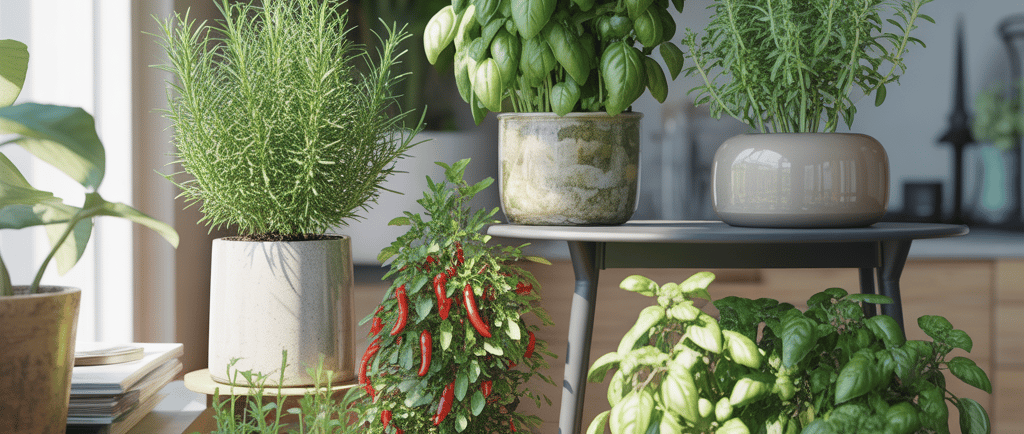
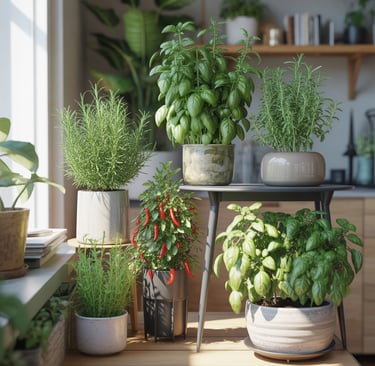
Basil is the king of kitchen herbs and one of the lushest-looking plants you can grow indoors. A healthy basil plant in a beautiful container — a glossy white ceramic, a terracotta pot with patina, a sleek matte black planter — is genuinely striking. The large, glossy green leaves are vibrant and full, and the plant has a kind of generous, abundant quality that makes it visually satisfying. Genovese basil is the classic, but for visual interest I almost always grow a couple of Genovese alongside a purple or dark opal basil — the deep burgundy-purple of the dark varieties against the bright green of the Genovese is a color combination that looks like it was designed by an art director. Purple basil in particular is one of the most visually dramatic herbs you can grow indoors. The foliage is a deep, almost eggplant purple with a slight sheen, and it looks sensational in a light-colored container. It also tastes slightly different from green basil — a bit more complex and spicy — which makes it doubly interesting.
Rosemary is an underrated décor plant that I think deserves a lot more credit in the interior design conversation. A mature rosemary plant has a genuinely architectural quality — upright, structured, with fine needle-like foliage that creates interesting texture. Some varieties grow in a naturally sculptural column shape. Others can be trained into topiary forms — balls, spirals — that look like something from a formal garden. The silvery-green color of rosemary foliage is elegant and versatile, complementing virtually any interior color palette. It's also intensely fragrant in a way that makes the whole room smell incredible on warm days. Rosemary does want bright light — a sunny window or grow light — but when it's happy, it's one of the most beautiful long-term herb plants you can keep indoors.
Variegated varieties of common herbs are where things get really interesting from a décor standpoint. Variegated thyme — which has leaves edged in cream or gold against green centers — is genuinely beautiful as a trailing plant in a hanging planter or spilling over the edge of a mixed container. Tricolor sage has leaves marked with green, white, and purple-pink that look almost painted. Golden oregano glows with a warm yellow-green that's striking against darker plants. These variegated varieties are just as flavorful as their plain counterparts but dramatically more ornamental. I mix them into containers with solid-colored herbs for a visual richness that plain herb collections just don't have.
Styling herbs for maximum visual impact is something I think about a lot. A few principles that make a real difference: use containers with visual weight and presence rather than cheap plastic nursery pots — the container is part of the plant's visual presence in your home. Group herbs in odd numbers — three or five pots together look more intentional and designed than two or four. Vary the heights using a small plant stand or inverted pot to lift one plant slightly. And don't be afraid to let herbs get a bit full and abundant — the lush, overflowing look is more beautiful than sparse, carefully managed plants.
Microgreens and Sprouts — Fast, Beautiful, and Delicious
Microgreens might be the most underappreciated décor element in the edible indoor garden world. When I first started growing them, I thought of them purely as a food thing — tiny nutrient-dense seedlings I could add to salads and sandwiches. Then I started paying attention to how they actually looked, and I realized that a tray of lush, densely growing microgreens sitting on a windowsill is a genuinely beautiful object. There's something about the density and uniformity of a well-grown microgreen tray — all those tiny seedlings at exactly the same height, creating an almost velvety surface of green — that looks designed rather than grown.
The visual variety across different microgreen species is surprising and worth exploring deliberately. Sunflower microgreens are bold and architectural — thick stems, large leaves, a confident presence that reads well from across the room. Pea shoots are delicate and romantic, with curling tendrils that add movement and whimsy to a windowsill display. Red amaranth microgreens are a deep magenta-purple color that's genuinely stunning — one of the most striking edible plants you can grow indoors at any scale. Beet microgreens combine deep red stems with green leaves for a two-tone effect that looks elegant in a clean white tray. Mixing varieties in adjacent trays creates a palette of colors and textures that's more interesting than any single variety alone.
The container you grow microgreens in matters a lot for the aesthetic outcome. The standard black plastic nursery trays work fine functionally but don't add much visually. White ceramic baking dishes, wooden serving boards with a liner, slate cheese boards — these elevate a microgreen display from functional to genuinely beautiful. I keep three or four trays going at different growth stages on a wooden tray on my kitchen counter, and guests consistently comment on how good it looks. The fact that I'm also eating from it regularly just adds to the satisfaction.
Succession planting is the key to keeping microgreen displays continuously lush and appealing. Because microgreens are harvested young — usually at one to two weeks of growth — individual trays have a relatively short display life. But if you start a new tray every five to seven days, you'll always have at least one tray at its visual peak — full, dense, lush — while another is at the harvesting stage and a third is just germinating. Once this rhythm is established, you always have something beautiful growing and always have microgreens ready to eat. It takes maybe five minutes a week to maintain once the routine is set.
Sprout jars — glass mason jars with mesh or screen lids used to grow bean sprouts, lentil sprouts, or seed sprouts — are a minimalist kitchen décor element that I find genuinely appealing. A row of glass jars at different stages of sprouting on a kitchen shelf has a clean, intentional, almost laboratory-aesthetic quality that suits modern and minimal interiors particularly well. The sprouts themselves — the pale, curling threads of germinated seeds — have a delicate, intricate beauty that's interesting to watch develop over days. And they're ready to eat in three to five days, making them the fastest food-growing experience available.
Edible Flowers That Transform Indoor Spaces
If I had to pick one category of edible indoor plant that most people are sleeping on, it would be edible flowers. They're the most visually dramatic thing you can grow in an indoor edible garden — colors and forms that rival the showiest ornamental flowering plants — and the fact that you can also eat them, use them in cooking, and float them in cocktails and teas feels almost like cheating. When people see edible flowers growing in my apartment for the first time, they're always slightly amazed that something so beautiful is also something you can just eat.
Nasturtiums are my absolute number one recommendation in this category. The flowers come in a range of warm colors — red, orange, yellow, cream, deep burgundy — that are intensely saturated and visually arresting. The lily-pad leaves are also beautiful in their own right, with a clean, circular shape and a fresh green color. Nasturtiums grow vigorously and quickly, produce flowers prolifically, and trail beautifully from hanging planters or cascade over the edges of tall pots. They want bright light — a sunny window is ideal — and actually prefer somewhat poor soil (heavy feeding produces more leaves and fewer flowers). The flowers taste peppery and slightly spicy, the leaves taste similar, and both are excellent in salads, on flatbreads, or as garnishes. I've grown trailing nasturtiums in a hanging planter near my sunniest window and the effect — masses of jewel-colored flowers cascading down — is genuinely spectacular.
Violas and pansies are the cool-season edible flower champions, and they're among the most charming plants you can grow indoors in autumn, winter, and spring. The flowers are small and intricate, with that distinctive pansy face pattern in combinations of purple, yellow, white, and nearly black. They look beautiful in window boxes, in small pots grouped together, or mixed with other cool-season edibles. Violas are hardier and more compact than pansies, making them better suited to indoor container growing. Both taste mildly floral and slightly grassy, and they're stunning on cakes, in salads, and frozen into ice cubes for drinks. The visual impact of a cluster of viola pots on a windowsill in the grey months of winter is deeply cheerful in a way that's hard to overvalue.
Calendula — pot marigold — is an edible flower that I think is visually underrated. The flowers are bold, daisy-like, in shades of orange and yellow that glow with warmth. The plant is upright and bushy with textured, slightly sticky foliage that has a distinctive herbal scent. Calendula is easier to grow indoors than many other flowering plants and blooms prolifically in a bright window. The petals are used as a saffron substitute in cooking — they add color and a slightly peppery flavor to rice, soups, and egg dishes. As a décor plant, a pot of calendula in full bloom in a terracotta pot is a classic, warm, genuinely beautiful thing.
Harvesting edible flowers without wrecking the display takes a light touch and some strategic thinking. The key is picking individual flowers rather than stripping the plant, always leaving more flowers than you take, and harvesting from different parts of the plant so the overall form doesn't change dramatically. For most edible flower plants, regular harvesting actually encourages more flower production — so the more you pick, the more the plant produces. I harvest a few flowers every two or three days rather than doing big harvests occasionally, which keeps the display full and the plant continuously producing.
Fruiting Plants That Look Incredible Indoors
Fruiting plants are the most architecturally ambitious category of edible indoor plant, and when they're done right — the right variety, the right container, the right spot — they create a presence in a room that no herb or leafy green can match. There's something about a tree or a substantial shrub growing indoors that feels genuinely special, like you've created a small contained ecosystem in your living space. The fact that these plants also produce actual fruit you can eat just makes them more extraordinary.
Dwarf citrus trees are possibly the most beautiful edible plants you can grow indoors, full stop. A mature dwarf Meyer lemon tree — with its glossy, deep green leaves, intensely fragrant white blossoms, and clusters of developing yellow fruit — is as visually stunning as any ornamental tree and more interesting than most. The fragrance alone is worth the price of admission: when a citrus tree is in bloom, which can happen multiple times a year indoors, the scent fills the entire room with something that smells like a luxury candle. Meyer lemon is the most popular indoor citrus variety because it's the most cold-tolerant and most forgiving of indoor conditions. Calamondin orange is another excellent indoor citrus that stays compact, produces masses of tiny ornamental fruit, and has a slightly more shrubby form that works well in smaller spaces. Both want the brightest possible window — ideally south-facing — or a quality grow light, and they appreciate being outdoors in summer when temperatures allow.
Strawberries in hanging planters are one of those combinations that's so obviously right I can't believe I didn't try it for years. The cascading runners with their bright red fruit, the white flowers, the textured leaves — all of it together in a hanging planter near a sunny window creates something genuinely pretty. Everbearing varieties are best for indoor growing because they produce fruit continuously rather than all at once. Alpine strawberries are a particularly good indoor variety — compact, continuously fruiting, and the fruit, while small, has a flavor intensity that commercial strawberries can't touch. The visual effect of a well-grown hanging strawberry planter is something people always notice and comment on. And eating a strawberry you just picked from a plant hanging by your window is a small luxury that genuinely improves your day.
Ornamental pepper plants — the kind with masses of small, upright peppers in colors ranging from cream through yellow, orange, red, and purple, sometimes all on the same plant — are some of the most visually dramatic edible plants you can grow indoors. The peppers stand upright above the foliage in a way that looks almost artificial, like someone stuck tiny colored lights all over a green plant. The 'NuMex Twilight' variety is especially spectacular, with peppers that transition through purple, yellow, orange, and red as they ripen — a multicolored display that looks incredible. Most ornamental pepper varieties are edible but seriously hot, so handle with respect. As a visual centerpiece on a sunny windowsill, they're unmatched in their color impact.
Dwarf fig trees deserve more attention as indoor statement plants than they typically get. A compact fig variety like 'Little Miss Figgy' or 'Petite Negra' has broad, dramatically lobed leaves that create bold visual texture, and the overall plant form is attractive and architectural in a way that suits modern, mid-century, and eclectic interiors particularly well. Fig trees want very bright light and a consistent watering routine — they're somewhat drought-tolerant but don't appreciate extreme swings. When they produce fruit — which indoor figs can do — it's a genuinely exciting moment, and the fruit is delicious. Even in years when fruit production is minimal, a healthy fig tree is a beautiful thing to have in a room.
Leafy Greens That Are Surprisingly Decorative
When most people think of leafy greens, they think of something utilitarian — nice for salads, not exactly a statement piece. That thinking completely changes once you encounter rainbow chard for the first time. I grew my first container of rainbow chard a few years ago mostly for the eating, and I was genuinely taken aback by how beautiful it was. I ended up leaving it on my dining table like a centerpiece for a week before I got around to harvesting any of it.
Rainbow chard is honestly one of the most visually stunning plants in the entire vegetable kingdom. The stems — vivid red, yellow, orange, white, and pink — glow with an almost neon intensity, especially in bright light. The large, crinkled, deep green leaves provide a perfect contrasting backdrop that makes those stem colors pop even more. A container of mixed rainbow chard varieties looks like it was designed by someone with a very good eye for color. It works beautifully in a large, simple container — something clean and architectural that lets the plant itself be the star. As a dining table centerpiece, a large pot of rainbow chard is something most guests have never seen before and will immediately want to talk about. The taste is mild and earthy, similar to spinach, and both the stems and leaves are delicious.
Red and bronze lettuce varieties are significantly more decorative than their green counterparts and just as easy to grow. 'Flashy Trout's Back' lettuce has green leaves spattered with red spots that genuinely look like a painter's canvas. 'Forellenschluss' — the Austrian heirloom variety — has a similar spotted pattern with deep burgundy markings on light green. 'Red Oakleaf' has deeply lobed, wine-red leaves with beautiful texture. 'Bronze Mignonette' forms compact rosettes of deep bronze that look almost like ornamental plants. Mixed in a wide, shallow container — what some gardeners call a "lettuce bowl" — these colorful varieties create a display that's as visually rich as a flower arrangement. And because you're harvesting outer leaves rather than whole plants, the display stays full and beautiful for months.
Ornamental kale varieties that are also edible occupy an interesting middle ground between vegetable and decorative plant. 'Redbor' kale is a deeply frilled, intensely purple variety that's spectacular in a container — it looks like a structural, architectural sculpture rather than something you'd put in a salad. 'Lacinato' or dinosaur kale has long, dark blue-green leaves with a dramatic crinkled texture that's genuinely attractive. Both are fully edible and delicious. They want good light and consistent moisture, and they prefer cooler temperatures — which makes them particularly useful in autumn and winter when other decorative edibles struggle.
Purple mizuna and other Asian greens are deeply underused as decorative indoor plants and deserve much wider attention. Mizuna has deeply cut, feathery leaves with a delicate, almost lacy quality that creates beautiful texture in containers. The purple variety adds a deep burgundy-red color that's rich and moody in an appealing way. Red shiso and green shiso both have large, somewhat heart-shaped leaves with deeply serrated edges and a textured surface that creates excellent visual interest. These plants grow quickly, tolerate lower light than many edibles, and produce abundantly with regular harvesting. In a mixed container with other leafy greens, they add the kind of textural variety that makes a planting look sophisticated rather than random.
Unusual and Exotic Edible Plants for the Adventurous Decorator
Once you've got the basics covered — herbs, microgreens, leafy greens, maybe a dwarf citrus — there's a whole world of more unusual edible plants that offer extraordinary visual interest and the added appeal of being genuinely surprising to anyone who visits your home. These are the conversation-starter plants, the ones that make people stop and say "wait, what is that?" And then you tell them it's edible, and they look at you like you've done something remarkable.
Lemongrass is one of my favorite architectural indoor plants, edible or otherwise. It grows as a dense clump of long, arching, blue-green leaves that creates a bold, grass-like statement with real physical presence in a room. A large container of mature lemongrass looks like a sophisticated ornamental grass — the kind you'd see in a high-end landscape design — except that you can harvest stalks from it regularly to use in Thai curries, soups, and teas. It wants lots of light and warmth, so a south-facing window is ideal. It's also genuinely fragrant — the citrusy, floral lemongrass scent is released when you brush the leaves — which adds a sensory dimension that purely decorative grasses can't offer.
Shiso — also known as perilla — is a plant I wish more people knew about, because it's extraordinary looking and almost nobody in the Western world is growing it indoors as a decorative edible. The large, deeply serrated leaves of purple shiso have a color that I can only describe as deep burgundy with a slight metallic sheen — it photographs beautifully and looks striking in person. Green shiso has a more delicate, bright green appearance with the same beautiful leaf shape. Both taste like a complex cross between basil, mint, and anise, and are used extensively in Japanese and Korean cuisine. In a clean white ceramic pot on a kitchen shelf, a healthy shiso plant is a genuinely beautiful thing that will make your kitchen smell faintly of its distinctive herb fragrance.
Vietnamese coriander — sometimes called Vietnamese mint or rau ram — is a trailing, low-growing herb with pointed leaves marked by a distinctive dark chevron pattern in the center of each leaf. The patterning is subtle but elegant, and the plant has a cascading growth habit that works beautifully in hanging planters or trailing over the edges of raised containers. It tolerates lower light than many herbs, which makes it useful for spots that don't get full sun. The flavor is intensely aromatic — similar to cilantro but more complex — and it's used in Vietnamese pho, salads, and spring rolls.
Sichuan pepper plant — the source of those distinctive numbing peppercorns used in Chinese cooking — is a genuinely dramatic-looking shrub that can be kept as an indoor container plant in a large pot with sufficient light. The leaves are attractive and the plant has a bold, structured form. When it produces its small, reddish peppercorns, the visual effect is similar to an ornamental berry plant — clusters of deep red fruit against glossy green foliage. It's a conversation piece at the highest level: most people have eaten Sichuan pepper in restaurants but have never seen the plant, and growing one at home feels like a genuinely special botanical accomplishment.
Container and Styling Tips for Beautiful Edible Indoor Gardens
Growing beautiful edible plants is only half the equation — how you present them determines whether they look like a thoughtful design choice or an afterthought. I've seen the same plant variety look completely unremarkable in a cheap plastic nursery pot and genuinely stunning in a beautiful ceramic container. The plant didn't change. The presentation did. Investing some thought in containers and styling transforms an indoor edible garden from functional to genuinely beautiful.
Container choice is the single most impactful styling decision you'll make. My general principle is to treat edible plants with the same container respect you'd give any decorative houseplant. For herbs, I love terracotta for its warm, natural quality — it also benefits herb growing because it breathes and prevents overwatering. For statement plants like dwarf citrus or fig trees, a large, substantial pot in a neutral color — matte black, cream, warm grey — lets the plant be the visual star without the container competing. For leafy greens and colorful edibles like rainbow chard, a simple white ceramic container creates a clean, gallery-like presentation that makes the plant's colors really sing. Match container material and color to your interior style — the edible garden should feel like a designed part of your home, not a separate utilitarian zone.
Color and texture combinations are worth planning deliberately rather than leaving to chance. Think about your edible garden the same way you'd think about a flower arrangement: consider the colors in combination, the contrast between fine and bold textures, the relationship between upright and trailing growth habits. A container of rainbow chard and dark purple basil together is a color combination that's dramatically beautiful. A pot of rosemary with trailing variegated thyme spilling over the edges combines structure with softness in a way that's visually satisfying. A hanging planter with nasturtiums and trailing herbs creates movement and abundance that a static arrangement can't match. Spend a few minutes thinking about combinations before you plant, and the results will look far more intentional.
Height variation is something a lot of people skip and it makes a huge difference. A collection of plants all at the same level looks flat. Introducing height variation — through plant stands, stacked books, inverted pots, wall-mounted planters — creates depth, layers, and visual interest that makes a collection of plants feel like a composed scene rather than a group of individual pots. I use a tiered wooden plant stand for my kitchen herb collection, which gives me three different height levels and turns six pots into a display that looks genuinely designed. A wall-mounted planter system for herbs adds a vertical element that standard shelf arrangements can't achieve and makes use of wall space that would otherwise be empty.
Grow lights have evolved dramatically in recent years, and modern LED grow lights are available in designs that function as attractive room lighting as well as plant support. Pendant-style grow lights, adjustable arm models that double as desk lamps, and clip-on lights with clean minimal profiles can all be integrated into a room's aesthetic rather than looking industrial and utilitarian. When you have a beautiful edible plant and you light it well — grow light supplementing natural window light from the right angle — you get shadows and highlights on the leaves that make the plant look even more extraordinary. Good lighting for your plants is also good lighting for your room.
Care Essentials for Keeping Edible Indoor Plants Looking Their Best
The most beautiful plant in the world stops looking beautiful if it's not cared for properly — and edible plants in particular often show stress quickly through yellowing leaves, leggy growth, or loss of that lush, full quality that makes them attractive. Getting the care fundamentals right is what separates a thriving, beautiful edible indoor garden from one that looks tired and neglected within a few months.
Light is the most critical variable across all edible indoor plants, but requirements vary significantly by category. Fruiting plants — citrus, peppers, strawberries — need the most light: a minimum of six to eight hours of direct or very bright indirect light daily, and most benefit from a quality grow light in anything less than a south-facing window. Herbs are similarly light-hungry: basil especially sulks and becomes leggy in low light, losing the lush, full quality that makes it attractive. Leafy greens and microgreens are the most tolerant of lower light — they'll grow acceptably in an east or west-facing window, though growth will be slower. Edible flowers fall somewhere in between. A grow light set on a timer is the most reliable way to ensure consistent, adequate light regardless of season or window orientation — and as I mentioned earlier, modern options are attractive enough to be part of your décor rather than an eyesore.
Watering strategy for beautiful plants is about consistency above everything else. Plants that go through drought-flood cycles look stressed — leaves yellow, edges brown, growth becomes uneven and unattractive. Consistent moisture, adjusted to each plant's specific needs, keeps foliage looking its best. The check-before-you-water approach — stick your finger an inch into the soil, water only if it's dry at that depth — works for most edibles. The exception is basil, which likes evenly moist soil and will start to look sad quickly if it dries out too much. Investing in self-watering containers for plants you want to always look their best is genuinely worth it — the consistent moisture delivery keeps foliage uniformly lush in a way that manual watering rarely achieves.
Fertilizing indoor edibles correctly maintains that lush, vibrant, full-color look that makes them beautiful. Unfed plants become pale, slow-growing, and thin — the opposite of the abundant, saturated-color appearance we're after. A balanced liquid fertilizer at half strength every two to four weeks keeps most herbs and leafy greens looking their best. For fruiting plants, switch to a higher phosphorus formulation once flowering begins to support fruit development. For deeply colored plants like purple basil and red lettuce varieties, slightly higher phosphorus levels enhance color intensity — it's a subtle thing but noticeable. Worm castings worked into the potting mix provide a slow-release nutritional foundation that keeps plants looking healthy between liquid feeding sessions.
Pruning and harvesting technique is where edible plant care and plant aesthetics meet most directly. The way you harvest from a plant determines whether it stays beautiful or becomes misshapen and sparse. For herbs, always cut just above a leaf node and distribute your cuts around the plant rather than harvesting from just one area — this encourages bushy, balanced growth. For lettuce and leafy greens, harvest outer leaves while leaving the growing crown intact. For edible flowers, deadhead faded flowers immediately to keep the plant looking its best and encourage continuous new blooms. Regular, thoughtful harvesting doesn't diminish a plant's beauty — done correctly, it actually promotes denser, more attractive growth over time. The most beautiful edible indoor gardens are ones that are harvested from regularly and maintained with care, not ones left untouched to grow wild and eventually decline.
Conclusion
The idea that growing food indoors has to look utilitarian and functional — plastic pots, fluorescent lights, the gardening equivalent of a utility room — is one worth letting go of completely. The plants in this guide prove that you don't have to choose between a home that looks beautiful and a home that grows food. Rainbow chard in a ceramic bowl. A dwarf Meyer lemon tree in your living room corner. Edible flowers cascading from a hanging planter. Shiso on a kitchen shelf smelling of spice and summer. These aren't compromises — they're upgrades.
Start with one or two plants that genuinely excite you, in containers that genuinely suit your home. Get those plants thriving and looking their best before expanding. Learn what your specific space does — how the light moves, how quickly things dry out, what grows with particular vigor in your conditions. That knowledge compounds over time into a growing confidence and a more and more beautiful, productive indoor garden.
I'd love to see what you're growing — drop your edible indoor plant setups, your favorite combinations, your before-and-after styling transformations, or just your questions in the comments below. This is a genuinely exciting corner of both gardening and interior design, and the more we share what's working, the more beautiful all of our homes get. Now go find yourself a gorgeous pot and something delicious to put in it. 🌿