
Balcony Weight Limits: What Every Apartment Gardener Needs to Know (Safety First Guide)
Learn balcony weight limits for container gardens! Calculate safe loads, distribute weight properly, and avoid structural damage. Essential safety guide for apartment gardeners.
BALCONY TINY PLOTS: TURN YOUR OUTDOOR SPACE INTO A MINI FARM
Introduction
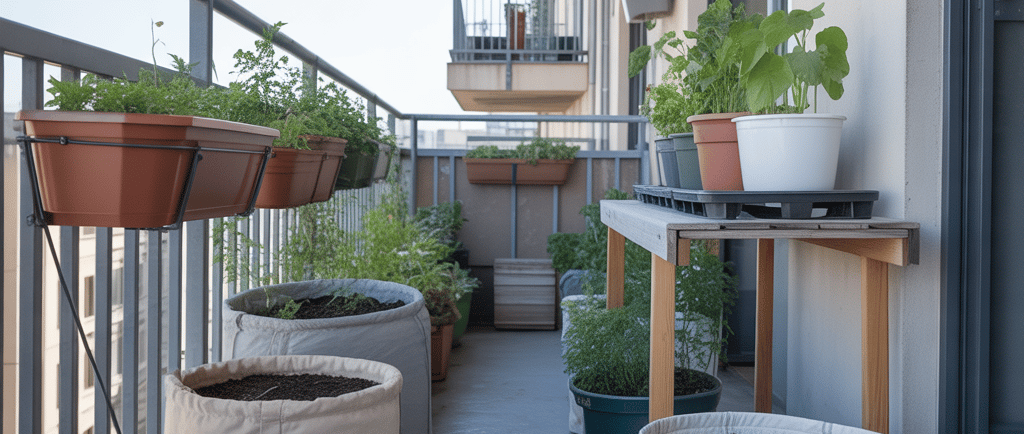
I'll never forget the conversation I had with my building manager in my second year of balcony gardening. I'd just added my fifteenth container—a large 10-gallon pot filled with tomato plants and saturated soil. She stopped by to chat and casually mentioned, "That's a lot of pots. You know balconies have weight limits, right?" I froze. Weight limits? I'd never even considered it. I was suddenly terrified that my beloved garden might be dangerous.
That conversation sent me down a research rabbit hole. I measured my balcony (6x8 feet = 48 square feet), looked up typical weight limits (50 pounds per square foot for my building), and calculated my total capacity (48 sq ft × 50 lbs = 2,400 pounds maximum). Then I calculated what I actually had on my balcony. The number shocked me: approximately 1,850 pounds when everything was saturated after watering. I was at 77% of capacity—not unsafe, but way closer to the limit than I'd realized. One or two more large containers and I'd have been in dangerous territory.
Here's what really hit me: a 7-gallon container filled with wet potting mix weighs about 70-80 pounds. I had fifteen containers. Do the math—that's over 1,000 pounds in soil and water alone, not counting containers, plants, or the furniture I also had out there. The weight adds up so much faster than you'd think. What seemed like a modest container garden was actually a significant structural load.
The research was eye-opening. Balcony collapses are rare but they happen—usually from structural defects or deterioration, but sometimes from overloading. More commonly, chronic overloading causes gradual damage: cracks, sagging, water intrusion, and expensive repairs. Even if catastrophic failure doesn't occur, you can be liable for damage from excessive weight. This isn't theoretical—it's real engineering with real consequences.
I've now helped probably twenty friends and neighbors calculate their balcony weight limits and optimize their gardens accordingly. I've learned that understanding weight limits doesn't mean giving up your garden—it means making smart choices about containers, soil, placement, and design. Most balconies can absolutely support beautiful abundant gardens when you work within their limits.
In this guide, I'm sharing everything I've learned about balcony weight limits, capacity calculations, safe distribution, and lightweight gardening strategies. We'll cover how to find your balcony's specific limit, calculate what you currently have, identify warning signs of overloading, and create gorgeous gardens that stay safely within structural capacity. This isn't the sexiest topic in gardening, but it's absolutely critical. Let's keep our gardens—and ourselves—safe!
Why Balcony Weight Limits Matter (It's Not Just Theory)
This section might seem alarmist, but understanding the stakes helps motivate proper attention to weight.
Structural failure is rare but catastrophic when it occurs. Balcony collapses make headlines because they're dramatic and often injurious. Most collapses stem from rot, corrosion, or construction defects rather than overloading, but overloading absolutely can cause failure, especially combined with existing weaknesses. I've seen photos of collapsed balconies—they fall suddenly and completely. People get severely injured or killed. This is rare (thousands of balconies exist safely), but the consequences are so severe that even low probability demands respect.
Liability and lease violations are more common practical concerns. Most leases prohibit alterations or uses that damage the property. Overloading a balcony could violate your lease, giving landlords grounds for lease termination or demanding garden removal. If your garden causes structural damage, you're financially liable for repairs—potentially thousands to tens of thousands of dollars. I know someone whose overloaded balcony cracked the building façade. Repairs cost $8,000 and she was responsible per her lease. The garden cost way more than she ever imagined.
Building code requirements exist for good reasons based on engineering and historical failure analysis. Codes require balconies to support minimum loads (typically 40-60 pounds per square foot for residential). These aren't arbitrary—they're based on typical uses (people, furniture, snow, etc.) with safety factors. Codes assume you'll use your balcony, not that it'll sit empty. But they don't necessarily assume you'll put 2,000 pounds of wet soil out there. Respecting code limits respects the engineering that keeps buildings safe.
Chronic overloading causes gradual damage even without catastrophic failure. Excessive weight causes: concrete cracking, metal fatigue, wood compression and rot, separation from building wall, drainage problems from sagging, and accelerated deterioration. I've seen balconies with visible cracks and sagging from years of overloading. The damage wasn't immediately dangerous but required expensive repair and reduced property value. Chronic overload shortens balcony lifespan significantly.
Insurance implications of weight-related damage are serious. If your garden causes balcony failure or damage, your renter's or homeowner's insurance may not cover it if you violated lease terms or building codes. Insurance can deny claims for negligence or prohibited uses. If someone is injured by balcony failure you caused through overloading, you could face liability claims exceeding your insurance coverage. This isn't scare tactics—it's reading actual insurance policies and understanding liability.
Peace of mind knowing you're within safe limits is underrated. I sleep better knowing my balcony is safely loaded. I don't worry when neighbors walk past under my balcony. I don't stress during heavy rain (water adds weight). The peace of mind from knowing I've calculated properly and stayed within limits is worth the effort. Anxiety about potential danger ruins the joy of gardening. Safety enables enjoyment.
Enabling larger gardens through smart distribution is the positive flip side. Understanding weight limits doesn't mean smaller gardens—it means optimized gardens. By using lightweight materials, strategic placement, and proper distribution, you can have more garden than you'd have through ignorant overloading. I fit more plants on my balcony now (safely) than when I was carelessly adding weight wherever. Knowledge enables better design.
Professional responsibility as a renter/owner means respecting property and neighbors. As renters, we have a responsibility not to damage property. As owners, we have a responsibility to maintain our property and not endanger neighbors. Overloading balconies violates these responsibilities. Being a responsible gardener means being a responsible occupant first. Weight awareness is part of that responsibility.
Understanding Your Balcony's Load Capacity
Before you can calculate whether you're within limits, you need to understand what those limits mean.
Typical residential balcony ratings fall in the 40-60 pounds per square foot range. This is "live load"—the weight of temporary items (people, furniture, snow, etc.). Most modern balconies are rated 50 lbs/sq ft minimum by code. Older buildings might be 40 lbs/sq ft. Newer buildings or commercial buildings might be higher (60-100 lbs/sq ft). The actual rating depends on design and building codes at time of construction. My building (built 1990s) is rated 50 lbs/sq ft per the architectural plans.
How balconies are engineered and rated involves structural calculations by engineers. Balconies are designed to support specified loads distributed across their surface, with safety factors (typically 1.5-2x) built in. The structure (concrete slab, steel frame, wood joists—depending on construction type) is sized to handle rated loads without excessive deflection or failure. Engineers account for: dead load (permanent weight like the balcony itself), live load (temporary weight like people and furniture), and environmental loads (wind, snow, seismic).
Live load versus dead load explained: Dead load is permanent weight (the balcony structure itself, permanent fixtures). Live load is temporary variable weight (people, furniture, snow, YOUR GARDEN). The 40-60 lbs/sq ft rating refers to live load—what you add to the balcony. The structure already accounts for its own weight (dead load). Container gardens are live load. You're adding weight the engineer may not have specifically anticipated, though the live load allowance should cover typical uses.
Safety factors built into ratings mean actual failure load is higher than rated load. If a balcony is rated 50 lbs/sq ft, actual failure might not occur until 75-100 lbs/sq ft (safety factor of 1.5-2x). This doesn't mean you can load to failure load—the rating includes safety margin for good reason. But it does mean occasional brief exceedances (like very heavy rain temporarily exceeding capacity) probably won't cause immediate collapse. Don't rely on safety factors—they're for unexpected situations, not intentional overloading.
Differences by building age and type are significant. Modern buildings (post-1980): likely designed to current codes, concrete or steel construction, typically 50-60 lbs/sq ft. Older buildings (pre-1980): possibly designed to older codes, might be wood frame, could be 40-50 lbs/sq ft or less. High-rises: often stronger balconies due to stricter codes, might be 60+ lbs/sq ft. Low-rise older buildings: potentially weakest balconies, sometimes 40 lbs/sq ft or less. Type and age matter enormously.
Why posted limits are conservative (usually) is good engineering practice. Posted limits typically include safety factors and are meant for general public use with minimal risk. Engineers design conservatively because conditions vary (material quality, construction quality, deterioration over time). The posted 50 lbs/sq ft probably means actual capacity is somewhat higher—but you should never rely on this. Use the posted conservative number. That's what it's there for.
The cantilever principle for balconies explains why distribution matters. Many balconies are cantilevered—they extend from the building without support underneath, held up by the attachment to the building structure. Cantilevers are strongest at the building wall (the support point) and weakest at the free edge (the far end). This means weight distribution matters enormously. Weight near the building is supported more effectively than weight at the far edge. This is why perimeter loading is recommended.
How weight capacity varies across balcony surface: it's not uniform. The balcony isn't equally strong everywhere. Generally: strongest near building wall and near support columns/walls, weaker in the center and at the free edges, weakest at the outer corners (especially if cantilevered). This variation is why concentrated heavy loads in weak spots are more dangerous than the same weight distributed across strong spots. Understanding this variation guides smart placement.
How to Find Your Specific Balcony's Weight Limit
Getting your actual number requires some detective work.
Checking building plans and documentation is the most reliable method. Building plans (architectural and structural drawings) specify design loads. These documents exist for every building and are usually kept by: building management office, original architect/engineer, building department in your municipality (public record), or condo/HOA association. Ask building management first: "Could I see the architectural plans? I want to verify the balcony load rating for safety." Many managers will provide this or at least tell you the rating.
Asking building management or landlord directly is the easiest approach. Email or ask in person: "What is the load capacity rating for balconies in this building? I'm planning a container garden and want to ensure I stay within safe limits." Most managers appreciate the responsible inquiry. They may know off-hand (50 lbs/sq ft is common), or they may need to check plans. I've asked three different building managers in different buildings—all responded within days with the information.
Consulting original architectural drawings if you can access them shows design loads on structural drawings. Look for: "live load" specifications on structural plans, balcony detail drawings, general notes about loading, or engineer's calculations. These drawings use technical language but usually clearly state "balcony live load = 50 psf" or similar. If you own your condo/home, you might have received these at purchase. If renting, ask management. If they won't provide, you can often view them at the municipal building department (public record).
Hiring a structural engineer is worth it when you can't find information and you're planning a heavy garden or the building is old. Cost: $200-500 typically for an assessment. The engineer will: inspect your balcony, review any available documents, assess current condition, calculate actual capacity considering age and condition, and provide a written report with capacity and recommendations. I know someone who did this for a $400 fee—the peace of mind was worth it, and the engineer identified some deterioration issues that needed attention anyway.
Typical limits by building type and era as general guidance (use specific info when possible):
Modern high-rise (post-2000): 60 lbs/sq ft likely
Modern mid-rise (post-1980): 50 lbs/sq ft typical
Older buildings (1960-1980): 40-50 lbs/sq ft
Very old buildings (pre-1960): 40 lbs/sq ft or less, possibly 30
Wood deck balconies: 40 lbs/sq ft typical
Commercial/institutional: 60-100 lbs/sq ft often higher These are rough guidelines. Your actual building may differ. Use these only if you cannot get specific information.
Regional building code variations exist across countries and even cities. US codes (IBC/IRC): typically 40-60 lbs/sq ft for residential. Canadian codes: similar, 50 lbs/sq ft common. European codes: vary by country, often metric (use conversions). Some cities have stricter codes than others. Earthquake zones often require stronger construction. Coastal areas may have additional requirements. Check your region's specific codes if you're researching without building-specific info.
What to do when you can't find information: assume a conservative limit and proceed cautiously. If you cannot find your building's actual rating after asking management and checking available resources, assume 40 lbs/sq ft (conservative for residential). Design your garden to stay well under this assumed limit (use only 60-70% of assumed capacity to add extra safety margin). Monitor for warning signs carefully. Consider this a temporary solution while you continue seeking actual information.
Assuming conservative limits for safety when in doubt is always the right approach. If you're choosing between 40 lbs/sq ft and 50 lbs/sq ft and you're unsure, use 40. If you're unsure whether your balcony is typical or might be weaker, assume weaker. The cost of being overly conservative is minimal (slightly smaller garden). The cost of being overly optimistic is potentially catastrophic. I always round down when estimating limits and round up when estimating weights. This double conservatism provides comfortable margin.
Calculating the Weight of Your Container Garden
Now let's get into actual numbers. This is where theory becomes practical.
Container weight varies dramatically by material. Empty container weights (approximate, for 10-gallon/12-inch diameter pot):
Terracotta: 12-18 lbs
Ceramic glazed: 15-25 lbs
Plastic: 2-5 lbs
Resin: 3-6 lbs
Wood: 8-15 lbs depending on construction
Metal: 5-10 lbs typically
Fabric grow bag: 0.5-1 lb
Concrete/hypertufa: 20-40 lbs
The material choice dramatically affects total weight. Fifteen terracotta pots at 15 lbs each = 225 lbs. Fifteen plastic pots at 4 lbs each = 60 lbs. That's 165 lbs difference just in containers.
Soil weight is the heaviest component and often underestimated. Weight per cubic foot:
Standard potting mix (dry): 40-50 lbs/cu ft
Standard potting mix (moist): 50-60 lbs/cu ft
Standard potting mix (saturated): 60-75 lbs/cu ft
Garden soil (dry): 75-80 lbs/cu ft
Garden soil (moist): 85-100 lbs/cu ft
Garden soil (saturated): 100-120 lbs/cu ft
Example: A 7-gallon container holds approximately 0.9 cubic feet of soil. With saturated potting mix at 70 lbs/cu ft, that's 63 lbs of soil alone. Ten such containers = 630 lbs of soil.
Water weight in saturated soil adds 20-30% to dry soil weight. Potting mix holds 40-60% water by volume when saturated. Water weighs 8.3 lbs per gallon. A 7-gallon container might hold 3-4 gallons of water when fully saturated (absorbed in soil and filling air spaces). That's 25-33 lbs of water. After you water your garden, you're adding 20-30% more weight temporarily. This matters because balcony capacity needs to accommodate worst-case saturated weight, not just dry weight.
Plant weight is usually negligible compared to soil and water. Most plants (even large tomatoes) weigh only 2-10 lbs including stems, leaves, and fruit. Large shrubs might be 15-25 lbs. Unless you're growing trees, plant weight is typically under 5% of total weight. I generally ignore plant weight in calculations—it's a rounding error compared to soil and containers.
Support structure weight includes trellises, tomato cages, plant stands, and vertical growing systems. Weights:
Bamboo stake: 0.25-0.5 lbs
Tomato cage (wire): 1-3 lbs
Wood trellis: 5-15 lbs depending on size
Metal plant stand: 10-25 lbs
Ladder shelf: 15-30 lbs
Vertical pallet garden: 20-40 lbs
These add up if you have multiple support structures. Five tomato cages = 10 lbs, one large trellis = 15 lbs, two plant stands = 40 lbs = 65 lbs total support structures.
Furniture and other balcony items must be included in total weight calculation. Common items:
Bistro table and 2 chairs: 30-60 lbs
Lounge chair: 20-40 lbs
Storage box/deck box: 15-30 lbs empty, more when filled
Grill: 40-80 lbs
Large umbrella with base: 40-60 lbs
Outdoor rug: 10-20 lbs
Don't forget to include everything on your balcony, not just garden items.
Seasonal weight variations matter for worst-case calculations. Summer: garden at peak size with saturated soil after watering. Fall/Winter: snow accumulation (snow weighs 5-20 lbs/cu ft depending on type). Spring: rain saturation. Your balcony must safely support worst-case conditions. In my climate, worst-case is late summer after heavy rain when all containers are saturated and plants are full-grown. That's when I'm at maximum weight.
Real calculation example with actual numbers for a typical setup:
My 6x8 foot balcony (48 sq ft), rated 50 lbs/sq ft = 2,400 lbs capacity.
Container garden inventory:
3 × 7-gal plastic pots (4 lbs each) = 12 lbs
3 × 7-gal saturated potting mix (63 lbs each) = 189 lbs
5 × 5-gal plastic pots (3 lbs each) = 15 lbs
5 × 5-gal saturated potting mix (45 lbs each) = 225 lbs
4 × 3-gal plastic pots (2 lbs each) = 8 lbs
4 × 3-gal saturated potting mix (27 lbs each) = 108 lbs
3 tomato cages = 6 lbs
1 small trellis = 8 lbs
Plants (estimated) = 25 lbs
Garden subtotal: 596 lbs
Other items:
Bistro table and chairs = 45 lbs
Small storage box = 20 lbs
Outdoor rug = 12 lbs
Watering can (full) = 18 lbs
Total weight: 691 lbs
Load: 691 lbs ÷ 48 sq ft = 14.4 lbs/sq ft (29% of capacity)
This is safely within limits with plenty of margin. But notice how quickly it adds up—12 containers = 691 lbs total.
Weight by Container Material: The Complete Comparison
Material choice has huge impact on total weight. Let's compare in detail.
Terracotta and ceramic weights are on the heavy end. Benefits: attractive, breathable, natural look. Weight penalty: significant. A 12-inch terracotta pot weighs 12-18 lbs empty. The same size plastic pot weighs 3-4 lbs. For a 10-container garden, that's 90-140 lbs extra weight from terracotta versus 30-40 lbs from plastic. The 100-lb difference is significant. I love terracotta aesthetically but I limit how many I use because of weight.
Plastic and resin container weights are lightest and most practical for weight-conscious gardening. A 12-inch plastic pot: 3-5 lbs. A 14-inch resin pot: 5-8 lbs. Benefits: very lightweight, inexpensive, durable, retain moisture well. Downsides: less attractive (though quality resin can look good), can degrade in UV over time. For balcony gardens where weight matters, plastic/resin is the smart choice. I use plastic for 80% of my containers because the weight savings allow more containers total.
Wooden planter weights depend on construction. A 12x12x12 inch wooden box made from 1-inch boards weighs approximately 8-15 lbs empty depending on wood type (cedar is lighter, hardwoods heavier) and construction. Wooden planters are heavier than plastic but lighter than terracotta or ceramic. Benefits: natural look, decent insulation, sturdy. Downsides: moderate weight, degradation over time. Wood is middle-ground option.
Metal container weights vary by type. Galvanized steel: 8-12 lbs for 12-inch container. Aluminum: 4-7 lbs for same size. Cast iron (decorative urns): 15-30+ lbs and very heavy—avoid on weight-restricted balconies. Thin stamped metal: 3-5 lbs, similar to plastic. Metal can be lightweight (aluminum, thin steel) or very heavy (cast iron). Check before buying—some decorative metal planters are shockingly heavy.
Fabric grow bag weights are the absolute lightest option. A 7-gallon fabric grow bag weighs 0.5-1 lb empty. Benefits: extremely lightweight, excellent drainage, collapsible storage, cheap. Downsides: less attractive than rigid containers, dry out faster, shorter lifespan. For weight-critical balconies, fabric bags are a game-changer. You can have twice as many containers using fabric versus terracotta for the same weight. I use fabric bags for vegetables where aesthetics don't matter and weight savings do.
Concrete and hypertufa weights are heaviest options and generally unsuitable for weight-limited balconies. A 12-inch concrete planter can weigh 30-60 lbs empty. Hypertufa (concrete/peat mixture) is slightly lighter at 20-40 lbs but still very heavy. These look beautiful and rustic but the weight is prohibitive for most balcony situations. I made hypertufa planters before understanding weight limits—they're gorgeous but I only keep one small one on my balcony. The rest went to ground-level gardens.
Weight when empty versus filled is dramatic and must be calculated. Example 12-inch container comparison (empty → filled with saturated soil):
Plastic: 4 lbs → 74 lbs (filled weight is 18x empty)
Terracotta: 15 lbs → 85 lbs (filled weight is 5.7x empty)
Fabric: 1 lb → 71 lbs (filled weight is 71x empty!)
Concrete: 40 lbs → 110 lbs (filled weight is 2.75x empty)
Notice the empty weight is small compared to filled weight. Soil dominates the equation. But container choice still matters—concrete adds 40 lbs versus fabric adding 1 lb for the same soil volume.
Material choice impact on total load for a 10-container garden (all 12-inch pots, saturated):
All plastic: 740 lbs total (40 lbs containers, 700 lbs soil/water)
All terracotta: 850 lbs total (150 lbs containers, 700 lbs soil/water)
All fabric: 710 lbs total (10 lbs containers, 700 lbs soil/water)
All concrete: 1,100 lbs total (400 lbs containers, 700 lbs soil/water)
The 390-lb difference between fabric and concrete is massive. Container material absolutely matters at scale.
Soil and Growing Medium: The Heavy Reality
Soil is your heaviest component. Understanding and reducing soil weight is critical.
Potting mix weight per cubic foot varies by moisture level. Dry potting mix (as sold in bags): 40-50 lbs/cu ft depending on brand and composition. Moist potting mix (normal soil moisture during growing): 50-60 lbs/cu ft. Saturated potting mix (immediately after watering or heavy rain): 60-75 lbs/cu ft. The variation is 20-30% between dry and saturated. Always calculate using saturated weight since your balcony must handle worst-case conditions.
Garden soil weight per cubic foot is dramatically heavier than potting mix. Dry garden soil: 75-80 lbs/cu ft. Moist garden soil: 85-100 lbs/cu ft. Saturated garden soil: 100-120 lbs/cu ft. This is 50-100% heavier than potting mix. This is the primary reason you should never use garden soil in containers—beyond the compaction and drainage issues, the weight is prohibitive for balconies. Ten containers with garden soil might weigh 300-500 lbs more than the same containers with potting mix.
Weight increase when saturated affects calculations significantly. Standard potting mix gains 20-30% weight when saturated. Example: a 7-gallon container with dry potting mix weighs approximately 45 lbs (soil only). The same container saturated weighs approximately 63 lbs. That's 18 lbs of water weight added. For 10 containers, that's 180 lbs difference between dry and saturated. Your calculations must use saturated weight since containers will be saturated regularly (after watering, after rain).
Lightweight soil alternatives and amendments reduce weight while maintaining plant health. Options:
Perlite: 6-8 lbs/cu ft (extremely light, improves drainage)
Vermiculite: 8-10 lbs/cu ft (light, improves moisture retention)
Coconut coir: 15-25 lbs/cu ft (lighter than peat, sustainable)
Expanded clay (hydroton): 10-15 lbs/cu ft (very light, used in hydroponics)
Styrofoam peanuts: 1-2 lbs/cu ft (controversial, very light)
By amending potting mix with these materials, you can reduce weight significantly.
Perlite, vermiculite, and coir for weight reduction are my primary strategies. My lightweight potting mix recipe: 50% standard potting mix, 30% perlite, 20% coconut coir. Weight of this mix (dry): approximately 25-30 lbs/cu ft versus 40-50 for standard mix. Weight savings: 30-40%. This mix is lighter, drains excellently, and grows plants just as well as heavier standard mix. I use this for all my containers now. The weight savings allowed me to add 3-4 more containers than I could have with standard mix.
Comparing soil weights at different moisture levels (per cubic foot):
Standard potting mix dry: 45 lbs
Standard potting mix moist: 55 lbs
Standard potting mix saturated: 70 lbs
Lightweight mix dry: 28 lbs
Lightweight mix moist: 35 lbs
Lightweight mix saturated: 45 lbs
The lightweight mix saves 25 lbs per cubic foot when saturated. For a 7-gallon container (0.9 cu ft), that's 22.5 lbs savings. For 10 containers, that's 225 lbs savings. This is huge.
Calculating total soil weight for your garden requires knowing container volumes. Container volume approximations (gallons → cubic feet):
1 gallon = 0.13 cu ft
3 gallons = 0.4 cu ft
5 gallons = 0.67 cu ft
7 gallons = 0.9 cu ft
10 gallons = 1.3 cu ft
Calculate total volume across all containers, multiply by soil weight per cubic foot. Example: five 7-gallon containers = 4.5 cu ft total. Using saturated lightweight mix at 45 lbs/cu ft: 4.5 × 45 = 202.5 lbs of soil. Using saturated standard mix at 70 lbs/cu ft: 4.5 × 70 = 315 lbs. The lightweight mix saves 112.5 lbs in this example.
Lightweight potting mix recipe I actually use and recommend:
50% quality potting mix (provides nutrients, structure)
30% perlite (lightweight, improves drainage)
20% coconut coir (lightweight, sustainable, moisture retention)
Optional: 5-10% compost or worm castings (nutrients)
Mix thoroughly. This produces excellent growing medium at 30-40% lighter weight than standard potting mix. Plants thrive in it. I've used this for 3+ years with excellent results. The weight savings is real and significant.
Safe Weight Distribution Principles
Where you place weight matters as much as how much weight you have.
The perimeter is strongest—this is the most important rule. Balconies are supported from the building edge (where they attach) and often from side walls or columns. The perimeter (edges near building and sides) is the strongest area. Place your heaviest containers here. My rule: containers over 5 gallons go along the perimeter only, never in the center. This distributes load to the strongest structural elements.
Center/middle is the weakest point on most balconies. The center is farthest from support points and experiences maximum deflection under load. Avoid placing heavy containers in the center. If you must use the center, use lightweight containers only (3 gallons or less, fabric bags, lightweight soil). I keep my balcony center relatively empty or use only small lightweight containers there. All large heavy containers are around the perimeter.
How cantilever balconies distribute loads explains why distribution matters. Cantilever balconies extend from the building without support underneath. They're held up by the attachment to the building structure. The building attachment acts as a fulcrum. Weight near the building is more effectively supported (short lever arm). Weight at the far edge has more leverage (long lever arm) and creates more stress on the building attachment. This is why weight should be near the building wall, not at the far railing edge.
Creating weight distribution maps helps visualize and plan your layout. Draw your balcony to scale on paper. Mark support locations (building wall, any columns or side walls). Divide into zones: strong perimeter zone (within 2 feet of building wall/support), moderate zone (middle), weak zone (far edges/corners). Plan heavy container placement in strong zones only, medium containers in moderate zones, lightweight containers anywhere. I created a map when I reconfigured my garden and it dramatically improved my weight distribution.
Spacing heavy containers appropriately prevents concentrated loads. Don't cluster all your heaviest containers in one spot—even if that spot is strong structurally, concentrated loads create stress. Distribute heavy containers around the perimeter with spacing between them. My rule: leave at least 2-3 feet between containers over 7 gallons. This spreads the load more evenly and prevents stress concentrations.
Avoiding concentrated point loads is engineering best practice. A point load is concentrated weight on a small area (like one extremely heavy container). Point loads are more stressful than the same weight distributed. Example: one 100-lb container in one spot is more stressful than four 25-lb containers spread across the same area. Use multiple smaller containers rather than fewer giant containers for better load distribution.
Understanding load paths to structure helps you think like an engineer. Load from a container travels down through the balcony structure to the supports (building wall, columns). Shorter, more direct load paths are better. Weight near supports has short direct load paths. Weight far from supports has long indirect load paths that stress the structure more. Visualize how weight travels to supports and prefer short direct paths (perimeter locations).
Seasonal redistribution strategies account for changing conditions. Winter: move containers closer to building before snow/ice adds weight. Spring: redistribute as you add new plants. Summer: avoid adding new containers during peak growth (heaviest time). Fall: can add containers as annuals die back and lighten. I actively move containers seasonally—I push everything closer to the building wall before winter since snow adds significant weight to the outer areas.
High-Rise vs. Low-Rise: Does Height Matter?
Building height creates different engineering considerations.
Engineering differences by building height stem from different code requirements. High-rise buildings (typically over 75 feet/7+ stories) face stricter codes due to wind loading, fire safety, and evacuation concerns. These stricter codes often result in stronger construction overall, including balconies. Low-rise buildings (under 4-5 stories) face less stringent requirements and may have lighter construction. This isn't universal but it's a general pattern.
High-rise balconies are often stronger due to newer codes and construction standards. Many high-rises are relatively new (built post-1990) and designed to current codes. Modern engineering and materials often result in higher capacity. I've lived in both high-rise and low-rise buildings—the high-rise balconies felt more substantial and had documentation showing 60 lbs/sq ft capacity versus 50 lbs/sq ft in the low-rise building.
Low-rise older buildings potentially have lower limits especially if built pre-1980 before modern codes. Older low-rises may have: lighter construction (wood vs. concrete/steel), designs to older less stringent codes, deterioration from age, and potentially lower capacity (40 lbs/sq ft or less). If you're in an older low-rise, be extra conservative and seek professional assessment if planning a heavy garden.
Wind loading on high-rise balconies is more significant and affects design. Wind pressure increases with height. High-rise balconies must resist higher wind loads, which influences their design. The good news: engineers account for this in design. The practical implication: high-rise balconies might have weight restrictions beyond structural capacity due to wind concerns. Very heavy items might be prohibited because wind could dislodge them. Check building rules specifically.
Evacuation concerns on high floors sometimes affect balcony use rules. Some buildings restrict balcony storage or uses on high floors because balconies might be needed for emergency access or items could fall and endanger people below. This doesn't directly affect weight limits but may limit what you can do even if within weight capacity. I've seen high-rise buildings that prohibit large plants or furniture on balconies above certain floors.
Building sway and movement considerations matter in tall buildings. High-rises sway slightly in wind (this is normal and designed for). This movement can stress balcony connections differently than static loading. Again, engineers design for this. Practically: containers should be stable and not prone to tipping during building movement. Secure heavy containers so they can't shift during sway. I use rubber feet under containers to prevent sliding.
Why high-rises may have stricter rules overall: liability concerns (many units, many potential plaintiffs), property value preservation (luxury buildings restrict anything that looks bad), fire code requirements (clear egress paths), and management resources (larger buildings have professional management that enforces rules). High-rise living often means more restrictions regardless of structural capacity.
Practical differences for gardeners: high-rise typically means stronger balconies but more restrictions. Low-rise typically means fewer restrictions but potentially weaker balconies. Neither is universally better—just different considerations. Know your situation and plan accordingly. I preferred high-rise for balcony gardening due to higher structural confidence, despite more rules to follow.
Sample Weight Calculations for Common Setups
Let's walk through real-world examples to make this concrete.
Small balcony (4x6 feet) with 5 containers:
Balcony: 24 sq ft × 50 lbs/sq ft = 1,200 lbs capacity
Garden setup:
2 × 5-gal plastic pots + saturated soil = 2×(3+45) = 96 lbs
3 × 3-gal plastic pots + saturated soil = 3×(2+27) = 87 lbs
Plants, supports = 15 lbs
Small bistro set = 35 lbs
Person (occasional) = 150 lbs
Total: 383 lbs (32% of capacity) - SAFE with comfortable margin
Medium balcony (6x10 feet) with 10 containers:
Balcony: 60 sq ft × 50 lbs/sq ft = 3,000 lbs capacity
Garden setup:
4 × 7-gal plastic pots + saturated soil = 4×(4+63) = 268 lbs
4 × 5-gal plastic pots + saturated soil = 4×(3+45) = 192 lbs
2 × 3-gal hanging baskets + saturated soil = 2×(2+27) = 58 lbs
Plants, supports, trellises = 35 lbs
Bistro table + 2 chairs = 45 lbs
Lounge chair = 30 lbs
2 people (occasional) = 300 lbs
Total: 928 lbs (31% of capacity) - SAFE with comfortable margin
Large balcony (8x12 feet) with 15+ containers:
Balcony: 96 sq ft × 50 lbs/sq ft = 4,800 lbs capacity
Garden setup:
6 × 7-gal plastic pots + saturated soil = 6×(4+63) = 402 lbs
6 × 5-gal plastic pots + saturated soil = 6×(3+45) = 288 lbs
4 × 3-gal containers + saturated soil = 4×(2+27) = 116 lbs
Plants, supports, larger trellises = 60 lbs
Furniture set (table, 4 chairs, bench) = 120 lbs
Storage box = 25 lbs
Grill = 50 lbs
3 people (occasional) = 450 lbs
Total: 1,511 lbs (31% of capacity) - SAFE with comfortable margin
Notice all examples stay around 30-35% of capacity when including people. This is good design—leaving 60-70% margin.
Vegetable garden setup weight analysis (6x8 ft balcony):
Focus on productive vegetables in larger containers:
3 × 10-gal tomato containers + soil = 3×(5+90) = 285 lbs
2 × 7-gal pepper containers + soil = 2×(4+63) = 134 lbs
3 × 5-gal herb containers + soil = 3×(3+45) = 144 lbs
2 × 3-gal lettuce containers + soil = 2×(2+27) = 58 lbs
Tomato cages, stakes, supports = 25 lbs
Watering can, tools = 15 lbs
Total: 661 lbs on 48 sq ft = 13.8 lbs/sq ft (28% of 50 lbs/sq ft capacity) - SAFE
Flower garden setup weight analysis (same 6x8 ft balcony):
Focus on ornamental beauty:
5 × 5-gal flowering plant containers + soil = 5×(3+45) = 240 lbs
4 × 3-gal mixed containers + soil = 4×(2+27) = 116 lbs
3 hanging baskets with flowers + soil = 3×(2+20) = 66 lbs
Plant stand/ladder shelf = 20 lbs
Decorative elements = 15 lbs
Total: 457 lbs on 48 sq ft = 9.5 lbs/sq ft (19% of capacity) - SAFE with large margin
Notice flower garden is lighter than vegetable garden because fewer large containers.
Mixed container garden calculation (8x10 ft balcony):
Combination of vegetables, herbs, and flowers:
2 × 10-gal tomatoes + soil = 190 lbs
2 × 7-gal peppers + soil = 134 lbs
3 × 5-gal herbs + soil = 144 lbs
4 × 3-gal flowers + soil = 116 lbs
2 hanging baskets = 44 lbs
Supports and structures = 30 lbs
Bistro set = 40 lbs
Total: 698 lbs on 80 sq ft = 8.7 lbs/sq ft (17% of capacity) - SAFE with large margin
Vertical garden weight considerations are interesting because weight distribution differs:
Vertical pallet garden (6 ft tall, 4 ft wide):
Pallet structure = 30 lbs
Landscape fabric, fasteners = 5 lbs
Soil (12 pockets, 0.3 cu ft each, lightweight mix) = 12×0.3×45 = 162 lbs saturated
Plants = 10 lbs
Total: 207 lbs concentrated in 4×2 ft floor space = 8 sq ft
Load: 207÷8 = 25.9 lbs/sq ft on that spot
This is higher local loading but as long as it's positioned on a strong area (against building wall), it's fine. The total weight is manageable but the concentrated footprint creates local loading that must be on sturdy area.
Worst-case scenario calculations (all saturated, maximum people):
My actual 6x8 ft balcony, worst-case:
All containers saturated after storm = 596 lbs
All furniture = 75 lbs
3 people standing on balcony = 450 lbs
Accumulated rain water in saucers/items = 20 lbs
Worst-case total: 1,141 lbs on 48 sq ft = 23.8 lbs/sq ft
Capacity: 50 lbs/sq ft
Safety margin: 26.2 lbs/sq ft remaining (52% unused)
This worst-case analysis is still safe. I wouldn't want to be much closer to the limit though.
Lightweight Container Gardening Strategies
If you're approaching limits, these strategies reduce weight while maintaining garden abundance.
Choosing lightweight container materials means prioritizing plastic, resin, and fabric over terracotta, ceramic, and concrete. I replaced four terracotta pots (15 lbs each = 60 lbs) with plastic pots (4 lbs each = 16 lbs) for a 44-lb weight savings with zero functional difference. The plants don't care about container material. For weight-critical situations, choose the lightest material that's functional. Aesthetics can be added with exterior cache pots if needed.
Using lightweight soil amendments extensively throughout all containers creates dramatic savings. My lightweight soil mix (50% potting mix, 30% perlite, 20% coir) weighs 30-40% less than standard potting mix. For a garden with 10 cubic feet of soil total, that's 250-400 lbs savings. This single strategy enabled me to add 4-5 more containers than I could have with standard soil. Mix lightweight soil for every container, not just some.
Self-watering containers reduce watering weight accumulation in saucers and trays. Traditional containers with saucers accumulate water in saucers after watering—this standing water adds weight. Self-watering containers contain the water reservoir within the planter design, and drainage is controlled. The total weight is similar, but distribution is better and you avoid extra weight in multiple saucers. Plus self-watering reduces frequency, meaning containers are saturated less often.
Smaller containers distributed versus few large ones can reduce total weight despite same soil volume. Example: one 15-gallon container (1.95 cu ft soil) versus three 5-gallon containers (2 cu ft total soil). Similar soil volume, but smaller containers allow better distribution, use lighter container materials (large containers are disproportionately heavy), and can use lightweight fabric bags easier. I moved from large containers to medium-sized distributed containers and saved weight while actually increasing total planting volume.
Vertical growing minimizes floor load by transferring weight to walls or railings. Hanging planters transfer load to ceiling/eave attachments, not balcony floor. Railing planters hang on railings (load goes to railing posts and building, not balcony floor). Wall-mounted pocket planters transfer load to wall. These vertical methods reduce floor loading while adding growing capacity. I use three hanging planters (60 lbs total) that don't count against floor load—effectively "free" capacity.
Hanging and railing planters transfer load to different structural elements. Important: verify that railings and attachments can handle the weight. A railing planter with saturated soil might weigh 30-40 lbs. Multiple planters could stress railings. But the load transferred to railings doesn't add to balcony floor loading, which is often the limiting factor. I use two railing planters (70 lbs total) that hang on my steel railings—the balcony floor sees zero additional load from them.
Avoiding decorative heavy elements saves weight for functional planting. Skip: heavy decorative pots (if not planting in them), stone or concrete statuary, large water features, heavy furniture, decorative rocks or gravel in containers. Every pound of decorative weight is a pound you can't use for plants. I removed a 40-lb decorative concrete sphere and a 30-lb iron plant stand—that 70 lbs freed up capacity for another container.
Foam peanuts and filler materials are controversial but can reduce weight. Method: fill bottom 1/3 of deep containers with styrofoam peanuts, landscape fabric layer, then soil on top. This reduces soil volume while maintaining container depth for aesthetics. Weight savings: 30-40% for deep containers. Controversy: peanuts can float and make mess, some people dislike plastic foam environmentally, and it doesn't work for all plants (deep-rooted plants need full depth). I've used this in ornamental containers for shallow-rooted plants with success. Not appropriate for vegetables needing full root depth.
When You're Pushing the Limits: Warning Signs
Recognition of problems enables early intervention before catastrophic failure.
Visible sagging or deflection is the most obvious warning sign. Stand at balcony edge and sight along the surface—is it level or does it sag in the middle? Small deflection (under 1/4 inch over 10 feet) might be normal. Larger deflection indicates overloading or structural issues. Compare to neighboring balconies—they should look similar. I checked my balcony by stretching a string across it and measuring gap underneath—less than 1/8 inch, which is fine.
Cracks in balcony surface or walls indicate stress. Hairline cracks in concrete might be normal shrinkage. Wider cracks (over 1/8 inch), growing cracks, or cracks that follow stress patterns (around support points, in predictable lines) indicate structural problems potentially from overloading. Cracks in the building wall where balcony attaches are especially concerning. I inspect my balcony quarterly for new cracks—so far none, but I'd reduce weight immediately if any appeared.
Separation from building wall is critical warning sign. The balcony should fit flush against the building with no gaps. Any gap, movement, or separation indicates the balcony is pulling away from its support—extremely dangerous. Check the joint between balcony and building wall carefully. If you can fit a credit card in the gap, that's a problem. This requires immediate professional assessment and weight removal.
Popping or creaking sounds when weight is added suggest structural stress. Some noise might be normal (thermal expansion, normal movement). But new sounds, loud pops, or creaking when you walk or add weight indicates stress. I added a container once and heard a loud creak—I immediately removed it and reassessed my total weight. Turned out I was fine (the sound was from a loose railing), but sounds should be investigated, not ignored.
Doors or windows not closing properly can indicate balcony settlement or movement. Balconies connect to building structure. If a balcony sags or pulls away, it can affect nearby door and window frames, causing sticking or gaps. If your balcony door suddenly doesn't close smoothly, check the balcony for sagging. This is an indirect indicator but worth noting.
Water pooling indicates sagging even if not visible to the eye. After rain, does water pond on your balcony surface? Balconies should have slight slope toward drainage. Standing water means sagging has created low spots. This doesn't necessarily mean danger, but it indicates deflection. I check after heavy rain—water should drain within hours, not pool for days.
Deteriorating railings or supports might indicate overloading or age-related failure. Check railing attachments—are they firm or loose? Are posts vertical or leaning? Is wood soft or rotting? Is metal rusted through? While deterioration isn't necessarily from overloading, it does reduce structural capacity. A deteriorated balcony can't safely support rated loads. If your balcony shows significant deterioration, reduce weight until repairs are made.
When to evacuate and call professionals: if you observe significant sagging (over 1/2 inch), large cracks (over 1/4 inch or rapidly growing), separation from building, loud popping sounds under load, or any sudden changes—evacuate the balcony immediately, remove any people, and call building management and/or structural engineer. Don't return to the balcony until professional assessment confirms safety. I've never faced this, but if I did, I'd err on the side of extreme caution. Lives matter more than plants.
Balcony Inspection: What to Look For
Regular inspection catches problems early.
Pre-garden inspection checklist before adding significant weight:
□ Visual inspection of surface: no cracks, level, good condition □ Check building attachment: flush fit, no gaps, no cracks at joint □ Inspect railings: firm, no wobble, no rust/rot, properly attached □ Test drainage: pour water, verify it drains within minutes □ Check underneath (if accessible): no visible damage, sagging, or deterioration □ Verify support structure: columns, joists, connections all intact □ Review documentation: confirm weight limit, check for any restrictions □ Compare to neighbors: does yours look similar or worse?
I did this inspection before starting my garden and repeat it annually.
Signs of existing structural issues to look for:
Cracks wider than 1/8 inch or any growing cracks
Surface spalling (concrete flaking off exposing aggregate or rebar)
Sagging visible to the eye or measurable with level/string
Water damage stains suggesting chronic leaking
Rust stains from corroding rebar in concrete
Soft wood or visible rot in wood construction
Loose or corroded attachments
Evidence of previous repairs (might indicate ongoing issues)
Any of these warrant professional inspection before adding significant garden weight.
Water damage and rot indicators in wood balconies:
Soft wood when you press with screwdriver
Discoloration or dark stains
Fungal growth or moss
Musty odor
Wood that crumbles or feels spongy
Visible cracks or splits in boards
Loose fasteners or nails backing out
Wood balconies require vigilant monitoring. Water and rot dramatically reduce capacity.
Concrete spalling and rebar exposure in concrete balconies indicates deterioration:
Concrete surface flaking away (spalling)
Rust-colored stains (corroding rebar underneath)
Exposed rebar (concrete has fallen away)
Powder or dust accumulation (concrete degrading)
White efflorescence (water infiltration and salt deposits)
Concrete deterioration reduces strength significantly. Professional assessment needed if extensive.
Drainage functionality must be verified. Pour water on balcony surface and observe:
Does it drain within 5-10 minutes?
Does it flow to drains or pond in spots?
Are drains clear or clogged?
Does water back up against building wall?
Poor drainage accelerates deterioration and indicates possible sagging. It also adds weight (standing water).
Railing stability and attachment is safety-critical beyond just weight. Test railings:
Push firmly—any give or movement?
Check bolts and fasteners—all tight?
Inspect posts at base—firmly attached?
Look for cracks at attachment points
Loose railings are immediate safety hazard regardless of weight.
Surface condition and integrity overall:
Rate your balcony: Excellent (like new), Good (some wear but sound), Fair (visible issues but functional), Poor (significant deterioration). Be honest. Excellent and Good balconies can probably support rated loads. Fair balconies warrant caution and conservative loading. Poor balconies need professional assessment and probably can't support full rated loads.
When to hire professional inspection:
Building is over 30 years old
Any signs of deterioration or damage
Planning very heavy garden (approaching 75%+ of rated capacity)
Can't find weight limit documentation
Previous water damage or known issues
Any doubts about safety
Cost: $200-500 typically. Worth it for peace of mind and accurate capacity assessment.
Furniture and Equipment Weight Considerations
Gardens aren't the only weight on balconies. Account for everything.
Bistro sets and seating weights are easily overlooked:
Small metal bistro set (2 chairs, table): 30-50 lbs
Larger dining set (4 chairs, table): 80-120 lbs
Wooden bench: 40-60 lbs
Single lounge chair: 25-40 lbs
Folding chairs: 8-12 lbs each
Heavy wrought iron furniture: 100-200+ lbs
I have a bistro set (45 lbs) and one lounge chair (30 lbs) = 75 lbs that I must include in my weight budget.
Grills and cooking equipment add substantial weight:
Small charcoal grill: 25-35 lbs
Medium gas grill: 80-120 lbs
Large gas grill: 150-250 lbs
Propane tank (full): 38 lbs
Pizza oven: 50-150 lbs depending on type
Many leases prohibit grills on balconies anyway (fire code), but if allowed, they're heavy. A gas grill with propane can be 150 lbs total.
Storage boxes and bins add weight empty and more when filled:
Small deck box: 15-25 lbs empty, 40-80 lbs filled
Large deck box: 35-60 lbs empty, 100-200 lbs filled
Storage ottoman: 15-30 lbs
Shelving unit: 20-40 lbs empty, plus contents
Consider what you're storing. Garden supplies, cushions, and tools add up. My storage box weighs about 60 lbs loaded with potting supplies and cushions.
Plant stands and shelving units:
Small metal plant stand: 10-20 lbs
Large tiered stand: 25-40 lbs
Wooden ladder shelf: 20-35 lbs
Baker's rack or etagere: 30-50 lbs
Plus the weight of plants placed on them. A tiered stand holding six 5-gallon plants adds 35 lbs (stand) + 300 lbs (plants) = 335 lbs total in a 2x3 ft footprint.
Water features and fountains are very heavy:
Small tabletop fountain: 15-30 lbs
Medium floor fountain: 40-80 lbs
Large statement fountain: 100-200+ lbs
Water itself weighs 8.3 lbs/gallon. A fountain with 5 gallons is 40+ lbs of water alone. I wanted a fountain but eliminated it due to weight.
Large umbrellas and shade structures:
Market umbrella with base: 40-70 lbs total
Cantilever umbrella with base: 80-150 lbs
Shade sail (mounted to building/railings): minimal balcony weight
Retractable awning: 30-60 lbs
Heavy umbrella bases (filled with sand or water) can be 50-80 lbs alone. Consider whether shade is worth the weight cost.
Snow and ice accumulation in winter climates adds seasonal weight:
Fresh fluffy snow: 5-7 lbs per cubic foot
Packed snow: 15-20 lbs per cubic foot
Ice: 57 lbs per cubic foot
Wet heavy snow: 20-30 lbs per cubic foot
A 6x8 ft balcony with 6 inches of packed snow: 48 sq ft × 0.5 ft deep × 18 lbs/cu ft = 432 lbs of snow. This is why balconies are rated for snow load in snow climates. But it also means you have less margin for garden weight in winter. I reduce my container count before winter because snow will add 300-500 lbs seasonally.
Accounting for people weight: balconies must support people. Live load ratings assume people using the space. Standard assumptions:
One person: 150-200 lbs
Gathering (multiple people): 40-60 lbs per sq ft assumed
A 48 sq ft balcony × 50 lbs/sq ft = 2,400 lbs capacity includes assumption of people. But if you're hosting a party with 10 people (1,500 lbs of people), that's most of your capacity right there. Your permanent garden weight needs to leave room for occasional people. I design my garden to use no more than 50% of capacity, leaving room for 3-4 people comfortably.
Legal and Liability Issues
Weight limits aren't just engineering—they're legal and contractual.
Lease restrictions on balcony use often include weight-related provisions. Common restrictions:
No modifications to balcony structure
No items that damage surface (heavy planters that crack concrete)
No excessive storage or clutter
Compliance with building codes
Maintains insurance coverage validity
Right of inspection/access
Your lease probably doesn't specify exact weight limits, but violating structural limits could be considered damage to property. Read your lease carefully.
HOA rules and bylaws in condos add another layer. HOAs can restrict:
Types of plants allowed (aesthetic consistency)
Container types and colors
Height of plants (visibility concerns)
Railings must remain visible
Weight limits more restrictive than structural capacity
I've seen HOAs restrict containers to certain colors or prohibit vegetables entirely. Know your HOA rules before investing in a garden.
Municipal building codes set minimum standards. Violating codes can result in:
Building inspector citations
Required removal of non-compliant items
Fines or penalties
Inability to sell property (code violations)
Overloading beyond rated capacity could violate code even if no structural failure occurs.
Liability for damage from overloading makes you financially responsible. If your garden causes:
Structural damage to building (cracks, sagging, etc.)
Water damage from drainage issues
Damage to units below from falling items
Injury to others from structural failure
You're liable for repair costs and potentially injury claims. This isn't theoretical—leases and laws make you responsible for damage you cause.
Insurance coverage implications are concerning. Standard renter's or homeowner's insurance might not cover:
Damage from prohibited uses (if lease prohibits and you violate)
Damage from negligence (intentional overloading could be considered negligence)
Liability for structural failure you caused
Review your insurance policy and consider umbrella liability coverage if you're pushing weight limits.
Neighbor impacts and complaints can escalate to legal issues. Neighbors might complain if:
Your garden blocks their view
Water drains onto their balcony
Pests are attracted
Items fall onto their space
Structural concerns from visible sagging
Neighbor complaints can trigger building inspections, management action, or even lawsuits between unit owners.
Documentation and permission protect you. I recommend:
Get weight limit in writing from management
Document your calculations and safety margin
Photograph balcony condition before and after garden
Get written permission for anything unusual
Keep records of maintenance and inspections
If issues arise, documentation shows you acted responsibly.
When violations can lead to eviction: lease violations (including excessive weight causing damage) can be grounds for lease termination. The process varies by jurisdiction but typically:
Warning notice of violation
Cure period (time to fix)
If not corrected, formal eviction proceedings
I've heard of one case where a tenant's overloaded balcony cracked the building facade. The landlord terminated the lease after repairs. The tenant was liable for $12,000 in repair costs. Extreme case, but it happens.
Reducing Weight Without Sacrificing Beauty
Strategic choices create beautiful gardens within weight limits.
Lightweight materials that look substantial create visual impact without weight. Examples:
Resin planters that mimic stone/terracotta (8 lbs vs. 40 lbs for real stone)
Foam or resin faux-stone garden edges and décor
Aluminum furniture that looks like wrought iron (15 lbs vs. 80 lbs)
Hollow decorative elements vs. solid
Lightweight modern containers in matte finishes (look premium)
I use resin planters that look like weathered terracotta—guests think they're real clay but they're 1/3 the weight.
Foam and resin faux-stone containers have improved dramatically. Modern resin containers:
Look convincingly like stone, concrete, or ceramic
Weigh 60-80% less than real materials
Are durable and weather-resistant
Cost 30-50% less than real stone
I replaced two concrete planters (60 lbs each) with resin faux-stone planters (12 lbs each). Saved 96 lbs, no one can tell the difference visually.
Vertical gardens versus floor containers change the weight equation. Comparison:
10 floor containers (7-gal each): 700 lbs concentrated on floor
1 vertical wall planter (20 pockets, 0.3 cu ft each): 300 lbs distributed to wall/railing
Same planting capacity, less than half the floor weight. Vertical growing is the ultimate lightweight strategy.
Choosing plants by size and water needs reduces weight. Heavy plants:
Large specimens (big mature plants)
Water-loving plants (constantly saturated soil)
Large-leafed tropicals (heavy foliage)
Lightweight plants:
Compact varieties (bred for containers)
Drought-tolerant plants (dry between waterings = less water weight)
Fine-leafed plants (lightweight foliage)
I prioritize compact varieties and let soil dry somewhat between waterings to reduce average weight.
Using fewer larger specimens versus many small creates visual impact with less total weight. Compare:
20 small 3-gallon plants: 600 lbs total, looks cluttered
10 medium 5-gallon plants: 500 lbs total, looks more substantial and intentional
Fewer larger plants often creates better design and reduces weight through fewer containers.
Lightweight soil mixes that perform well are critical. My lightweight mix performs identically to standard potting mix:
Plants grow just as vigorously
Flowering and fruiting are unchanged
Nutrient retention is equal
Moisture management is actually better (excellent drainage)
Weight is 30-40% less
There's literally no downside except the effort of mixing. I'll never go back to standard heavy mixes.
Strategic furniture and accessory choices prioritize function over weight:
Folding furniture (lightweight, stores away to create more weight budget)
Multi-functional pieces (storage ottoman serves as seat and storage)
Minimize pure decoration (every decorative pound is a lost planting pound)
Choose quality over quantity (one good chair better than three cheap ones)
I eliminated a decorative side table (30 lbs, purely aesthetic) and a second chair (25 lbs, rarely used). Gained 55 lbs for plants with zero functional loss.
Design illusions that create abundance without weight:
Mirrors on walls (create depth, no weight)
Vertical growing (dense planting, minimal floor weight)
Trailing plants (one plant cascades 3 feet, looks like multiple plants)
Strategic placement (position most colorful plants for maximum visibility)
Lighting (string lights create ambiance for 2-3 lbs total)
My balcony looks much fuller than its actual weight because of vertical growing and trailing plants that cascade dramatically.
Reinforcement and Structural Solutions
Most renters can't modify structure, but owners sometimes can.
When reinforcement is possible, it's rarely practical for renters and expensive for owners. Reinforcement involves adding structural support (posts, beams, brackets) to increase capacity. This requires:
Structural engineering design
Building permits
Professional contractor installation
Potentially HOA approval
Significant cost ($3,000-15,000+ typically)
For renters: not happening unless building does it. For owners: probably not cost-effective unless balcony needs repair anyway.
Professional structural assessment determines if reinforcement is needed or feasible. An engineer will:
Inspect current structure
Calculate current capacity
Design reinforcement if needed/wanted
Specify required work
Provide stamped drawings for permits
Cost: $500-2,000 for assessment and design. This might reveal your balcony is fine and doesn't need work—worth it for large expensive reinforcement decisions.
Adding support posts or brackets is the typical reinforcement method. Options:
Vertical posts from ground to balcony underside (most effective, not possible above ground level)
Diagonal brackets from building to balcony underside
Additional attachment points to building structure
Stiffening existing structure with steel reinforcement
Effectiveness varies. Post support from ground (for 2nd floor balconies) can double capacity. Brackets might increase capacity 20-40%. Higher floors can't use ground posts.
Underdeck support systems for accessible undersides (usually only 2nd floor):
Posts extend from ground to balcony joists
Distributed to avoid point loading ground underneath
Can significantly increase capacity
Requires ground-level work and permitting
I looked into this for a 2nd-floor balcony. Cost estimate: $8,000. I chose not to proceed and just limited my garden instead.
Load-bearing platform modifications involve reinforcing the balcony structure itself:
Sistering additional joists alongside existing (wood construction)
Adding steel reinforcement (concrete construction)
Replacing deteriorated structural elements
Upgrading attachment to building
Very expensive and invasive. Only makes sense when combining with needed repairs.
Cost-benefit analysis of reinforcement:
Reinforcement cost: $5,000-15,000 typically Value added: ability to have heavier garden, potentially increased property value Alternative: work within existing limits for $0
Unless balcony needs repair anyway, reinforcement rarely makes financial sense purely for gardening. Exception: if you're a serious gardener and plan to live there 10+ years, the quality-of-life value might justify it.
Alternatives to reinforcement that achieve similar goals:
Vertical growing (adds capacity without floor weight)
Lightweight materials and soil (doubles effective capacity)
Distributing weight properly (maximizes safe use of existing capacity)
Accepting smaller garden (3-5 containers can be beautiful)
I chose these alternatives and have an abundant garden within original capacity.
Working within existing structure is usually the best approach. Rather than asking "how can I increase capacity?", ask "how can I maximize the capacity I have?" This mindset leads to creative solutions, lightweight strategies, and beautiful gardens that are perfectly safe.
Special Considerations for Older Buildings
Age brings beauty and character but also structural concerns.
Pre-1980s construction standards were less stringent than modern codes. Buildings from this era:
May be designed to 40 lbs/sq ft or less (vs. 50 lbs/sq ft modern)
May use materials/methods now known to be problematic
Probably lack modern safety factors
Might not have detailed documentation
Approach pre-1980s balconies conservatively. Assume lower capacity until verified.
Wood deck balconies and weight limits require special attention. Wood:
Degrades over time (rot, insect damage, UV deterioration)
Loses strength as it ages
Requires more maintenance than concrete/steel
Shows signs of problems more visibly (sagging, soft spots)
Wood balconies probably had 40 lbs/sq ft original capacity. After 30-40 years, effective capacity might be less if not perfectly maintained. Inspect thoroughly and consider professional assessment.
Historic building restrictions may limit what you can do regardless of weight. Historic preservation rules can prohibit:
Any modifications to structure
Changes to appearance (even temporary)
Adding items visible from street
Drilling or attaching anything
Check historic district regulations before starting gardens in historic buildings.
Deterioration over time reduces original capacity. A balcony designed for 50 lbs/sq ft when built might now safely support only 35-40 lbs/sq ft after 40 years of deterioration. Factors:
Concrete degradation and spalling
Steel corrosion and rust
Wood rot and insect damage
Fastener loosening and corrosion
Water infiltration damage
Assume aged balconies have reduced capacity unless recently inspected/repaired.
Original design assumptions might not match current use. Balconies designed in 1960s-70s assumed:
Lighter furniture (wood and wicker vs. heavy metal)
Minimal storage (no deck boxes, grills)
Occasional use (not daily outdoor living)
No intensive gardening
Modern use patterns (outdoor living rooms, heavy furniture, container gardens) may exceed original design intent even if within calculated capacity.
More conservative approach needed for older buildings means using 50-70% of rated capacity instead of 75-90%. If a 1970s balcony is rated 40 lbs/sq ft, I'd design for 20-28 lbs/sq ft actual use. This conservatism accounts for age-related deterioration and uncertainty.
Maintenance state affects capacity significantly. Well-maintained old balconies: might retain 80-90% of original capacity. Poorly maintained old balconies: might have 50-60% of original capacity or less. Visible deterioration is a red flag. Perfect maintenance is a green light (but still verify with assessment).
Getting expert assessment for old buildings is cheap insurance:
Costs $300-500 typically
Identifies problems before they cause failure
Provides actual current capacity number
May identify needed maintenance
Gives peace of mind
For buildings over 40 years old, assessment before extensive gardening is wise investment.
Regional and Climate-Specific Issues
Climate creates different weight considerations across regions.
Snow load in northern climates is major consideration. Snow weights:
Fresh fluffy: 5-7 lbs/cu ft
Settled: 15-20 lbs/cu ft
Packed/wet: 20-30 lbs/cu ft
Ice: 57 lbs/cu ft
A 6x8 balcony with 12 inches of settled snow: 48 sq ft × 1 ft × 18 lbs/cu ft = 864 lbs. This is why northern codes require higher capacity. But it also means your garden must share capacity with seasonal snow. I live in snow climate—I remove some containers before winter because snow will add 500+ lbs seasonally.
Rain and water accumulation weight in rainy climates creates temporary loading. Heavy rain saturates all containers simultaneously (worst-case weight). Standing water in saucers, on balcony surface, and in any low spots adds weight. A major rainstorm might add 100-300 lbs temporarily. Ensure your capacity calculations use saturated container weights since rain will create this condition.
Hurricane and wind considerations in coastal areas:
Severe wind can knock over containers (secure them)
Flying debris can damage balconies
Building codes may be stricter due to wind loading
Balconies might be prohibited from storage during hurricane season
Weight limits might be same, but additional restrictions exist. Secure all containers to prevent them becoming projectiles in hurricanes.
Earthquake zones and structural requirements often have stronger construction. Earthquake codes require:
Better connection between balcony and building
More robust structural design
Often higher capacity as side effect
But earthquakes also mean you must secure containers so they don't fall off during shaking. Weight capacity might be higher, but usage restrictions might be stricter.
Freeze-thaw damage to structures in cold climates accelerates deterioration. Water infiltrates concrete, freezes, expands, cracks concrete. Annual cycles degrade structure over decades. Northern balconies might age faster than southern balconies. Account for this in capacity assumptions for older northern buildings.
Desert heat and material degradation affects some materials. Extreme heat:
Degrades plastics faster (UV plus heat)
Dries out wood (cracking, warping)
Expands and contracts materials (stress cycles)
Desert balconies might have reduced lifespan for some materials. Inspect for heat-related damage.
Coastal salt air and corrosion attacks metal components. Salt accelerates:
Steel reinforcement corrosion in concrete
Metal railing rust
Fastener deterioration
Coastal balconies might have accelerated corrosion reducing capacity. Inspect metal components thoroughly in coastal buildings.
Regional building code variations affect design standards:
Snow regions: higher capacity requirements (60 lbs/sq ft common)
Hurricane zones: wind loading requirements, higher capacity
Earthquake zones: seismic design, stronger attachments
Older cities: older codes, possibly lower capacity
New developments: modern codes, typically 50+ lbs/sq ft
Know your region's code requirements. They give insight into likely balcony capacity.
Creating Your Personal Weight Budget
Organization and tracking prevent accidental overloading.
Documenting your balcony specifications in one place:
Create a document with:
Balcony dimensions (length × width = square footage)
Weight capacity (lbs/sq ft and total lbs)
Building age and type
Construction type (concrete/steel/wood)
Source of weight limit (building plans, manager, assumption)
Date of last inspection
Any restrictions or notes
I keep this in a note on my phone. It's my reference for all weight decisions.
Calculating total available capacity:
Total capacity = square footage × capacity per square foot
Example: 48 sq ft × 50 lbs/sq ft = 2,400 lbs total
Then determine your budget:
Reserve for people/temporary use: 30-40% (720-960 lbs)
Reserve for furniture: 10-15% (240-360 lbs)
Reserve for safety margin: 10-15% (240-360 lbs)
Available for garden: 30-50% (720-1,200 lbs)
This budgeting ensures you leave room for intended uses.
Allocating weight across purposes prevents overspending any category:
My allocation (2,400 lb total capacity):
People (occasional): 600 lbs budgeted
Furniture: 150 lbs budgeted
Garden: 1,200 lbs budgeted
Safety margin: 450 lbs reserved
Total: 2,400 lbs
Tracking actual weights of items as you add them:
I maintain a spreadsheet:
Item Quantity Unit Weight Total Weight 7-gal plastic + sat soil 3 67 lbs 201 lbs 5-gal plastic + sat soil 5 48 lbs 240 lbs Bistro set 1 45 lbs 45 lbs ... ... ... ... TOTAL 691 lbs
This tracks actual weight and prevents surprises.
Leaving safety margin of 20-30% is essential engineering practice. Safety margins account for:
Calculation errors or underestimates
Unexpected temporary loading
Material deterioration over time
Worst-case scenarios (all containers saturated, multiple people)
I aim to use no more than 70% of capacity. This 30% margin provides comfortable safety buffer.
Seasonal adjustment planning accounts for changing weights:
Spring: adding new plants (weight increases)
Summer: peak plant growth and constant saturation (maximum weight)
Fall: plants dying back (weight decreases)
Winter: snow accumulation (weight increases dramatically)
I plan for summer and winter peaks. If both are within limits, I'm safe year-round.
Long-term addition planning prevents incremental overloading:
It's easy to add "just one more container" repeatedly until you're overloaded. Track cumulative additions:
Year 1: 8 containers, 550 lbs
Year 2: added 3 containers, total 11 containers, 725 lbs
Year 3: added 4 containers, total 15 containers, 980 lbs
Year 4: want to add more? Check total first!
Review total weight before adding anything. Don't let incremental additions exceed capacity.
Spreadsheet or app tools for tracking:
I use Google Sheets with:
Balcony specs tab (dimensions, capacity, limits)
Current inventory tab (all items with weights)
Calculation tab (auto-calculates total weight, % of capacity, remaining budget)
History tab (tracks changes over time)
This system takes 10 minutes to set up and 2 minutes to update when adding/removing items. It prevents overloading through data and visibility.
Apps that help:
Simple spreadsheets (Google Sheets, Excel)
Note-taking apps (just text lists with calculations)
Home inventory apps (repurposed for balcony)
I haven't found specialized balcony weight apps, but generic tools work fine.
Conclusion
We've covered a lot of technical information, and I know it's not the most exciting aspect of balcony gardening. But understanding weight limits is the foundation of safe, sustainable balcony gardening. Let me bring this back to the practical essentials.
The core truth is simple: balcony weight limits are real structural constraints, not suggestions. Exceeding them risks damage, liability, and in extreme cases, catastrophic failure. But understanding your limits doesn't mean abandoning your garden dreams—it means designing intelligently within reality.
Most balconies can absolutely support beautiful, abundant gardens when you:
Know your specific capacity (ask management, check plans, or assume conservative 40 lbs/sq ft)
Calculate your actual weight honestly (containers + saturated soil + everything else)
Stay within 60-80% of capacity (leaving safety margin and room for people)
Use lightweight strategies (plastic containers, lightweight soil, vertical growing)
Distribute weight properly (heavy items on perimeter, not center)
My own balcony journey illustrates this: I went from careless accumulation (1,850 lbs, 77% of capacity, too close to limits) to strategic optimization (950 lbs, 40% of capacity, comfortable margin) while actually increasing plant count through lightweight materials and vertical growing. Knowledge enabled better gardening.
Start by calculating your situation today. Measure your balcony, find your weight limit, and estimate your current weight. If you're uncomfortably close to limits, reduce weight through strategies we discussed. If you're well within limits, you have room to expand thoughtfully.
Remember that weight awareness isn't about fear—it's about informed decision-making. I don't worry about my balcony because I know I'm well within limits. That confidence and peace of mind comes from doing the math, not from hoping everything is fine.
I encourage you to share your experiences: What's your balcony's capacity? What weight-saving strategies have you used? Have you done the calculations? Discussion in the comments helps everyone learn and stay safe.
Final thought: safe gardens are sustainable gardens. A garden that stays within structural limits is a garden you can maintain for years without worry, without damage, and without liability. That's worth the effort of understanding weight limits.
Now go measure your balcony, calculate your capacity, and design your beautiful, safe, abundant garden with confidence!