Balcony Gardening for Renters: What You Can and Can't Do (And How to Garden Without the Risk)
Everything renters need to know about balcony gardening — what's usually allowed, what requires permission, and how to build a thriving garden without risking your deposit or lease.
BALCONY TINY PLOTS: TURN YOUR OUTDOOR SPACE INTO A MINI FARM
Introduction
A survey of urban renters found that over 65% want to garden but don't because they're uncertain what their lease allows — and of those who do garden on their balconies, nearly half have never actually read the relevant sections of their lease to understand what they're permitted to do. That gap between the desire to grow and the knowledge of what's allowed is where most renter balcony gardens never get started — not because landlords have prohibited them, but because renters assume they have.
I've been renting apartments with balconies for most of my adult life and I've gardened on every single one of them — including in buildings with fairly restrictive lease language and a landlord who initially seemed skeptical. My current balcony garden has twelve containers, a freestanding vertical tower, two over-railing planters, and a collection of herbs that have been with me through three apartment moves. Not one hole has been drilled. Not one permanent modification has been made. Not one cent of deposit has been withheld because of my gardening. The secret isn't a loophole or a particularly permissive landlord — it's understanding what genuinely matters in lease language, what landlords actually care about versus what they're technically concerned about on paper, and how to build a garden that enhances a rental property rather than threatening it.
This guide is the practical, honest version of renter balcony gardening — the one that takes the lease seriously without letting it prevent you from growing anything at all. I'm going to tell you what you can almost certainly do without asking anyone, what requires a conversation, what's genuinely off the table, and how to build a thriving balcony garden that follows the rules, protects your deposit, moves with you when you leave, and might even impress your landlord in the process. Let's start with the lease.
Understanding Your Lease Before You Garden
The lease is the governing document for everything you do on a rental property, and balcony use is no exception. Reading the relevant sections before starting any balcony garden — rather than after you've received a notice from your landlord — is genuinely step one, and I mean this practically rather than as a legal disclaimer. Most renters who've had balcony garden problems with landlords haven't read their lease carefully enough to know what it actually says, and most renters who avoid gardening because of lease concerns haven't read it carefully enough to know that their specific concern isn't actually addressed.
What to look for in your lease when assessing balcony garden permissions involves several specific types of clauses. Look for sections titled "Alterations," "Modifications," or "Improvements" — these typically address anything that physically changes the property and often include language about holes, fixtures, and structural changes. Look for sections on "Balcony Use," "Outdoor Areas," or "Common Areas" — some leases have specific balcony rules addressing what can be stored, displayed, or installed there. Look for sections on "Appearance" or "Exterior Modifications" — particularly relevant for buildings where landlords care about the building's appearance from the street or from neighboring units. And look for sections on "Liability" or "Damage" — which establish your responsibility for any damage caused by your use of the property, including water damage from planter drainage.
Common lease clauses that affect balcony gardening tend to fall into recognizable categories. Prohibition on drilling or making holes in building surfaces is among the most common — this directly affects wall-mounted systems, permanently attached railing planters, and ceiling hooks for hanging baskets. Prohibition on storage of certain items outdoors — sometimes including "large containers" or "structures" — can technically affect freestanding planters though enforcement of this language against reasonable container gardens is rare in practice. Requirements to maintain the balcony in clean condition and free of damage are standard and relevant to water damage prevention. And some leases in older buildings or buildings with specific aesthetic standards include language about what can be visible from outside the building — which can affect trellis systems, tall plant structures, or anything that changes the visual appearance of the unit from the exterior.
Getting permission in writing is genuinely important whenever you're doing something that sits in a grey area or that you've specifically asked about. An email to your landlord describing what you'd like to do and receiving a reply that either approves it or sets conditions creates a record that protects you if there's a disagreement later. This doesn't need to be a formal letter — a casual email saying "I'd like to put some container plants on my balcony, including a couple of railing planters that hook over the railing without any drilling. Is that okay?" followed by a reply saying "That's fine" is sufficient documentation. The documentation matters because it establishes that the activity was authorized, which protects your deposit if a future property inspection raises questions about the state of the balcony.
What Renters Can Almost Always Do
Here's the genuinely reassuring news that most renters don't realize: the core activities that constitute productive balcony gardening — growing plants in containers, using portable structures, and hanging things from existing hooks — are permitted in virtually all rental situations and rarely require any special permission. Understanding this clearly removes the anxiety that prevents many renters from starting.
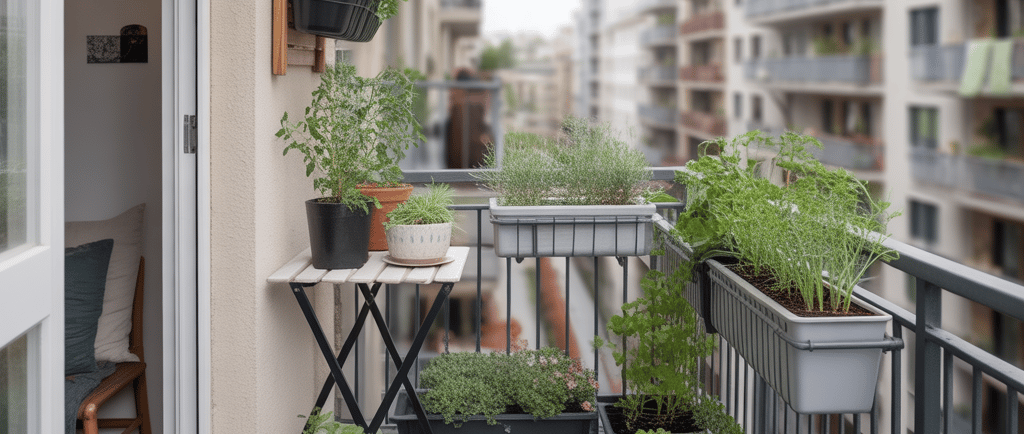
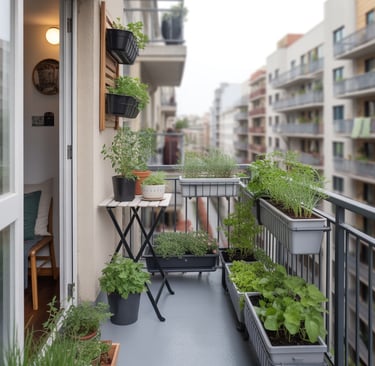
Freestanding containers are the universally safe gardening option for renters because they make no modification to the property whatsoever. A container sitting on a balcony floor is furniture, functionally — no different from a chair or a table in terms of its relationship to the building structure. It can be moved. It leaves no mark. It damages nothing if properly managed. The only caveats are weight — we'll address this separately — and the moisture management that prevents water damage to the balcony surface, which is your responsibility but entirely manageable with appropriate drip trays and container placement. In virtually every rental situation, freestanding containers in reasonable quantities are permitted without any lease concerns. This includes pots of any size, fabric grow bags, window boxes sitting on balcony surfaces, and self-contained growing systems of any design as long as they don't attach to building structure.
Portable plant stands and shelving that sit on the balcony floor and are moved by lifting rather than by detaching from building structure are similarly universally acceptable. A three-tier bamboo plant stand. A metal shelf unit. A wooden ladder stand. These are furniture — portable, removable, and leaving the balcony in exactly the condition it was found when removed. A tiered plant stand holding eight containers takes up the floor footprint of perhaps one large container while providing multiple levels of growing space — the most practical example of the furniture-style portable gardening system that renters can use without any permission or concern.
Hanging baskets on existing hooks are a specific case worth addressing explicitly. Many balconies come with one or more ceiling or wall hooks already installed — placed by previous tenants, by the landlord for practical use, or as building-standard features. Using existing hooks for hanging planters involves no modification whatsoever and is universally permitted. The weight capacity of existing hooks is worth considering — a fully planted and watered hanging basket can weigh fifteen to twenty-five pounds, and hooks vary in their load ratings. Test an existing hook's security before trusting it with a heavy planted basket.
Temporary systems that leave no trace represent the broader category within which all renter-appropriate gardening solutions fall. The question to ask about any system is not "is this allowed?" but "if I removed this tomorrow, would the balcony look exactly as it did before I installed it?" If the honest answer is yes, the system is renter-safe. Fabric pocket planters hung from over-the-door hooks. Freestanding tower planters. Over-railing planters that hook without bolts. Clip-on systems that grip without marking. These all pass the no-trace test and are appropriate for renters at any lease restriction level.
What Usually Requires Landlord Permission
Between the things renters can always do and the things that are genuinely prohibited lies a significant middle ground — activities that aren't outright banned by most leases but that are specific enough modifications that asking permission and getting written approval is the right approach. Asking permission for these activities often results in a straightforward yes, particularly if you frame the request well.
Drilling into walls, floors, or ceilings is the modification most clearly addressed by most lease clauses on alterations, and it's the one that most directly affects balcony gardening through its implications for wall-mounted planter systems, ceiling hooks for hanging baskets, and wall-attached trellis structures. Most leases prohibit drilling without permission, and most landlords who grant permission do so with the expectation that holes will be filled and surfaces repaired before move-out. For balcony gardening purposes, the practical question is whether the convenience of a wall-mounted system is worth the conversation and the repair obligation at move-out. In most cases, the range of excellent no-drill alternatives makes drilling unnecessary — but if you genuinely want a wall-mounted vertical garden, asking permission and committing to appropriate restoration is the right process.
Attaching anything to railings permanently — as opposed to the hook-over and clamp-on systems that are designed to be removed — requires the same permission process as drilling. Permanent railing attachments might include brackets bolted through the railing, wire systems tensioned against railing posts, or irrigation lines secured to railing structure with permanent fasteners. The railing is a structural safety element of the building, and permanent modifications to it are appropriately subject to landlord approval. The good news is that the vast majority of railing-mounted gardening systems are specifically designed to be non-permanent — the product market for renters is well-developed — so permanent railing attachment is rarely necessary.
Installing irrigation systems connected to the water supply — particularly any system that involves tapping into an outdoor spigot, making plumbing connections, or running tubing through building structure — requires landlord permission because it involves modifications to building systems rather than just use of the balcony surface. A simple drip system that runs from a gravity reservoir or a battery-powered pump without connecting to building plumbing is a freestanding system that requires no permission. Connecting to a building water source is a different matter and should be discussed explicitly before installation.
Adding shade structures or privacy screens that attach to the building structure — as opposed to freestanding privacy screens in containers — requires permission because they modify the building's appearance and may affect neighboring units or common areas. A bamboo shade screen attached to the railing with zip ties might seem minor, but if it changes the visible appearance of the balcony from outside the building, it falls within the scope of exterior modifications that most lease clauses address. A freestanding privacy screen in a container base — which can be picked up and moved — requires no permission and achieves similar functional goals.
What Is Almost Always Prohibited
Being honest about genuine prohibitions saves renters from pursuing approaches that will create real problems — either with their landlord during tenancy or with their deposit at move-out. These prohibitions exist for reasons that are legitimate from a building safety, liability, and property management perspective, and working around them honestly rather than trying to circumvent them is the right approach.
Structural modifications to balconies — cutting through balcony floors, removing or modifying railing posts, altering drainage systems, or making any change to the structural elements of the balcony — are universally prohibited in rental situations and genuinely dangerous in some cases. Balconies are engineered structures whose safety depends on the integrity of their components, and modifications by unqualified persons can create safety risks that extend beyond the individual apartment to neighboring units and the building as a whole. No gardening goal justifies structural modification of a rental balcony, and no landlord in any jurisdiction would approve it.
Exceeding weight limits is a prohibition that's less often explicitly stated in leases but is equally real and potentially serious in consequence. Balconies are engineered to specific load ratings — typically in the range of forty to one hundred pounds per square foot for residential construction — and exceeding those ratings creates structural risk that can range from minor surface damage to, in extreme cases, structural failure. For balcony gardening, the practical weight concern arises when multiple large containers of wet growing medium are concentrated in a small area, or when a heavy vertical system is added to an already-loaded balcony. The general guidance is to distribute weight across the balcony rather than concentrating it, to favor lightweight growing media over heavy garden soil, and to be conscious of cumulative weight when a gardening setup grows over time.
Anything that blocks fire escape routes is not just prohibited by lease — it's typically a fire code violation with legal implications beyond the landlord-tenant relationship. If your balcony serves as a fire escape route or connects to emergency egress stairways, keeping those routes completely clear is a legal requirement, not a landlord preference. Even in buildings where the balcony isn't a primary fire escape, blocking the door or threshold with containers or structures that would impede emergency exit is inappropriate. Plan your container placement with clear access to doors and any emergency egress always maintained.
Growing certain plants falls into a category that varies by jurisdiction and building but is worth addressing explicitly. Cannabis cultivation is prohibited in most rental situations regardless of local legalization for personal use — leases almost universally restrict it, and the smell, humidity, and light requirements create legitimate landlord concerns. Some buildings in regions with invasive species concerns restrict certain plants — particularly vigorous climbers that could spread to neighboring properties. And some leases in buildings with shared outdoor areas restrict planting in common areas regardless of what a tenant does on their private balcony. Understanding these specific prohibitions in your context is part of the lease review process.
The Best Renter-Friendly Gardening Systems
With a clear understanding of what's permitted and what isn't, the practical question becomes what systems actually work well within the renter-friendly constraints. The good news — and this is genuinely good news — is that the best renter-friendly systems aren't compromised versions of unrestricted alternatives. They're genuinely excellent gardening systems that happen to be fully portable and leave no trace.
Freestanding vertical towers are the highest-value single investment a renter balcony gardener can make, and they deserve specific emphasis here. A tower planter — whether a soil-based stacked pocket design or a hydroponic recirculating tower — provides the growing capacity of ten to thirty floor containers in a floor footprint of perhaps two square feet, requires no wall or railing attachment of any kind, and moves with you to the next apartment as easily as a piece of furniture. The Lettuce Grow Farmstand, the Mr. Stacky systems, and a range of other tower designs at different price points all share this renter-friendly characteristic. They're completely self-contained, leave zero trace on the balcony, and can be disassembled and packed for a move in under an hour. For a renter who wants serious food production from a balcony, a freestanding tower is the most impactful purchase available.
Over-railing planters with non-permanent attachment are available in designs that grip the railing by hooking over its top edge or by clamping around it with adjustable hardware that tightens and loosens without tools. These designs are explicitly created for the renter market and are available for flat-topped railings, round-bar railings, and square-section railings. A set of over-railing planters running the full length of the balcony railing adds a full tier of growing positions — at a convenient working height, in an often sunnier position than the balcony floor — without any permanent attachment. Removed for a move, they leave the railing exactly as they found it.
Tension rod systems deserve recognition as an underused renter gardening innovation. A tension rod — the same mechanism as a shower curtain rod, using spring tension against two opposing surfaces to stay in place without drilling — installed between balcony wall and railing post, or between two railing posts, creates a horizontal bar from which hooks and hanging planters can be suspended. No drilling, no marks, completely removable. In a doorway or window opening, a tension rod supports a window box or hanging herb garden inside the apartment. The principle is simple and the applications are numerous once you start looking for opposite surfaces to tension between.
Freestanding trellis structures in large containers solve the climbing plant problem for renters elegantly. A wooden obelisk, bamboo teepee, or metal spiral trellis planted in a large container of growing medium is self-supporting — the weight of the container base stabilizes the trellis without any wall or railing attachment. Climbing beans, peas, cucumbers, and nasturtiums grow up these structures enthusiastically, providing vertical growing coverage without any building attachment. The entire assembly — trellis, container, and plants — lifts and moves as a unit. I've moved a container trellis with a growing cucumber plant across a balcony in five minutes without disturbing the plant or leaving any mark.
Container Choices That Protect Your Deposit
Deposit protection isn't just about what you do — it's about how you do it and specifically about managing the one genuinely significant risk that balcony gardening poses to a rental property: water damage. Water from planter drainage that sits on a balcony surface can stain, damage, or degrade surfaces over time in ways that a landlord at move-out inspection might legitimately attribute to your tenancy. Preventing water damage from the beginning is far easier than dealing with it at move-out.
Drip trays under every single container are the most important deposit protection measure in balcony gardening and the one that many renters skip because they seem fussy or unnecessary. They are not fussy and they are not unnecessary. Every time you water a container, excess water drains from the bottom — that water carries mineral deposits, organic matter, and soil particles that stain concrete and other balcony flooring over time. A drip tray under each container catches that water before it reaches the balcony surface. Empty the trays after each watering session to prevent the standing water that causes its own damage and creates mosquito breeding conditions. This single habit — drip tray under every pot, emptied after every watering — addresses the vast majority of deposit risk from balcony gardening.
Protective mats under containers that sit directly on balcony flooring provide an additional layer of moisture protection and prevent the scratching that heavy ceramic or terracotta containers can inflict on softer balcony flooring materials. Rubber or foam mat sections cut to size work well and are invisible once containers are placed on them. For a setup with multiple containers on a wooden balcony deck, a single continuous mat under the whole growing area is cleaner and more effective than individual mats under each pot.
Lightweight containers reduce the cumulative floor pressure and make moving plants around the balcony — for seasonal light optimization, for cleaning under containers, and at move-out — significantly more practical. Fabric grow bags are the lightest weight-to-volume option and have the additional advantage of not scratching surfaces on their own, though they still need drip trays for drainage management. Lightweight plastic containers are the next step up. Heavy ceramic, concrete, and terracotta containers should be used selectively and positioned on protective mats with particular attention to their drainage management.
Building a balcony garden that looks intentional and cared-for rather than cluttered and neglected is a genuine deposit protection strategy in its own right. A landlord conducting a move-out inspection who encounters a well-organized, obviously maintained collection of healthy plants in neat containers on protected surfaces is far less likely to scrutinize the balcony aggressively than one who encounters a chaotic jumble of overgrown pots, stained surfaces, and general disarray. The aesthetic quality of your balcony garden is a signal — to yourself about how you're managing the space, and to your landlord about the standard of care you've applied to the whole property.
Talking to Your Landlord About Gardening
Many renters who want to do something slightly beyond the obvious freestanding container basics never ask because they assume the answer is no or because they're uncomfortable having the conversation. In my experience, the conversation is almost always easier than expected and the outcome more favorable than assumed — because most landlords, when approached respectfully and presented with a reasonable, specific proposal, respond reasonably.
How to frame the conversation for the best outcome involves presenting your gardening plans as an enhancement to the property rather than a risk to it. Instead of leading with what you want to do and waiting for objections, lead with the benefit: "I'd love to add some container plants to the balcony — I think it would really improve the look of the space and I've seen some nice balcony garden setups in the building." Then describe specifically what you're planning — specific systems, how they attach or don't attach, how you'll manage drainage. Specific is better than vague because it gives the landlord something concrete to evaluate rather than an open-ended permission that might be interpreted more broadly than intended later.
A practical checklist of things to ask covers the main areas where clarity helps you plan: Can I put container plants on the balcony floor? Can I use over-railing planters that hook without drilling? Can I install a freestanding tower planter? Are there any specific restrictions on plant types, heights, or quantities? Is there a weight limit I should know about? Is there anything specific I should do to protect the balcony surface? Most of these questions get simple yes or no answers, and the conversation typically takes less than five minutes. The email version of this conversation is sometimes even easier — a brief, friendly message with your plans attached gets a reply that serves as documentation regardless of what it says.
What to do if your landlord says no to something you wanted to do is worth addressing, because it happens and the right response isn't despair or passive non-compliance. First, understand specifically what the objection is — sometimes a no to "can I put a vertical garden on the wall" is actually a no to drilling, and the same landlord would say yes to a freestanding tower that achieves a similar result differently. Second, offer alternatives that address the specific concern. Third, accept genuine nos graciously and focus your gardening energy on what is permitted — which, as we've established, is usually enough to build a genuinely productive balcony garden without any modifications at all.
Gardening Inside When the Balcony Has Limits
Some rental situations genuinely restrict balcony use more than most — buildings with strict aesthetic standards, management companies with conservative policies, or specific balcony configurations that make even freestanding containers impractical. In these situations, moving garden ambitions indoors is not a defeat — it's a practical pivot that opens access to the extensive range of productive indoor growing methods covered throughout this article series.
Moving the garden indoors involves the same fundamental principles as any indoor food growing, with the additions of grow lights to compensate for reduced natural light and the adaptations for apartment-appropriate scale and mess management. The crops that work best in a shaded balcony garden — leafy greens, herbs, microgreens — are exactly the crops most accessible to indoor growing under lights. A kitchen shelf with a grow light bar handles most of the same crops that a shaded balcony would. The transition from balcony to indoor growing doesn't require new knowledge or significantly different systems — just the grow light investment that makes indoor growing viable year-round.
Window box solutions for renters without functional balconies deserve specific mention as an often-overlooked intermediate option. A window box mounted on the interior sill of a window — not attached to the exterior, just sitting on the interior sill — provides growing space for herbs and small plants that receives natural window light without any exterior modification. For windows large enough to accommodate a significant sill planter, this can be a surprisingly productive growing position for herbs and compact lettuce varieties. The entire system sits entirely within the apartment, requires no permission, and provides fresh herbs from a position that most leases treat as entirely unambiguous interior apartment space.
Hydroponic countertop systems — the AeroGarden, Click and Grow, and similar all-in-one designs covered in the hydroponics article earlier in this series — are the most deposit-safe and permission-free food growing systems available to any renter. They sit on a kitchen counter, plug into a standard outlet, require no water connections, make no modifications, and produce genuine food in a self-contained system that fits in a cardboard box for moving day. For the renter whose balcony access is genuinely prohibited or impractical, a hydroponic countertop system plus a microgreen tray on the counter plus a grow light shelf of herbs covers the most valuable fresh food crops with zero landlord negotiation required.
Moving Out With a Balcony Garden — Planning Ahead
The end of a tenancy is when the lack of planning in a balcony garden becomes most costly — both financially, if the balcony isn't properly restored, and emotionally, if beloved plants can't make the move. Planning for move-out from the beginning of a balcony garden is the difference between a stressful dismantling and an orderly transition.
Taking your garden with you is the most satisfying move-out outcome and the one that portable gardening systems are specifically designed to support. Every plant in a freestanding container moves with you — the same container that sat on your balcony for two years goes directly onto the balcony or into the apartment of the next property. Vertical towers disassemble and pack. Over-railing planters come off the railing in seconds. The entire balcony garden that took months to build can be loaded into a vehicle in two to three hours. This movability is the single most practically important feature of renter-appropriate gardening systems, and it's worth keeping at the front of your mind when deciding between a permanent-ish system and a fully portable alternative.
What to do with established plants that can't make the move — either because they're too large, too fragile, or because the new property doesn't have appropriate space for them — requires planning that ideally starts weeks before the move rather than on moving day. Propagating cuttings from herbs and other plants that root easily gives you portable descendants of established plants in small, easily transported containers. Offering plants to neighbors — particularly plants you've grown to a large, beautiful state — is often genuinely appreciated and sometimes results in goodwill that matters in the context of the move-out inspection. Local plant swap groups and community gardening networks often welcome donations of healthy established plants that a moving gardener can't take along.
Restoring the balcony to original condition is straightforward when the gardening system was properly renter-friendly throughout the tenancy. No drip tray stains mean no surface cleaning needed beyond normal balcony maintenance. No drilling means no hole filling. No permanent attachments mean no hardware removal. The balcony restoration from a well-managed renter garden is genuinely just cleaning — sweeping, wiping down surfaces, removing drip tray residue — rather than repair. This is another argument for maintaining drip trays and protective mats consistently throughout the tenancy rather than just at the start.
A well-maintained balcony garden can genuinely impress a landlord at move-out rather than creating concern — and this is something many renters don't realize because they've internalized the idea that any garden activity creates risk. A landlord who walks onto a balcony that looks better than when the tenant moved in — healthy, attractive plants (now removed), clean surfaces with no damage, well-maintained floor and railing — is not the same as one encountering stained concrete, scratched surfaces, or holes in walls. The garden that was managed properly throughout the tenancy is evidence of a careful, attentive tenant rather than a liability. That impression carries weight, sometimes literally in the form of a full deposit return and a positive reference.
Conclusion
Balcony gardening for renters is not a legal minefield that requires choosing between following your lease and growing food. It's a well-defined activity with clear rules — most of which permit exactly the core activities that constitute productive balcony gardening — and a well-developed ecosystem of products and systems specifically designed for the no-permanent-modification constraint that most rental situations impose. The renter who reads their lease, uses freestanding and portable systems, manages drainage diligently, and communicates openly with their landlord has access to essentially everything the balcony gardening articles in this series describe — vertical towers, over-railing planters, container food gardens, herb walls — without a meaningful deposit risk.
The place to start is exactly where this guide began: freestanding containers, drip trays under all of them, on the floor of your balcony, no drilling, no asking, no risk. Add a packet of lettuce seeds and a pot of mint. Set them on protective mats. Empty the drip trays when you water. That's a renter-appropriate balcony garden started today — and from that foundation, the progressive addition of over-railing planters, a freestanding tower, a portable trellis with climbing plants, and whatever else your space and conditions support follows naturally.
Drop your renter gardening experiences in the comments — the creative solutions you've found for no-drill vertical growing, the landlord conversations that went better than expected, the portable systems you've moved through multiple apartments, or the lease language you navigated successfully. The renter gardening community has accumulated extraordinary practical wisdom about making productive gardens work within rental constraints, and every shared experience here makes that collective wisdom more useful for the thousands of renters who are right now wondering whether they're allowed to put a pot of basil on their balcony. You almost certainly are. 🏡